Planetary Health

2025 Strategic Collaborations: AJRAM and the Planetary Health Alliance

This year, EuroNet MRPH has established two strategic partnerships to enhance our capacity to address critical global health challenges. These collaborations align with our recently adopted policy documents and aim to foster cross-border cooperation among young professionals.

Collaboration with AJRAM In May 2025, we formalized a partnership with AJRAM (Actions des Jeunes contre La Résistance aux Antimicrobiens). Antimicrobial resistance remains a pressing public health threat, and this collaboration allows us to work closely with a dedicated youth network to promote better stewardship and awareness strategies across Europe.

Membership in the Planetary Health Alliance As of November, EuroNet MRPH has officially joined the Planetary Health Alliance (PHA). This membership underscores our commitment to the “One Health” approach, providing our residents with a platform to engage with the intersection of environmental sustainability and human health.

Through these alliances, we aim to contribute more effectively to the discourse on these urgent topics.

Alumni Section

Launching the Alumni Section and First Mentorship Programme

EuroNet MRPH is proud to announce a major expansion of our community: the official launch of the EuroNet MRPH Alumni Section.

Created to ensure our network thrives beyond residency, this new section is a dedicated space for former members to stay connected, share opportunities, and continue contributing to the public health field. By blending the experience of alumni with the fresh perspectives of current residents, we are taking a significant step toward our core mission of strengthening the Public Health Workforce in Europe.

Why an Alumni Section? The Alumni Section bridges the gap between training and professional practice. It is designed to:

  • Promote networking among former and current members.
  • Encourage collaboration and partnerships across borders.
  • Offer opportunities for professional growth and lifelong learning, focusing on areas often outside the scope of formal training.

Meet the 2025 Alumni Team This initiative is coordinated by a dedicated team elected to support our growing network:

  • Carolina Baptista (Alumni Lead)
  • David Peyre-Costa
  • Damir Ivanković
  • Maria Francesca Manca

First Initiative: Call for Mentors! To kickstart this new chapter, we are thrilled to launch the 1st EuroNet MRPH Mentorship Programme. We invite our alumni to support the next generation of specialists by becoming mentors.

  • What: Guide and support a current resident.
  • When: The first edition runs from September to December 2025.
  • Deadline: Applications are open until August 15, 2025, at 23:59 CET.

Apply here to be a Mentor

How to Join the Section Whether you completed your residency or moved into the public health field through a different path, you are welcome here. By joining, you will gain access to our exclusive WhatsApp community to share ideas, proposals, and job opportunities.

Register for the Alumni Section here

We look forward to building a lasting community that supports public health professionals at every stage of their careers. Welcome back!

Structure

Governance Update: Adoption of New Statutes and Policy Frameworks

We are pleased to inform our members that EuroNet MRPH has successfully finalized a significant update to its governance structure. Following the approval of the new Statutes and Charter of Values on January 24, 2025, the General Assembly officially adopted the updated Policies & Procedures on June 13, 2025 (you can find them both here)

These documents establish a renewed operational framework for the network, ensuring greater transparency and alignment with the current landscape of public health in Europe.

A Shift to Multidisciplinary

A key amendment within these new statutes is the formal transition of the association’s name to the European Network of Multidisciplinary Residents in Public Health. This adjustment aligns our legal designation with the reality of the workforce, acknowledging that public health challenges require collaboration across various professional backgrounds. While the acronym EuroNet MRPH remains unchanged, this update ensures that our governance structure is inclusive of all residents contributing to the field.

These approved documents are now in effect and will guide the network’s activities moving forward.

Approved

Exciting Milestone: EuroNet MRPH Adopts Charter of Values and Important New Policy Documents

Exciting Milestone: EuroNet MRPH Adopts Charter of Values and Important New Policy Documents

EuroNet MRPH is thrilled to announce the official adoption and publication of the Charter of Values and four essential policy documents on February 1, 2025, marking a significant step in our continued commitment to promoting public health across Europe.

Following an extensive collaborative process initiated in 2024, involving our National Commissions and dedicated working groups, the Charter of Values and policy documents were finally formally approved! They represent EuroNet MRPH’s foundational principles and consolidated positions on critical public health issues.

Charter of Values:

The Charter of Values outlines EuroNet MRPH’s core principles, guiding our mission and actions. It emphasizes education, cooperation, innovation, empowerment, equality and non-discrimination, intercultural exchange, transparency, accountability, health advocacy, and sustainability. These values underpin all our policies and reinforce our dedication to building a stronger, more equitable, and healthier Europe.

Policy Documents:

  1. Climate Change, One Health, and Planetary Health
    Addressing the urgent need to tackle ecological crises through holistic, multidisciplinary frameworks such as One Health and Planetary Health, this document emphasizes integrating health considerations into climate policies and promoting sustainable healthcare practices.
  2. Economic Sustainability of Health and Care Systems
    Recognizing the economic pressures on healthcare systems, this policy highlights the necessity of innovative solutions, efficient resource use, and improved economic strategies to ensure the long-term sustainability and resilience of health services.
  3. Mental Health
    Focused on comprehensive mental health policies, this document underlines the importance of societal approaches to mental well-being, addressing stigma, advocating for community-based services, and prioritizing mental health in educational and workplace settings.
  4. Political Involvement of Public Health Bodies
    Advocating active participation in political processes, this policy promotes Health in All Policies (HiAP), urging public health professionals to engage politically to shape legislation and influence public health outcomes positively.

Each document includes a clear call to action, outlining specific internal and external actions to guide our members and partners in implementing these essential strategies.

We believe these policies and values will significantly impact public health practices and advocacy across Europe.

Explore the full Charter of Values and Policy Documents, and join us in our mission to advance public health in Europe!

EuroNet MRPH logo with the full name of the network, European Network of Multidisciplinary Residents in Public Health.

The Formation of the German Network of Young Professionals in Public Health (Nachwuchsnetzwerk Öffentliche Gesundheit): Reflecting transformative change in Public Health in Germany

by Kerstin Sell on behalf of the Network

A wave of transformative energy has been building up in Germany’s Public Health community over the past years. After the 2015 Leopoldina report powerfully presented the necessity for reform in Germany’s Public Health institutions and academic landscape, along with the country’s politics and policies, the actors in the Public Health community have joined forces to work towards a new Public Health strategy for Germany. The conference Zukunftsforum Public Health (Future Forum PH) has been critical in facilitating community networking, interdisciplinary exchange of perspectives and preparing a road map for the strategy development.

At the second Zukunftsforum Public Health in December 2017, early career public health professionals, students, and researchers sought to find a medium to connect with each other, network, discuss and work on common interests. This led to the formation of the German Network of Young

Professionals in Public Health which we would like to introduce here.

Initially, the network consisted of an informal mailing list that anyone who self-defined as a young person with an interest in Public Health could join after review by the moderators. News about the network was shared by word of mouth, but as the network became more formalised, new members were informed about its existence through publications and the visibility of public engagement of the network.

In addition to the email exchange, regular conference calls were established, a network statute was adopted, a corporate design and a homepage were launched, and a coordinating committee was elected. Within the first months of the network’s existence we published an article about our perspectives as young professionals on Public Health in Germany with a focus on necessary reforms in Public Health education and training (Akçay et al. 2018). Careers in Public Health have been an ongoing topic in the network as the urgency to reform Public Health education in Germany has become very clear through the exchange of the network members’ experiences.

At the third Zukunftsforum conference in January of 2019, participation of young professionals and students had increased remarkably. A network meeting was organised for the day following the conference to enable reflection about our role as Young Professionals in Public Health at the conference and within the German Public Health landscape. The network meeting also offered the opportunity to continue brainstorming and discussing the Zukunftsforum’s main topic: the new Public Health strategy for Germany. From the brainstorming process we were able to derive recommendations for the strategy development from our perspective, which we subsequently published on our homepage. An executive summary of this paper has been accepted for publication recently.

While our network is growing and facilitating exchange, cooperation and a platform for discussion among young professionals in Public Health in Germany, it is also still evolving and diversifying. We hope to be able to report on further interesting projects and initiatives in another EuroNet Newsletter in the future.

As our homepage is in German, please feel free to contact the speakers of the network sprecher@noeg.org for more information.

Reference: 

Akçay et al., Public Health in Germany from the Perspective of Young Professionals. Gesundheitswesen 2019; 81(03): 176-181. DOI: 10.1055/a-0795-3477. (Article in German)

EuroNet MRPH logo with the full name of the network, European Network of Multidisciplinary Residents in Public Health.

Interview with Robert Otok, Director of ASPHER

We have been reading ASPHER’s strategic Objectives 2016-2020. We are right now just in the middle of this period of time. Could you tell us some of the achievements ASPHER (Association of Schools of Public Health in the European Region) has accomplished so far regarding those strategic goals?

ASPHER 2020, which was inaugurated during the 50th anniversary year of the Association, presents a comprehensive and balanced agenda guiding the strategic development of ASPHER during an important period, critical in many ways for the future of Public Health in Europe and globally.

As we reach the midterm mark of this time period, several key achievements have been reached by ASPHER. These include the continued development of ASPHER’s core competences programme with the publication of the 5th edition of competences list. The list remains a core reference for the development of public health education in Europe, while also supporting public health careers and systems development.

A central project underway is the collaborative development of a series of tools for public health workforce development and professionalization in Europe. This is being undertaken as part of a groundbreaking agenda set by the WHO Regional Office for Europe within a framework of the European Action Plan (EAP) for Public Health Capacities and Services Strengthening. The tools will be presented at the European Public Health Conference in Ljubljana this November and will be made available for use by countries and other relevant stakeholders soon thereafter.

ASPHER has also made strides to bolster collaboration between keystone public health organizations. Cooperation across organizations that pool ideas, resources, and capacity can only strengthen Public Health today and brighten the outlook for the field in the future. ASPHER is maintaining historically close ties with the European Public Health Association (EUPHA), and forging new key partnerships – including those with the International Association of National Public Health Institutes (IANPHI) and the Association of Schools and Programs of Public Health (ASPPH), which is ASPHER’s counterpart organization across the Atlantic.

There are other exciting developments still to come under the ASPHER 2020 agenda. These include the launch of the Public Health Training Academy, which is meant to constitute a training platform for individuals seeking continuing professional development opportunities in public health. ASPHER is also improving the formula for its annual Deans’ and Directors’ Retreats – a major membership event of the Association.

We know one of the foremost pillars of ASPHER working is on Professionalization of the Public Health Workforce. Could you explain the ASPHER’s work in this area?

This project is primarily realized through ASPHER’s active engagement in WHO Europe’s Coalition of Partners (CoP) work on implementation of the EAP for Public Health Capacities and Services Strengthening. The relevant CoP projects include:

  1. Development of the Road Map towards professionalization of the public health workforce in the European Region. This is a tool meant to support countries in developing policies related to public health workforce professionalization. The Road Map recognizes the diversity of public health systems in place across Europe and should act as a guide to countries to choose the path that suits their culture and needs to strengthen and professionalize their workforce. The Road Map seeks to reinforce the professional identity of the current public health workforce and help to align public health services and operations with the public health workforce development.
  2. Development of a Handbook for managing public health professional credentialing and accreditation systems in the European Region to serve as a reference tool for the national education and health systems to ensure the competencies both required and presently possessed by the public health workforce.
  3. Development of a core competencies Framework for the public health workforce in the European Region. This should be of use for human resources practices to enable an ongoing standardized and consistent assessment and development of public health knowledge and skills at individual, service, organizational, and country levels, thus, supporting public health professionalization and credentialing.

Does ASPHER have any plan to facilitate the application of its proposals about professionalisation to medical residency programmes in Europe? What EuroNet and public health residents in general can do to support and participate in ASPHER?

The EuroNet Medical Residents in Public Health (MRPH) plays an important role in the development and the implementation of the public health professionalization agenda. The Network already actively contributes to the work of the CoP providing a specialist workforce and fresh perspectives from a younger generation. Input from EuroNet and its individual members is critical for the success of this effort.

The specialist training EuroNet MRPH members obtain makes them also particularly relevant to ASPHER. It is no surprise then that both associations actively collaborate, share mutual understanding and friendship. Italy is an interesting example of a country where all schools providing residency and specialist training in public health became ASPHER members – such a membership context provides powerful potential for working closely together.

To learn from your experience, which are the aspects of ASPHER that led you to get involved with the association? How did you benefit from being involved in ASPHER?

ASPHER is a family, with all the baggage that it brings – both pluses and minuses. Still, what I think keeps me (and I believe not only me) with ASPHER is its unique atmosphere and the people who are part of the organization.

Over the past years, I have sought to secure its professional shape and high performance standards. Being the Association of Schools of Public Health, (i.e. concrete institutions, with staff, students and graduates), extends the impact of ASPHER through the schools’ infrastructure, the services they provide in training, research and societal contributions. It is an extremely powerful organisation – essential for the growth of the Public Health in Europe and globally. Working at ASPHER is therefore an extraordinary journey, an eye-opening experience, reflecting the complexity of the truly unique field the Public Health is.

Which do you think are the future challenges for the future public health workforce and how young public health professionals could prepare to face those challenges?

My personal take is that we are currently challenged to identify clear career options/paths and to make quality training available to enable smooth navigation through the complexity of the public health field and the choices it offers. ASPHER makes continuous efforts to address this. Young public health professionals should remain courageous and pertinacious. I would recommend that they find someone they can trust to lead them in facing their career challenges and in their turn, mentor newcomers as they move forward and gain experience.


https://www.aspher.org/

EuroNet MRPH logo with the full name of the network, European Network of Multidisciplinary Residents in Public Health.

EUPHAnxt: A New Team, A New Logo

EUPHAnxt is a unique network within the European Public Health Association (EUPHA), for students and young professionals in the field of public health.

EUPHA is an umbrella organisation for public health associations and institutions in Europe. Currently, EUPHA has 81 members from 47 countries, bringing together around 19,000 public health experts for professional exchange and collaboration throughout Europe.

EUPHAnxt was established in 2011, and has grown bigger each year. It is a free and open initiative that aims to inform and involve the future generations into the European and multidisciplinary network of public health associations.

The new team: Sara McQuinn (EUPHAnxt Coordinator), Pasquale Cacciatore (EUPHAnxt Communication Manager),  Keitly Mensah (EUPHAnxt Conference Manager) and Anton Hasselgren (EUPHAnxt Partnership Manager).

We strive to further expand the network, build partnerships and strengthen the presence of students and young professionals in the European public health community. We aim to gather all young public health professionals and students in Europe. You are welcome to join us by subscribing to our newsletter and follow our social media channels.

EUPHAnxt current projects and initiatives include:

  • To co-organise skill-building sessions at the annual European Public Health (EPH) conference to promote training and education. This year the conference will be in Ljubljana, Slovenia Nov 28th-Dec 1st. We hope to see you there!
  • A fun and informative newsletter where we share our latest activities and news addressed to students and young professionals interested in public health.
  • The abstract mentoring programme, which provides an opportunity for young and/or less experienced abstract submitters to receive feedback from expert reviewers on abstracts that are to be submitted to the EPH Conference.
  • An Informal Internship Programme, where our goal is to put students and young professionals interested in doing an internship at the EUPHA office or within one of the EUPHA sections, in contact with the relevant public health professional.

If you have any queries, or would like more information regarding EUPHAnxt, please email: info.euphanxt@eupha.org. We also have Facebook, Twitter, Instagram and LinkedIn accounts where we share our latest activities, and interesting public health news! Come join us ® https://eupha.org/euphanxt

____________________

Sara McQuinn
EUPHAnxt Coordinator

EuroNet MRPH logo with the full name of the network, European Network of Multidisciplinary Residents in Public Health.

Getting to know the Global Health Next Generation Network

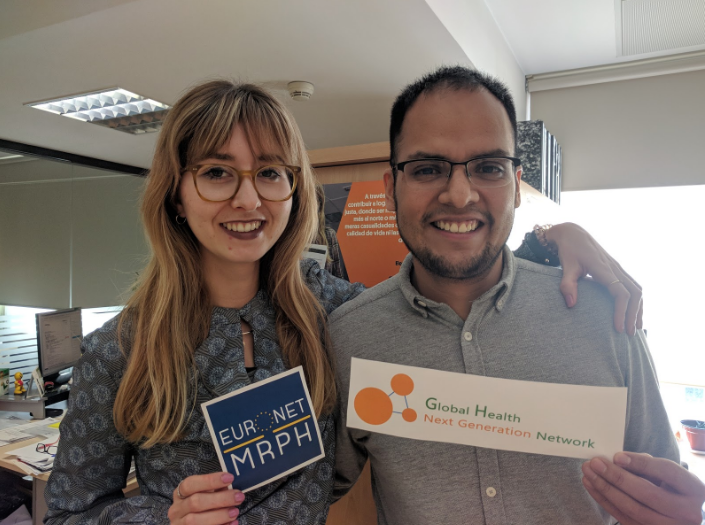
Multidisciplinary work is part of everyday life of any resident; living among Medical Doctors in training for Public Health could isolate us from the different perspectives that exist out there. One of the efforts of Euronet is to connect the residents of the member countries, but also to build bridges between other groups, teams and associations related to Public Health. One example is the Global Health Next Generation Network (GHNGN), which in a short time has created a network of working groups, some with common objectives with Euronet, such as empowering young professionals in trainee with practical tools.

“As the voice of the next generation of Global Health professionals, GHNGN focuses on bringing people together and foster discussion around Global Health through formal (conferences) and informal events (global health hangouts) as well as mentorship opportunities (Global Health Mentorships and Peer to Peer sessions).”

The network was created in Barcelona, with students of the Master of Global Health at the University of Barcelona, with the aim of having a platform so that young professionals from different cultures and backgrounds can network and exchange Global Health expertise and skills; to promote trans-disciplinary teamwork, to help each other out in the transition from academic to professional careers in global health, to initiate and foster dialogue on Global Health education and to support engagement of young professionals in Global Health initiatives and projects worldwide. Currently, there are approximately 30 people in the team, working from 15 different countries.

There have been some attempts to bridge in the last years. But it was this 2018 winter, when members of Euronet and GHNGN gathered in Barcelona and pushed forward on partnering. Some ideas flew on our first exchange of emails like ‘Social media visibility’, ‘Inviting speakers from Euronet for the Global Health Forum‘, ‘nominating a Global Health Ambassador’, ‘Writing a blog/career story about people on each organization’, ‘Exchange of expertise’, ‘Internships´, etc.

The official presentation of the GHNGN to Euronet members was made in March, at the meeting of Nancy. In the assembly there was general approval to draft an agreement for the next meeting. This beautiful story has the next date next July in Valencia, where some members of the GHNGN will visit us to make a formal presentation of their network, pitch some ideas and party with us at our meeting organize by Euronet Spain.

_________________________

References

Twitter: twitter.com/globalhealthngn
Facebook: www.facebook.com/GHstudentnetwork/
Website: http://ghnetwork.org/

_________________________

Efrain Pantoja
MRPH at Hospital Clinic de Barcelona and ‘Mr Pantoja’ at EURONET

Elena Marban
Pre doctoral fellow at ISGLOBAL and GHNGN board member

EuroNet MRPH logo with the full name of the network, European Network of Multidisciplinary Residents in Public Health.

The Turkish association of residents in Public Health joins EuroNet MRPH

During the Summer Meeting in Valencia, Turkey joined EuroNet MRPH. With a population of more than 80 millions people, Turkey is one of the biggest countries of the European continent. In this country Public Health is listed as a clinical discipline and it has several challenges to face. It is expected that around 2400 public health specialist will be needed in 2023 to answer to the Turkish population’s needs*.

EuroNetters are extremely happy to welcome their Turkish colleagues and are looking forward to meeting them all as soon as possible. The road for a better “health for all” is still long, but together we are stronger!

Please, find attached to this post the presentation of Turkish residency programme. More information will be soon updated on the website.

Public Health Residency Turkey


*http://dergipark.gov.tr/download/article-file/152999

EuroNet MRPH logo with the full name of the network, European Network of Multidisciplinary Residents in Public Health.

EuroNet MRPH and the European Forum for Primary Care sign a Partnership Agreement

A brief, but motivating, encounter at the conference in Porto this September was all that it took for a Portuguese EuroNet member to initiate cooperation talks between EuroNet MRPH and the EuropeanForum for Primary Care (EFPC).
During these conversations, both networks recognised a strong need for cooperation and collaboration between young Public Health and Primary Care professionals, especially EFPC’s Working Group for Young Primary Care Experts (You&EFPC).

A month later, we have the Partnership Agreement signed and collaboration and cooperation talks in the pipeline.
We will keep you updated on future talks, collaborations and results. Stay tuned.