EuroNet MRPH logo with the full name of the network, European Network of Multidisciplinary Residents in Public Health.

Internships Team 2019 – Call for action!

Dear EuroNetters,

A new year has just begun and the new board is working hard to make 2019 another amazing one for EuroNet!

I want to start this first communication as new Internships Lead by thanking my predecessor Julio and all the people that have been working hard on the Internships projects during 2018, your work has been precious for the development of the 2019 plan, and any future collaboration on the new projects will always be truly appreciated.

The main goals for 2019 are resumable in the following points:

  • To increase the number of Internships applications
  • To develop new communication and application strategies about internships and mobility for Public Health residents inside the EU
  • To strengthen and expand collaboration with partners and with the National Associations of Public Health residents

The main actions to achieve these goals will require a strong involvement of endeavoured residents, not only those who already are actively participating to EuroNet activities (members of National Commissions), but also of those who still are not fully engaged, but play a role inside their National Associations or simply are interested in working on mobility and helping their colleagues achieving internships periods.

Another important action, in order to try to raise the number of possible positions, is to engage in new partnerships that could provide internships and trainings or grants for summer schools and similar projects. At the same time, strengthening the already existent collaborations, in continuity with the previous board´s excellent work, might also lead to new opportunities of this kind.

The results of this work can contribute to the formation of a working group, to the creation of workshops about this theme or can be used for whatever other useful scopes that will cross our path.

So, to be short, the plan is settled, now I need YOU!!!

If you are interested in joining the Internships Team, just send me an email (internships@EuroNetmrph.org), I will be extremely pleased to welcome you in the team and we can start working together.

There is of course a lot of room for plan improvement and for you to add new ideas, the work to do is not little but it´s going to be fun, interesting and never overwhelming!

And keep in mind that during the meeting in Torino we will have time to know each other and have the chance to organize the main part of the work.

This call for action is of course open to any PH resident, whether this is the first time you are reading the newsletter or not, just join if interested or simply curious!

Join the Internships, Stay for the Net!

Internships Lead

Robin Thomas
 

EuroNet MRPH logo with the full name of the network, European Network of Multidisciplinary Residents in Public Health.

This is a Story about Networks

This is a story about networks. A story about the balance between their simplicity and the impact they can bring about. My name is Miguel Cabral and I’m a Medical Resident of Public Health (MRPH), in Amadora, Lisbon, Portugal. One of the great things the Portuguese Public Health (PH) residency has is the chance for MRPH to do some of their training abroad, while still receiving their salary. Another great thing is that we have 3 months for an optional internship, which means we can pretty much choose anything we want to do in the world, as long as we work on a PH area under the supervision of a PH specialist.

In my case this was very handy. My wife was doing an internship in Rome for her residency. I wanted to find an internship that would allow us to be together and make the most out of the experience on a professional level but also on a personal level. So, I “just” had to find an internship somewhere in Rome that would not require an Italian speaking person (I can understand basic Italian but you don’t want to hear me speak).

So… networks of people. Here is where a Maltese MRPH gets into the picture. A friend of mine, that is also part of the European Network of MRPH (EuroNet MRPH), passed by Lisbon and we had a coffee and a pastel de Belém by the Tejo River. I hadn’t searched too much for internship opportunities yet, but he told me he knew the perfect guy for me to do my internship with. The next day, I had an email message from Dr. Carlo Favaretti with a general proposal of what an internship with him would be like. And boy, I was thrilled! As my wife puts it: there were many words I liked, all together.

Fast-forwarding the bureaucracy needed, some months later, I was entering the Public Health Institute of Università Cattolica del Sacro Cuore, in Rome. The institute hosts several interesting institutions. One of them is a World Health Organization (WHO) Collaborating Centre focused on Leadership in Medicine. The other one is a spin-off from the University called V.I.H.T.A.L.I. (Value In Health Technology and Academy for Leadership & Innovation). I like to think institutions reflect the people that are part of them, and the institute had several remarkable people indeed, both on professional and personal levels. But we’ll get back to that shortly.

Before my internship, I thought I would mainly deal with the topics of Health Technology Assessment (HTA) and Leadership, since Dr. Favaretti is the president of the section on HTA from the European Public Health Association (EUPHA) and is part of the Leadership Centre, on top of having extensive experience in health management. However, I got a big bonus, as I’ve also ended up dealing a lot with the topic of Value Based Health Care (VBHC), which is becoming quite trendy in Portugal (and a bit everywhere).

The most astonishing thing I’d like to point out is how much I’ve learned in so little time. I’m convinced that a temporary switch of network and work environment allows one to get in touch with so many different ideas, perspectives and methodologies that it feels like some sort of intensive course on whatever the topic dealt with. In my case, I would particularly highlight the areas of HTA and VBHC. In the classes I had about HTA they usually just addressed clinical and economical evaluation, so to find out something so schematic as the EUnetHTA model was very positive. And on the topic of VBHC, the discussion in Portugal is very centred on the notion of Value by Michael Porter, the author that launched the concept, by defining value as a formula that divides the outcomes of the patient by the costs used to obtain those outcomes. To me, it seemed strange to apply this to a National Health Service (NHS) type of health system. And, of course, I was not alone. During this internship I learned about Sir Muir Gray and Dr. Jani Anant’s work on the field and their notion of triple value, which is particularly more adequate, in my PH view. I was fortunate enough to even meet them in person, as the institute has very good relations with them. This is another benefit of trying out new networks as one might even get in touch with connections from that network.

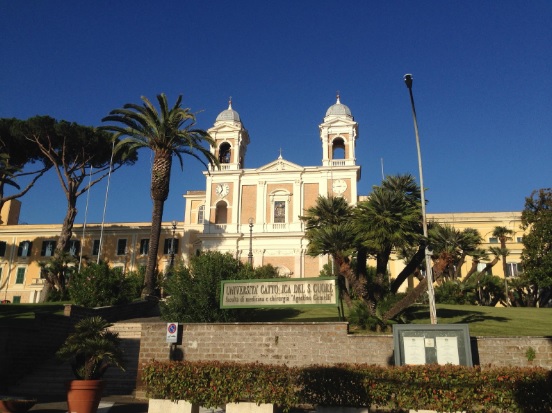
Figure 1. The entrance of the Università Cattolica del Sacro Cuore

As I see it, sometimes you get lucky and you grow a lot in professional terms with these internship opportunities, some other times you get very lucky and you end up also growing personally due to the relationships you build. I’ve learned a lot from the senior and junior specialists in the institute, but I’ve also learned with and because of the MRPHs in the Institute. In Italy, the PH residency is mainly based on Universities. I was able to connect with MRPH from different stages of residency and in the case of UCSC, the residents are very proactive and they even organize Global Health Courses for Medical Students in the University. How cool is that?! If they wanted to host a EuroNet MRPH meeting, I think they would probably do it without any trouble!

Besides all this, there was also Rome and Italy. There is culture around every corner and under every rock (I mean literally as during my stay they found new ruins when a bit of pavement on a road sunk due to the rain). I was able to travel around quite a lot and visit several landmarks in and outside of Rome. It is amazing how even in tiny cities I’ve visited there were some amazing monuments to be seen and the food was always good. The only travelling I didn’t enjoy was the traffic, which is quite hectic. Other than that, I have only good things to point out of my internship.

Therefore, I highly recommend every MRPH to do an internship outside their usual network of connections, as the benefits will likely out weight the costs. I was lucky enough to have someone in my network (thank you Stefan!) that was able to point out the perfect internship for me, but there are also other ways to go. For instance, you can make use of the internship program from EuroNet MRPH. Or if you are very keen on a specific place or topic that is not on the EuroNet list, you can also make use of the list of WHO’s collaborating Centres. You’ll likely have to put in a bit more effort to make it happen, but it will most likely pay off. In my case it definitely did. I’ve learned a lot, ate a lot of good food (and drank a lot of macchiato coffees as only Italy can provide), visited amazing places and enriched my network with a group of very knowledgeable, proactive and generous people. My experience would not be the same without them and I’m very thankful for them. I look forward to attending a EuroNet Meeting there very soon!

_________________________

Miguel Cabral
Medical Resident of Public Health (MRPH)
Amadora, Lisbon, Portugal

EuroNet MRPH logo with the full name of the network, European Network of Multidisciplinary Residents in Public Health.

What do you think #PublicHealthLooksLike? An unusual (but rewarding) PH resident attachment

In my experience it’s not very often that you get to combine your public health work with your hobbies, particularly when your outside interests include the arts as mine do. However, in my current role I am for the first time being able to do both daily, which has been exciting, rewarding and challenging!

For the last two months I have been working with the UK Faculty of Public Health (FPH) communications and policy team. They cover a lot of ground and I’m involved in several workstreams, but the main piece of work that I ‘own’ is the planning, implementation and promotion of their photography competition #PublicHealthLooksLike.

As the name suggests, the competition is aiming to improve the way FPH represent their members (i.e. the public health workforce) by showcasing what public health work really looks like in the UK and around the world, rather than using stereotypical ‘stock photo’ images of attractive models with stethoscopes. They’re offering some great prizes including £250 and a year’s free membership, but most importantly they’re planning an exhibition in London featuring the top ten photographs to celebrate the amazing diversity of public health.

Although the competition has only been running for six weeks and doesn’t close till October 19th, it’s already been incredibly inspiring to see both the engagement from public health professionals and the early entries coming in. I suppose we all know in the abstract that public health is a broad church, with people working in so many different areas, but there’s a big difference between knowing that and actually seeing it visually. We’ve had photos of anything and everything, from people supervising walking groups in the sunny English countryside to members hosting immunisation clinics in the Middle East.

From a personal point of view, I’ve loved being able to engage with potential entrants online, encouraging them to recognise their talents and the incredible work that they do every day without probably realising how interesting and engaging that might be to other people. It’s made me think seriously about how little I talk about or share my own public health work, and try to (slowly) increase the amount of personal and professional engagement I do on Twitter and other social networks. We should all talk more about what we do, because it’s often only by hearing and seeing the experiences of others that we become inspired to seek out new challenges – that’s partly why networks such as Euronet are so important.

The competition is still running, and I would definitely recommend Euronet members enter to showcase the work that we all do on a daily basis across Europe! You can enter up to five photos through the competition website. If you’re on Twitter it would be fantastic if you could take 10 seconds to RT this tweet to publicise the competition across Europe more widely, and if you fancy following either @FPH or me personally you can find us there as well.

I look forward to seeing your entries!

_________________________

Rachel Thomson
Public Health Resident
UK Faculty of Public Health, London

EuroNet MRPH logo with the full name of the network, European Network of Multidisciplinary Residents in Public Health.

Training experience in the UK – Haelo & Salford Royal NHS Foundation Trust

I am at the end of the fifth year of the school of Hygiene and Preventive Medicine at the University of Pisa and just before the end I wanted to taste some examples of the best european infection control. Thanks to a precious man, professor Peter Lachman, pediatrician and CEO of the ISQua, I was connected with Haelo that is a quality improvement agency collaborating with many hospitals, one of which is the Salford Royal Hospital. At Haelo they planned for me one-day full immersion on the programs they run routinely with professionals and academics, their methodology and strategies for QI. The next day I was directly into the hospital visiting the amazing A&E Village that is the result of a recent renovation structurally and organizationally: the workflow is designed to let the patient get out of the unit in less than 4 hours unless complications, major injuries or frailty and they normally obtain the >90% patients target! I spent the next days with the Infection Control Team, visiting wards, receiving explanations for every question I posed them, participating to a part of the Induction Package that every new employee must pass before beginning the job. I visited the lab too, talked to a clinical microbiologist about his occupation there and sharing the differences with my country hospital system. I followed a specialist nurse of the IV team in her activity and it was very impressive in matter of competence! Finally two running projects they showed me were the NAAS and CAAS (Nurse and Community Assessment and Accreditation System), examples for how to fix chronic problems like nurses’ professional update and the link between hospital and local health authorities. Outstanding!

Among the other things, have to flag an excellent restaurant inside the hospital, very nice meals consumed during my stay.

Outside I visited the city of Manchester in occasion of the Chinese New Year, the Salford University swimming pool, very nice indeed and the surroundings of Salford, in particular it is worth of remark the most modern area that is MediaCity.

In conclusion, it has been an intense and intensive experience, deep into the world of Infection Control to lean and bring back home a different way to tackle the antimicrobial resistance and the infection transmission in the hospital setting not to mention many ready-to-use tools for my hospital!

_________________________

Giulio Pieve
Public Health Resident, University of Pisa

EuroNet MRPH logo with the full name of the network, European Network of Multidisciplinary Residents in Public Health.

Reflections of a Public Health Resident

I’ve been an internal Public Health doctor since January, and I’m taking my first steps in the wide-ranging medical specialty of Public Health. My unit of work covers a wide area including two small-sized cities, Santa Maria da Feira and Arouca, located approximately 40 kms south of Porto. As the first year of an internship in Portugal is focused on Community Health, my daily work is based on 5 major areas: Prevention and Health Promotion, Environmental Health, Health Authority, Epidemiological Surveillance and Health Planning.

In addition to having a particular interest in Global Health, I attend traveller’s consultations in the International Vaccination Center of Porto whenever I possibly can. I grasped the opportunity to attend the World Health Summit Regional Meeting, which took place in Coimbra on the 19th and 20th of April. The congress was held at the San Francisco Convent in a space that gathered around 600 participants and 120 speakers from more than 40 countries to discuss Global Health. A special focus was paid to the health problems faced within countries of the Community of Portuguese Language Countries (CPLC).


Europarque at Santa Maria da Feira


Besides the excellent exhibits, interesting debates and networking, which was essential for both professional and personal enrichment, it has also brought many concerns and a feeling that change is essential.

The task of countries considered underdeveloped is increasingly seen as a utopia. The high rates of maternal and child mortality in addition to the high burden of communicable diseases, these countries are facing a growing increase in noncommunicable diseases that until very recently were confined to developed countries. Conversely, developed countries are facing the resurgence of some vaccine preventable communicable diseases, such as Measles in Europe, as a result of a drop in vaccination rates due to the growing anti-vaccine movements we have witnessed. Climate change is a fertile ground for migrations of certain vectors, which may facilitate one of the greatest Public Health problems in countries considered underdeveloped, the vector-borne diseases.

Taking into consideration the future problems resulting from the constant increase of the world population with a prediction of 8.5 billion people in 2030… will there be clean water for all?

We’re a time bomb, and time is counting.

According to various experts in many different areas, even if all efforts were put into practice it would be difficult to achieve the 17 sustainable development goals by 2030. The strategies and measures adopted have been scarce in dealing with the many problems that exist.

We can’t continue to focus solely on the health of our communities, knowing what is happening in the rest of the world.

We can’t all live in Sweden (Ranked 1st the SDG’s rankings), but we can replicate 157 Swedens.

Through the history of Public Health, we have a duty to try to change the world for the better, because anything is possible if someone dreams about it.

_________________________

References

1. World Health Summit Regional Meeting 2018, Coimbra – Portugal. Available: <https://www.worldhealthsummit.org/regional-meeting.html>
2. SDG Index and Dashboards Report 2017 – SGD Index & Dashboards

_________________________

Davy Fernandes
Public Health Resident, Feira-Arouca Public Health Unit, Portugal.

EuroNet MRPH logo with the full name of the network, European Network of Multidisciplinary Residents in Public Health.

Public Health Residency: Time for Focus and Opportunity

Last  January, I started my residency in Public Health in Oporto, at an institution responsible for all the population living or working in the oriental area of the city. I’m very pleased with my choice and I feel very welcomed by this big community. Fortunately, public health in Portugal is on the rise in the last 8 years with an increase number of all public health professionals. Even in Europe and all around the world, public health is becoming more prominent in order to have real impact in our lives and on the ones in most need. Euronet is an excellent example of the ambition and hard work of a new technological generation of public health doctors, understanding the value of a solid and robust network between different countries and cultures. One of my first goals, after choosing public health as my profession, was to find out what it is and its objectives. Besides its fundamental actions according to WHO, promoting health, preventing disease and prolonging life, and the additional ten major interventions that we can and should address on a daily basis, I read a sentence stated by Arnaldo Sampaio, a reference figure in the development of public health in Portugal, that, in my opinion, describes the range that public health can have, “If you want you can even consider the public lighting as a promoter of better Public Health, since it gives more safety to pedestrians and decreases the probability of road accidents”.

In the first residence year our program in Portugal is focused on community health. A major aim of this phase is to learn and practice epidemiological surveillance and intervention. In Oporto, we work with a population that has a big incidence of tuberculosis comparing with other regions of Portugal. It is characterized for having a low socioeconomic status and poor neighborhoods, and consequently low hygienic conditions and reduced search of healthcare treatment in due time, which are risk factors for acquiring the disease. Those conditions promote the spread of the disease between family, friends and work colleagues. Although our job’s aim is towards the identification of the source of the disease and all the contacts, there are, unfortunately, some barriers and bureaucratic restrictions that not allow us to do it properly. For example, the minimum 6 month period of treatment of tuberculosis is a huge downsize in the battle against the disease, since some cases doesn’t even complete the treatment, despite its mandatory order to do it under observation. One suggestion to fight those problems could be health institutions merely for treating tuberculosis where patients could be hospitalized during it, depending on the danger to themselves or others. We have the ability to, if not eradicate, reduce considerably the incidence of tuberculosis with new and good practices, using all the information that we have available today.

In almost two months I proudly declare that public health is exceeding my expectations, that I feel highly motivated and we all should encourage each other in order to overcome all the barriers that we might face along our path. Public health gives us all the tools to make a better, healthier and more sustainable world. Together, and perhaps with Euronet and its communication assets, we can make the difference.

_________________________

João Paulo Magalhães
MD, Public Health Resident, Portugal

(As published in EuroNews #13)

EuroNet MRPH logo with the full name of the network, European Network of Multidisciplinary Residents in Public Health.

French Guiana – Who is the stranger?

In France, as residents, we have the possibility to do a maximum of three rotations in a different place from the one where we are doing our residency. One lazy autumn evening I went through the list of the available rotations in French overseas departments, and I chose Saint-Laurent du Maroni, French Guiana. The choice was simple: a 37 years-old public health doctor had opened a whole public health department in Western French Guiana hospital 5 years before, just out of her residency, while getting a PhD with a thesis on migrants’ health. I could not ask for anything better.

French Guiana is a French overseas department, a former penal colony, wedged between Brazil and Suriname. It is a European outermost region and the only border of Europe with South American countries, it hosts a European spaceport from where Ariane rockets are launched every month and, of course, Euro is the currency.

I vaguely imagined what expected me. I read the data: the epidemiological profile of the region is similar to that of developing countries, where communicable diseases like dengue fever and leishmaniasis persist alongside a high prevalence of cardiovascular diseases and diabetes. HIV is epidemic (>1%), half of the population is less than 25 years old and the fertility rate is 3.5%.

The first thing I noticed when I arrived in Saint-Laurent, which has more than 40 thousands inhabitants and lies on the shore of the Maroni river, was the lack of public transportation. Being born and bred in cities, public transportation for me is a fundamental part of the landscape and the absence of it struck me immediately. Public transportation has practical implications, but also a symbolic meaning. It carries communities together and fights geographical isolation. In its absence, people living in the peripheries are left out of the public life. They cannot easily access services, which are historically aggregated in the city center. It did not take long to discover that isolation, lack of access to services, inequalities, structural discrimination would be key words of my experience here.

I participate in most of the activities of the public health department, whose mission spaces from prevention activities – an IST clinic, therapeutic patient education for chronic illnesses, cultural mediation, school interventions on sexual health… – to research and training, to international cooperation with neighboring Suriname, to providing medical missions to the health centers along the Maroni river. This allows me to have a glance at population needs and the difficulties to tackle them.

There is no single cause for the particular obstacles that may be encountered in health care in French Guiana. Part of the problem are practical issues: the scarcity of means – In terms of money but above all in terms of human resources – , the complexity of the territory – the road stops 50 km south of Saint-Laurent and you can only reach further towns by boat or by plane -, the distance from the capital city, where decisions are taken.  

However, it is not as straightforward as that. Working in this environment is the concrete exemplification of how determinants of health act.

Here, as professionals or laypeople, we are obliged to confront with theoretical and political questions that we do not usually think about in our day-to-day life, such as the subject of decentralization, the role and responsibilities of the State, the scars of colonialism, how societies form and develop. Questions arise about migrations and nationality3. We wonder who is a foreigner, is it the person who was born here but who does not speak French, is it the person who comes from across the river, is it the Parisian doctor, is it me, is it no one or are we all?

And the list of questions continues. How can we support sexual violence survivors, which can be count in hundreds every year? What is the best way to advocate for undocumented migrants and to provide appropriate services to mobile people? How do you tackle the complex ties between health, education, (lack of) job opportunities, social structures? What about indigenous population?

I do not have simple answers. However, I had the great opportunity to combine practice and reflection and to learn from dedicated professionals and for that I am grateful. I hope I leave you craving for more French Guiana.

_________________________

References

  1.  Inamo J. et al. Existe-t-il des spécificités dans la prévalence et la prise en charge de l’hypertension artérielle aux Antilles-Guyane par rapport à la France métropolitaine ? BEH thématique, 16 décembre 2008 ; 49-50. Romon I. et al. Le poids important du diabète sur la mortalité dans les départements d’outre-mer. InVS, Mars 2007.
  2. Jaries R. et al. Population movements and the HIV cascade in recently diagnosed patients at the French Guiana -Suriname border., 2017; 13:1-5
  3. Carde E. Les discriminations selon l’origine dans l’accès aux soins. Access to health care and racial discrimination. Santé publique 2007, volume 19, n° 2, pp. 99-109.

_________________________

Maria Francesca Manca
Public Health Resident, France

(As published in EuroNews #13)

EuroNet MRPH logo with the full name of the network, European Network of Multidisciplinary Residents in Public Health.

Make it happen: A very brief note on failure, success and strange August weather


“Make it happen” has been the official slogan for the city of Rotterdam since 2014. So, last August, I made it happen.

Each year, Rotterdam’s Erasmus Medical Centre (MC) and Netherlands Institute for Health Sciences (NIHES) organise the Erasmus Summer Programme (ESP) that “provides hundreds of students, researchers and health professionals with the opportunity to boost their scientific careers. It is a specialized event that offers three weeks of á la carte research training in quantitative medical and health research. The programme provides its participants with a broad range of dynamic courses, both introductory and advanced, and provides the flexibility to mix and match the courses to their own individual programme.” This introductory text does a nice job of explaining the programme and was taken from ESP’s website, which I highly recommend (https://erasmussummerprogramme.nl/), not only because you can find photos of me there.

In 2016, I applied for the Fellowship programme offered by ESP and failed spectacularly to be accepted. Then I consulted my favourite quote-guy, the late and always great F. Scott Fitzgerald for some top quality advice. “Never confuse a single defeat with a final defeat”, he said. Okay, I applied again in 2017 and made it happen this time round.

So why is this ESP thing so special? Amazing programme with a rich selection of courses and topics, able to fill each public health resident’s theoretical and methodological gaps. Smart, motivated and interesting colleagues from all around the world. Literally – Egypt, Colombia, Trinidad, Pakistan, Nigeria and Hong Kong, just to name a few. Top top top professors. Do names like John Ioannidis or Johan Mackenbach ring a bell? If not, ask Pedro☺ Oh yeah – also an ultimately bike-friendly Rotterdam in August.

Any drawbacks? Well, the cost of the courses was an issue, to start with. Also, summer in Rotterdam is not really what I imagine when someone mentions August and weather in the same sentence.

The cost problem, I managed to solve by applying for the Fellowship programme. This took time and stubbornness. It worked out from the second attempt, as I already mentioned. The coldest_and_rainiest_August_of_my_life issue, I simply solved by embracing that it is normal to wear a fleece jacket mid-Summer and get soaking wet riding your bike on odd_date days. That’s how locals do it.

For additional stories (SUP’ing around the channels, free coffee machine, chance encounters with EuroNet’ters…) plus tips&tricks how to apply, feel free to give me a call or shoot me an email.

_________________________

Damir Ivankovic
Public Health Resident from and in Croatia

EuroNet MRPH logo with the full name of the network, European Network of Multidisciplinary Residents in Public Health.

Two weeks at the Cochrane Collaboration Center in Split

I first considered the possibility of going to Split after I saw Livia Puljak and Ana Jerončić at EuroNet 2017 summer meeting in Motovun, Croatia. They told us about some of the projects they had worked on and also commented on some of the internships they had hosted which had apparently been very fruitful. They even mentioned the possibility of arranging accommodation for interns. I had been in Split back in 2007 and an internship at the Cochrane Collaboration Center seemed like the perfect opportunity. It was a win win.

After several weeks of contemplation I decided to formally request the internship through EuroNet Internship’s work group. Through the group I contacted Damir Ivanković the rather shy but charming Croatian representative in the group, who provided me with practical information for my stay, as part of the “internship tutor” program within the work group. He enabled a first contact with both Ana and Livia so as to talk about their current projects at the time to see if any would fit my interests and objectives.

After a couple of emails we settled on some learning objectives and the possibility of future collaboration. One of the apartments that the Split School of Medicine has built into it was free so I was lucky enough to have accommodation arranged for free. Then the paperwork nightmare began. After receiving Ana’s formal invitation I had some trouble from my teaching unit back in Valencia. At one point I realized my application form had been misplaced and I had to start the process again. Luckily, all permissions were granted in time.

My arrival was a little rough. I was going to Split right after EuroNet winter meeting, so it took three flights and several uber rides. Once I got to the right address, Ana was waiting for me (it was almost midnight) and showed me to the apartment. After a good night’s sleep we met for coffee at the university’s cantina. Despite our original agreement being to do some work on regression models, we realized we had a common interest in statin therapy, and then and there decided to engage in a completely different project involving systematic review and guideline quality assessment. I am now extremely glad we did.

Croats are amazing hosts, and the people I met during my stay in Split were no exception. Ana was extremely kind and both her and the rest of the members of the Cochrane Collaboration Center and the Split School of Medicine made my short stay feel like second home from day 1. There is, however, one obvious drawback. December is not the best time for a stay in Croatia. Split is an extremely lively city during summer, with dozens of clubs just a couple of meters from the Adriatic sea and plenty of outdoor life, but during winter things change. Many of the bars and restaurants I had been told about were closed, and a strong, cold, wet wind blew angrily for days from the sea.

Looking back I am really glad I decided to apply, both for the short but intense learning experience but also for the great people I met. I am currently in touch with Ana as we continue to work on our project on the quality of cardiovascular disease prevention guidelines and hope to visit her again in the future and that she holds onto my promise and comes to Valencia to try some real paella.

Julio Muñoz
Public Health Resident from Spain

EuroNet MRPH logo with the full name of the network, European Network of Multidisciplinary Residents in Public Health.

EPHA Professional Development Course for EuroNet MRPH Members: A brief summary

Approximately one month ago, EPHA prepared an exclusive advocacy course for Euronet MRPH members. In 28th and 29th September, 18 medical residents in Public Health from 8 Euronet MRPH member countries had the chance to attend EPHA Professional Development Course in Brussels.

Here you can find a summary of the most relevant contents, compiled by Rachel Thomson, from Euronet MRPH Scotland.

By the end of the workshop, it was anticipated participants would be able to:

  • Understand how the EU works in practice, from the perspective of a large public health umbrella NGO;
  • Better grasp the role of civil society in EU policymaking processes;
  • Gain knowledge about EPHA’s campaign areas and discuss key challenges and opportunities;
  • Comprehend different advocacy approaches deployed by EPHA;
  • Discuss how to make best use of public health expertise and scientific evidence to engage with policymakers and shape “health-friendly” EU policies;
  • Engage with public health stakeholder at EU level.

We hope you can attend future courses with our partners, to promote Public Health skills among european residents.