EuroNet MRPH logo with the full name of the network, European Network of Multidisciplinary Residents in Public Health.

Environmental Health – climate change and impact

Climate change is not a new issue in global agenda, as well as environmental adverse effects on health. Climate consequences are not limited to low and middle-income countries, and Europe will not be spared in such global threat. It is expected that climate change will cause over 250000 additional deaths per year between 2030 and 2050. (1) Globally it is urgent to include a new ecological public health attitude, in which sustainability becomes part of daily practice. (2) Quality evidence is required to mitigate through inclusive strategies undeniable climate outcomes. One health through a cohesive concept, addresses environment and human health sinergically with animal welfare and veterinary medicine. By moderating consequences through multiple tactics, it is possible to achieve objectives in their whole dimension. (3)

Besides total environmental related deaths have been constant, in the last decades a shift from infectious diseases to non-communicable diseases was seen both in environmental fraction and burden, translating years of development in water safety and sanitation in low and middle-income countries. By estimating burden of disease that can be attributable to environmental risks, we can predict how measures can have impact on safeguarding people’s health – population attributable fraction. The acknowledgment of which factors can be amendable is crucial to support evidence in order to locate resources in actions that have a quantifiable benefit. (4) (5)

To monitor these changes, a surveillance system that include both ecological and human health impacts is essential. It is not possible to address these issues without giving health systems an essential role on moderating climate impact on populations’ health and societies. By decreasing their not minor footprint, the sector can be an example that transformations are accessible to all, even in segments as complex as health systems. Second and more appealing to managers and business associates is that these changes can have a serious impact on systems budgets and expenses.

Remarkably, health sector can improve public health and reduce costs simultaneously. (6)

_________________________

References

  1. Hales, S, et al. Quantitative risk assessment of the effects of climate change on selected causes of death, 2030s and 2050s. Geneva : World Health Organization, 2014. ISBN 978 92 4 150769 1.
  2. Brousselle, Astrid e Butzbach, Camille. Redesigning public health for planetary health. The Lancet Planetary Health. May 2018, Vols. 2, Issue 5 , e188 – e189.
  3. One Health Initiative. One Health Initiative. About One Health. [Online] [Citação: 3 de May de 2018.] http://www.onehealthinitiative.com/about.php.
  4. Prüss-Ustün, A, et al. Preventing disease through healthy environments: A global assessment of the burden of disease from environmental risks. s.l. : World Health Organization, 2016.
  5. World Health Organization. Preventing noncommunicable diseases (NCDs) by reducing environmental risk factors. Geneva : s.n., 2017 (WHO/FWC/EPE/17.1). Licence: CC BY-NC-SA 3.0 IGO.
  6. WHO’s Department of Public Health and Environment and Health Care Without Harm. Healthy Hospitals – Healthy Planet – Healthy People | Addressing climate change in health care settings – discussion draft . s.l. : World Health Organization, 2008.

_________________________

Mariana Perez Duque
Public Health Resident
Public Health Unit ACeS Porto Ocidental, ARS Norte, Portugal
EuroNet MRPH logo with the full name of the network, European Network of Multidisciplinary Residents in Public Health.

Noncommunicable diseases in humanitarian settings

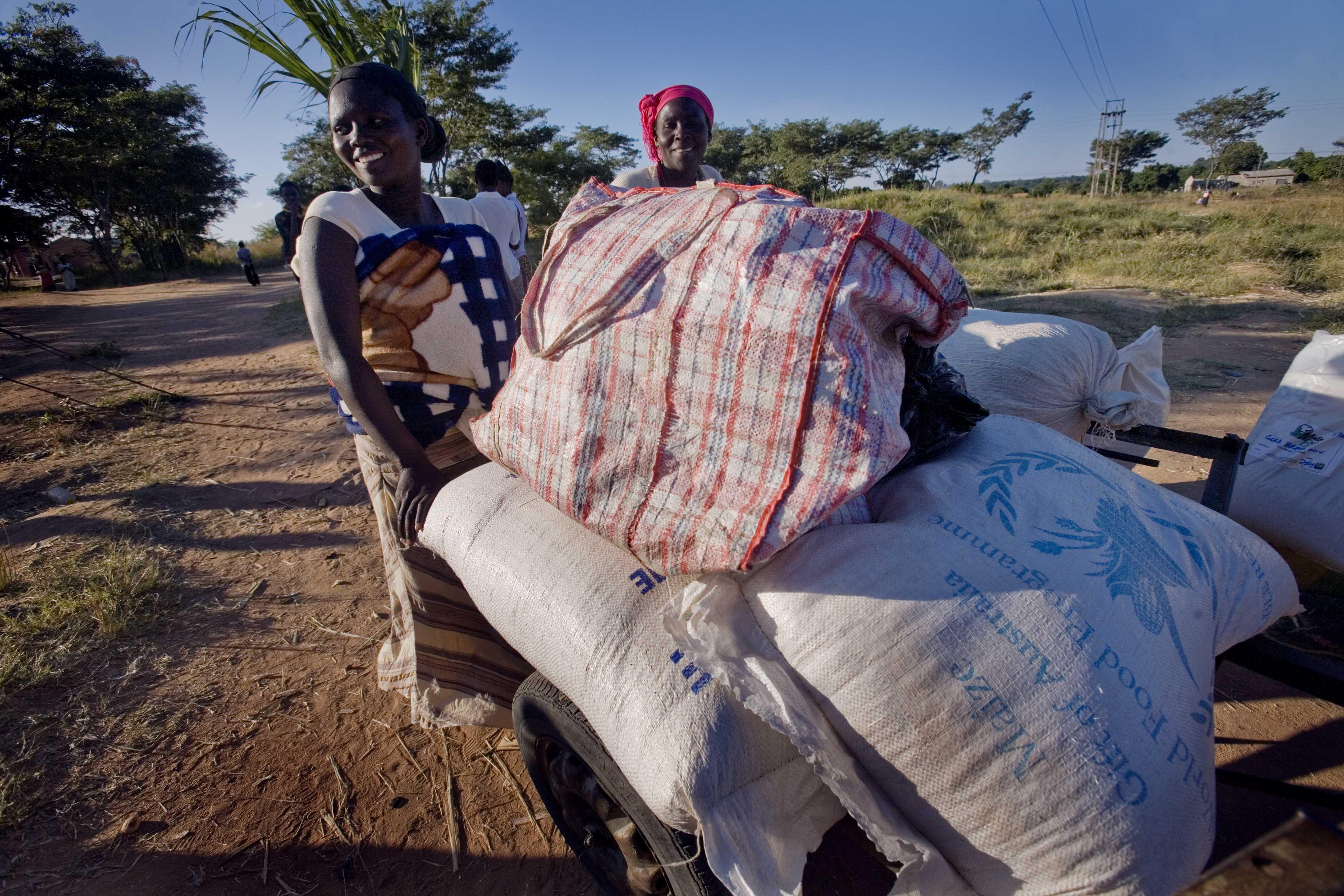
Women wheel their food rations, that have been donated by the Australian Governemnt, at a food distirbution point in Harare, Zimbabwe on the 23rd April, 2009.

In the 21st century, we live in a world regularly affected by emergencies, often with severe local and regional health consequences. In the context of climate change and corrosive political instability in many world regions, it is probable that we will see an increase in disasters or their resulting health impacts.1 By the end of 2016, 65.6 million people worldwide were forcibly displaced from their homes. The record number includes 22.5 million refugees, 2.8 million asylum seekers and 40.3 million people living in internal displacement (ID).2,3

The number of ID has nearly doubled since 2000 and has increased sharply over the last five years. For displaced populations health care has traditionally focused on maternal and child care and treatment of communicable diseases. While these traditional health priorities remain relevant, demographic and lifestyle changes are increasing the burden of noncommunicable diseases (NCD) in populations worldwide. This epidemiological shift poses new challenges for humanitarian agencies and host country governments. NCD accounted for 19% to 46% of mortality in the top 5 source countries for refugees in 2015.4

In the absence of regular care and access to medications, NCD may result in complications requiring costly specialised care and have the potential to seriously compromise both quality of life and life expectancy, since the risk of exacerbating pre-existing conditions or suffering acute complications, is two to three times higher than it was beforehand. In the initial response of an emergency management of NCDs should focus on treatment of life-threatening or severely symptomatic conditions. During the recovery phase after emergencies or during protracted emergencies such as long-term settlements, the management of NCDs should be expanded to include management of sub-acute and chronic presentations. WHO recognizes the growing problem of NCDs, and in 2013 introduced the Package of Essential Noncommunicable Disease Interventions, or WHO PEN, a set of tools to early detect and manage cardiovascular diseases, diabetes, chronic respiratory diseases and cancer in order to prevent life-threatening complications, such as myocardial infarction, stroke, kidney failure, amputations and blindness.5

There is a need to identify challenges and gaps in order to create a more holistic approach to effective planning, implementation and delivery of health care services to displaced populations with chronic NCD.

_________________________

References

  1. Demaio, A., Jamieson, J., Horn, R., de Courten, M., & Tellier, S. (2013). Non-Communicable Diseases in Emergencies: A Call to Action. PLoS Currents, 6, 5-23.
  2. UNHCR (2017). Global Trends – Forced Displacement in 2016. United Nations High Commissioner for Refugees, Geneva.
  3. IDMC (2017). Global Report on Internal Displacement. Internal Displacement Monitoring Centre, Geneva.
  4. Sethi, S., Jonsson, R., Skaff, R., & Tyler, F. (2017). Community-Based Noncommunicable Disease Care for Syrian Refugees in Lebanon. Global Health: Science and Practice, 5(3), 495–506.
  5. WHO (2010).Package of Essential Noncommunicable (PEN) Disease Interventions for Primary Health Care in Low-Resource Settings. World Health Organization, Geneva

_________________________

Ana Pinto de Oliveira
2nd year Public Health Resident
ACES Arco Ribeirinho, Barreiro, Portugal

Catarina Neves Oliveira
Public Health Specialist
ACES Arco Ribeirinho, Barreiro, Portugal

(As published in EuroNews #13)

EuroNet MRPH logo with the full name of the network, European Network of Multidisciplinary Residents in Public Health.

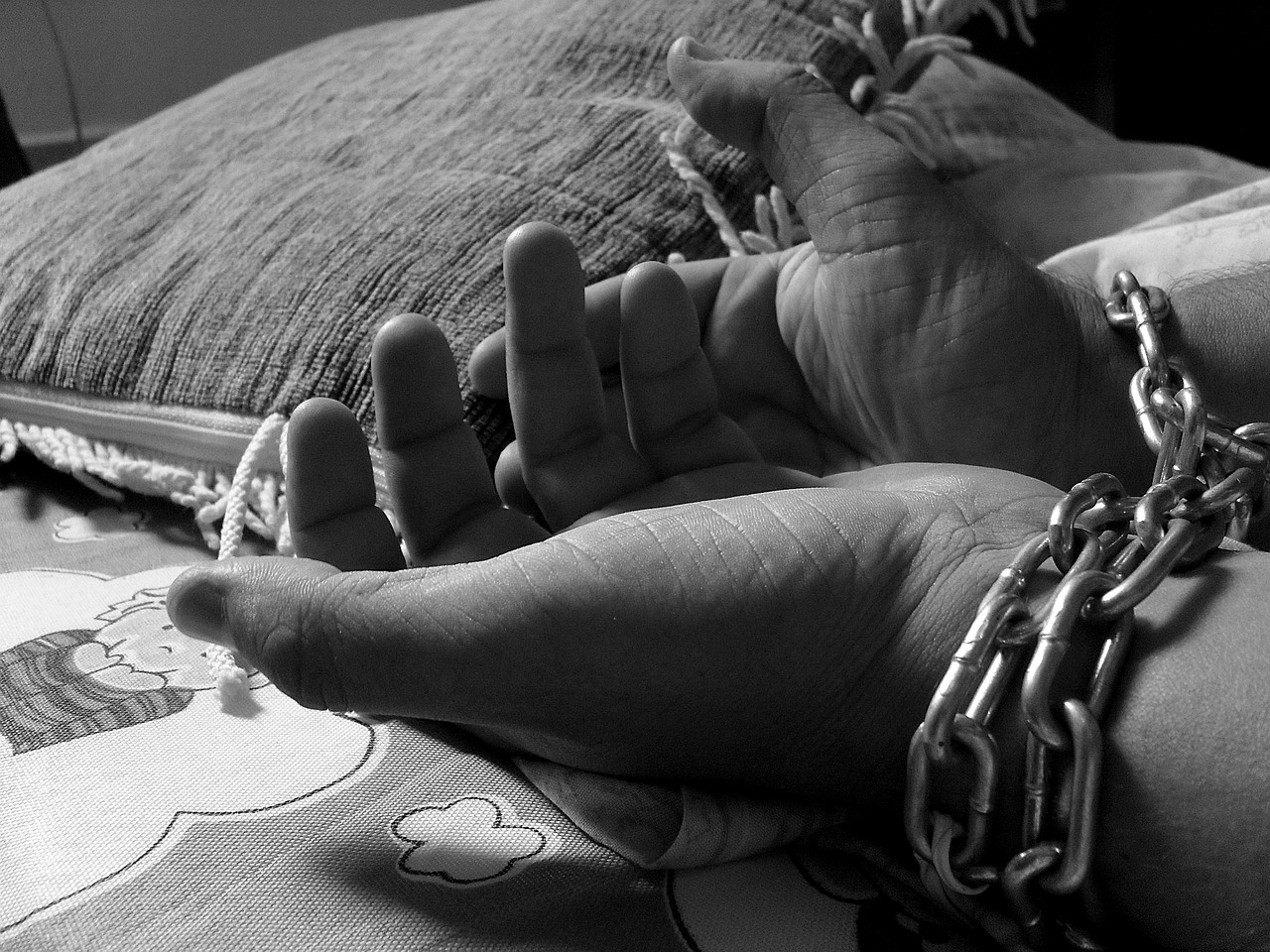
Modern slavery

(Pixabay)

Modern slavery is the illegal trade of human beings for the purpose of commercial sexual exploitation or reproductive slavery, forced labour, or a modern-day form of slavery.

British and foreign nationals can be trafficked into, around and out of the UK. Children, women and men can all be victims of modern slavery. Reasons for trafficking of individuals include sexual exploitation, domestic servitude, forced labour including in the agricultural, construction, food processing, hospitality industries and in factories, criminal activity including cannabis cultivation, street crime, forced begging and benefit fraud, and organ harvesting. It distinguishes human trafficking as a crime against an individual, and smuggling as a crime against the state where there are illegal border crossings.

There are an estimated 13,000 modern slaves in the UK. To tackle modern slavery in the UK, the Modern Slavery Act 2015 has been introduced. This is the second piece of anti-slavery legislation in 200 years. The Act gives law enforcement the tools to fight modern slavery, ensure perpetrators receive suitably severe punishments for these crimes, and enhances support and protection for victims. The UK government has a scheme of assessment and support for trafficked people, but currently only a small proportion are getting this support; approximately 20-25% of victims.

Those who present in healthcare settings may have little or no engagement with any other services. Health professionals therefore have an important role to play in identifying and caring for trafficked people and in referring them for further support and by being able to support them to report to the appropriate authorities.

As part of this, Public Health England is rolling out training to the PHE workforce on identifying and supporting victims of modern slavery, of which some of the lessons are here to further raise awareness.

The relevance to public health is multitude and includes long term multiple injuries, mental health, physical health, sexual trauma, sexually transmitted infections, late access to maternity care, unplanned pregnancies, disordered eating or poor nutrition, self-harm, dental pain, fatigue, post-traumatic stress disorder, psychiatric or psychological distress, back pain, stomach pain, skin problems, headaches, and dizzy spells.

As public health professionals and as citizens in our countries we all have a responsibility to look for the signs of modern slavery and to seek support for these vulnerable people. It is usually a combination of triggers, an inconsistent story and a pattern of symptoms that may cause you to suspect trafficking. Signs to look for in an individual include being accompanied by someone who is controlling, being withdrawn, submissive, vague, inconsistent, old and untreated injuries, no registration with a GP, nursery, or school, frequent movements of location, neglect, or poor English. Importantly, trafficked people may not self-identify as victims of modern slavery, can feel fear or shame in revealing their experiences or may be limited through language barriers. Support and advice is offered by the Salvation Army for adults and local safeguarding leads for children in the UK.

As public health professionals we have a responsibility to know the signs of modern slavery, and know where to go, and to share and inform our wider workforce and colleagues who work directly with the public.
_________________________

References

  1. Modern Slavery Act 2015. Accessed on 11/10/2017 http://www.legislation.gov.uk/ukpga/2015/30/contents/enacted
  2. Department of Health, 2015. Supporting victims of modern slavery through healthcare services. Accessed on 11/10/2017 https://www.gov.uk/government/news/supporting-victims-of-modern-slavery-through-healthcare-services
  3. Public Health England. 2017. Human trafficking: migrant health guide. Accessed on 11/10/2017 https://www.gov.uk/guidance/human-trafficking-migrant-health-guide
  4. department of Health. 2015. Identifying and supporting victims of modern slavery: guidance for health staff. Accessed on 11/10/2017 https://www.gov.uk/government/publications/identifying-and-supporting-victims-of-human-trafficking-guidance-for-health-staff/identifying-and-supporting-victims-of-modern-slavery-guidance-for-health-staff

_________________________

Karen Buckley
Public Health Specialty Registrar, UK

(As published in EuroNews #13)

http://emcrit.org/pulmcrit/demystifying-the-p-value/

Lies, damned lies, and statistics. Hacking the P-value.

In order to bring more out of the effort that are invested in the EuroNet Newsletters, we will also be featuring articles as blog posts on a regular basis, so that people that don’t read the entire newsletter all at once (there might be a few;)) can still read (most of) it across time.

Also, don’t forget that the next issue is in the making and you can be part of it!

Hoping to inspire you, take a read at Damiano Cerasuolo’s article “Lies, damned lies, and statistics. Hacking the P-value“, from the last Euronet Newsletter:

In chapters from ‘my Autobiography’ Mark Twain says: “there are three kinds of lies: lies, damned lies, and statistics.” [1] Twain’s statement about the use and the misuse of statistics couldn’t have been more farsighted. On February 2016, 177-year-old American Statistical Association (ASA) released a statement [2] (followed by a scientific publication [3]) issuing guidelines of p value to conduct and interpret quantitative science. P-value is misused. P-value is usually used to test (and possibly dismiss) the “null hypothesis”. If the statistical test of two groups or pair of characteristics results in a P-value below 0.05, the null hypothesis is usually dismissed (depending on the level of significance intended): there is a relationship between the two groups (or the two characteristics) that is not attributable to mere chance. On more practical basis, we want to test the association between two factors, for example age and injectable drug use in two comparable groups issued from a specific population. If our statistical test results in a p-value of less than 0.05, the association between the two factors is usually statistically significant. However, a significant P-value doesn’t provide any information about the strength of the relationship between the two factors, neither about its direction. Criticism of the p-value is not new. On February 25th, 2015, the journal Basic and Applied Social Psychology issued an editorial [4] banning P-values and confidence intervals from all future papers. Undoubtedly these drastic steps could seem counterproductive but they have the merit to start the debate. Without proposing a ban of P-value results, the American Statistical Association observes “good statistical practice is an essential component of good scientific practice”. Meanwhile its executive director, Ron Wasserstein, explains that “wellreasoned statistical arguments contain much more than the value of a single number and whether that number exceeds an arbitrary threshold. The ASA statement is intended to steer research into a ‘post p<0.05 era’”. In other words, P-value should not substitute scientific reasoning but it should come together with numerical and graphical summaries of data, interpretation and understanding of the phenomenon under study and its results in context. Wrong P-value reporting is helping “bad” science being published: without information and with only P-value results, nonsignificant data can easily make its way through publication. Stanford metaresearcher John Ioannidis and colleagues found an increasing number of articles reporting P-values over time[5]. Almost all articles and abstracts with P-values reported statistically significant results while confidence intervals, Bayes factors, or effect sizes were rarely mentioned. The explanation to this phenomenon has already its own name: publication bias (for statistical significance). Daniël Lakens in a 2015 paper published by PeerJ [6] defines publication bias as ‘tendency to publish statistical significant results, both because authors are more likely to submit these results and reviewers and editors to evaluate more positively these manuscripts’. In the way publication bias sacrifices reproducibility (the ability to recompute results) and replicability (the chances other experimenters will achieve a consistent result) to publication itself[7], addressing this issue is urgent. Statistics are a core part of Public Health and although P-value debate could be perceived as “pure statistics”, it is not. Public Health ranges from epidemiology to hygiene, from biostatistics to health promotion. It is not a unitary, monolithic discipline and it requires a multidisciplinary approach to the “P-value gate”, in order to provide the best answers to each subdiscipline. Specialists in public health should join the debate, proposing solutions.

Damiano Cerasuolo

Euronet France

———

[ 1 ] https://en.wikipedia.org/wiki/Lies,_damned_lies,_and_statistics

[2] http://www.amstat.org/newsroom/pressreleases/P-ValueStatement.pdf

[3] Ronald L. Wasserstein , Nicole A. Lazar. The ASA’s statement on p-values: context, process, and purpose. The American Statistician. http://d x.doi.org/10.1080/00031305.2016.1154108

[4] David Trafimow & Michael Marks (2015) Editorial, Basic and Applied Social Psychology, 37:1, 1-2, DOI: 10.1080/01973533.2015.1012991

[5] Chavalarias D, Wallach J, Li A, Ioannidis JA. Evolution of Reporting P Values in the Biomedical Literature, 1990-2015. JAMA. 2016;315(11):1141-1148. doi:10.1001/jama.2016.1952.

[6] Lakens D. (2015) On the challenges of drawing conclusions from p-values just below 0.05. PeerJ3:e1142 https://doi.org/10.7717/peerj.1142

[7] Jeffrey T. Leek and Roger D. Peng Opinion: Reproducible research can still be wrong: Adopting a prevention approach. PNAS 2015 112 (6) 1645-1646; doi:10.1073/pnas.1421412111

blog picture from:http://emcrit.org/pulmcrit/demystifying-the-p-value/