EuroNet MRPH logo with the full name of the network, European Network of Multidisciplinary Residents in Public Health.

Colorectal cancer screening: a Public Health priority in Portugal

In Portugal, as in the rest of Europe, the incidence of cancer has been steadily increasing at a rate of about 3% per year.1,2 This increase is mainly related to the aging of the population and with changes in habits and lifestyles.3

According to the 2018 edition of Health at a Glance: Europe report (Organization for Economic Co-operation and Development – OECD), Portugal has one the lowest avoidable mortality rates in Europe, reflecting greater efficacy in the treatment of patients.4

However, cancer disease remains the second leading cause of death in Portugal after cardiovascular disease5,6, and the leading cause of premature death (defined as death before the age of 70).7

Colorectal cancer is currently one of the major forms of cancer in the world, with significant mortality and morbidity associated. In general, it is more common in older people (most patients are over 60 years at the time of diagnosis, being unusual in people with less than 40 years), in males and in urbanized regions.

According to the latest data from the International Agency for Research on Cancer (World Health Organization), colorectal cancer is currently the third most frequent type of cancer in the world and the second largest cause of death by cancer.

In Europe, it is the second most common type of cancer and the second deadliest. In Portugal, it is the second most frequent type of cancer in males (18,8% of the new cases, after prostate cancer) and females (16,2% of the new cases, after breast cancer) but ranks first in the most prevalent types of cancer for both genders.8

In 2018, Portugal has diagnosed 10 270 new cases of colorectal cancer (more than 20 cases per day), corresponding to 17,6% of the total number of new cases of cancer in the country.8 Despite the increasing therapeutic success in oncological disease, the number of deaths caused by this type of cancer has been increasing, especially in the most advanced ages.5,6 It is currently the second most deadly type of cancer (following lung cancer), accounting for approximately 4214 deaths (about 12 individuals per day)8 and about 12 years of potential life lost.9

The reduction of the mortality and morbidity associated with oncological disease depends mainly on preventive strategies and the early detection of the disease. However, the early stages of colorectal cancer are usually asymptomatic or produce little symptoms. The first manifestation of disease is often the asymptomatic loss of small amounts of blood in the stool, not visible to the naked eye, making the early detection difficult. For this reason, many countries now offer systematic population screening programs.

Most cancers of the colon and rectum develop from polyps or adenomas. These lesions are benign but have a significant risk of developing dysplasia, and therefore are considered pre-malignant. The screening programs aim to detect cancer in its initial phase but also to identify and remove these precursor lesions.

Due to the increasing number of cases, the screening for colorectal cancer is now considered a Public Health priority in Europe, and Portugal makes no exception.

Although the significance of the colorectal cancer screening program is unanimously proven (it has the potential do reduce mortality rates by at least 20%)3, there is no international consensus on the methodology that should be used. The strategies vary according to the human and financial resources available and the characteristics of each country. The most validated diagnostic exams currently in use are fecal occult blood tests (FOBT), rectosigmoidoscopy and complete colonoscopy. The fecal immunochemical test (FIT) is currently the most commonly used primary screening test worldwide and has been shown to contribute to increased participation rates, with appropriate sensitivity and cost-effectiveness10.

Portugal follows the European guidelines and has been developing the foundations for the implementation of a comprehensive population screening program. Thus, in Portugal, screening should be offered to the asymptomatic population aged between 50 and 74 years. As in most European countries, the primary screening test is the FIT, performed every 2 years. The convocation of patients for screening is ensured through their General Practitioners11.

In case of a positive result in the FIT (cut off of 100 ng/mL), the patient should be referred for colonoscopy, under informed consent and within the scope of the Portugal National Health Service, in an average period of no more than 30 days.

The referral algorithm after colonoscopy varies depending on the result of the exam and is performed according to the recommendations of the European Society of Gastrointestinal Endoscopy (ESGE)11.

Population-based screening programs for cancer have evolved significantly in Portugal during the last few years, with expansion of the geographic coverage, increased numbers of patients screened, and significant improvement in adherence rates. However, screening for colorectal cancer continues to present low countrywide coverage (about 19%)1, with significant regional asymmetry.

Portugal is currently making efforts to extend colorectal cancer screening throughout the country and to create the channels to adequately screen all the eligible individuals. As a result of the acknowledgement as a Public Health priority and the ongoing efforts, it is expected that in a few years, Portugal will be able to effectively reduce this problem.

Fábio Ricardo Elias Sousa Gomes

PH resident Aveiro, Portugal

References:

  1. Portugal. Ministério da Saúde. Direção-Geral da Saúde. Programa Nacional para as Doenças Oncológicas 2017. Lisboa: Direção-Geral da Saúde; 2017.
  2. Portugal. Ministério da Saúde. Direção-Geral da Saúde. Direção de Serviços de Informação e Análise. A Saúde dos Portugueses 2016. Lisboa: Direção-Geral da Saúde; 2016.
  3. Portugal. Ministério da Saúde. Direção-Geral da Saúde. Relatório de Monitorização e Avaliação dos Rastreios Oncológicos 2016. Lisboa: Direção-Geral da Saúde; 2017.
  4. Organisation for Economic Co-operation and Development. OECD Health Division. Health at a Glance: Europe 2018. Paris: OECD Publishing; 2018.
  5. Portugal. Instituto Nacional de Estatística. Causas de morte 2016. Lisboa: Instituto Nacional de Estatística; 2018.
EuroNet MRPH logo with the full name of the network, European Network of Multidisciplinary Residents in Public Health.

A National Immunisation Information System in Italy

The Ministry of Health has recently established a National Immunisation Information System (IIS), through the Ministerial Decree of 17 September 2018 published in the Gazzetta Ufficiale n. 257/20181. The aim of the electronic registry is to facilitate estimation of vaccine coverage, monitor the nation-wide implementation of the National Immunisation Plan (NIP) throughout the national territory; and to provide information both to the international bodies and for administrative tasks.

The need to create a single IIS from 21 regional registers was agreed upon in the State-Regions Conference of 19 January 2017, and highlighted on the National Immunisation Plan 2017-20192. The Ministerial Decree of 17 September 2018 defines the information that all Italian regions and autonomous provinces must provide to the Ministry of Health, including:

1) vaccinated individuals;

2) individuals to be vaccinated;

3) subjects already immunised after natural infection;

4) subjects temporarily or permanently exempted for health reasons;

5) doses and timing of administrated vaccines.

The IIS should be linked to the national databases of communicable diseases and adverse events.

The national IIS will aggregate individual records from the regional registries and, through a more precise estimate of vaccination coverage, will improve the monitoring activities of the programs in place, and identify areas where extraordinary interventions are required. Furthermore, in order to maintain updated regional vaccine registries, the national IIS will make available to the Regions information related to citizens who will modify their residence. The Ministry of Health will have access only to anonymised information. The first upload of files from the regional authorities is expected by April 2019.

The last update of Italian regional IISs characteristics and functionalities are presented elsewhere3.


Vincenza Gianfredi

PH resident,  University of Perugia, Italy


References:

1. Ministero della Salute [Ministry of Health]. Decreto del Ministero della Salute: Istituzione dell’Anagrafe nazionale vaccini [Decree of Ministry of Health: Establishment of a National Immunisation Information System] 17 September 2018 published in the Gazzetta Ufficiale n. 257/2018

2. Ministero della Salute [Ministry of Health]. Piano Nazionale di Prevenzione Vaccinale 2017-2019 [National Plan of Vaccination Prevention 2017-2019]. 3 Apr 2018. Rome: Ministry of Health; 2018. Available from: http://www.salute.gov.it/imgs/C_17_pubblicazioni_2571_allegato.pdf

3. D’Ancona F, Gianfredi V, Riccardo F, Iannazzo S. Immunisation Registries at regional level in Italy and the roadmap for a future Italian National Registry. Ann Ig. 2018 Mar-Apr;30(2):77-85. doi: 10.7416/ai.2018.2199.

EuroNet MRPH logo with the full name of the network, European Network of Multidisciplinary Residents in Public Health.

Perspectives: Public Health Workforce Development in Slovenia and Wider

Introduction

History of modern society is riddled with public health breakthroughs. Advances based on the notion of prevention of disease and promotion of good health allowed for better living conditions, safe transportation, diverse and nourishing diets, and numerous other standards of developed societies most of us take for granted.

In retrospect, we praise much of those advances as prototypal public health measures. Did ingenious minds behind those actions perceive themselves as public health pioneers? One might even argue that they needn’t identify as such (1). John Snow, Louis Pasteur and Robert Koch transformed the world through their work and for that they only had to subscribe to the ideal of public health – not to the profession. They were inventors that spawned a health revolution. But times have changed. We are faced with globalised world, global warming and regular political tantrums with possibly perilous consequences (2). Nations of the world are putting health high on the agenda with concerted actions such as Millennium Development Goals and Sustainable Development Goals (3). Further advancement of public health demands a different toolset and approaches from those of past eras. This holds true for public health practice on international as well as on an national or even local level (4). Modern challenges of public health require a workforce with capacities to address and overcome them (5,6). Public health practitioners of today and tomorrow need to be leaders as much as scientists and inventors (7). Development of such a workforce is the common theme of following reflections provided by a group of professionals with deep insight into education and training practices in public health.

The collection of reflections starts with an overview of current status and recent initiatives in public health workforce development in the European region written by Robert Otok, Katarzyna Czabanowska, and John Middleton who are all active in Association of Schools of Public Health in the European Region, a key independent European organisation dedicated to strengthening the role of public health by improving education and training of public health professionals for both practice and research.

Alberto Mateo, president of the European Network of Medical Residents in Public Health, further reflects on the topic of international cooperation and on importance of internationally harmonised curricula in public health education. Afterwards authors focus on analysing and reflecting on public health workforce development in Slovenia. Tit Albreht from National Institute of Public Health addresses the challenge of diversification of public health workforce in Slovenia. In his commentary, he stresses the importance of standard education as well as continuous professional development. Recognising the importance of having a modern and comprehensive public health educational programme for medical residents, Lijana Zaletel Kragelj from Faculty of Medicine at University of Ljubljana provides us with a summary of the transformation of Slovenian public health specialty training programme from its conception and offers us with a glimpse of what we can expect in near future. Ivan Eržen from National Institute of Public Health completes the overview of graduate and postgraduate programmes which offer public health topics in their curriculums. Acknowledging the limitations of current landscape of educational opportunities in public health he points out the need for a school of public health which has yet to be established in Slovenia. In the following commentary, Marjan Premik, one of the main protagonists of establishment of school of public health in Slovenia, introduces arguments for school of public health as an integral part of health care system. Putting the emphasis on the wider public health workforce, Mitja Vrdelja from National Institute of Public Health, gives his view on working in public health in Slovenia from a communications expert perspective and complements reflections on workforce developments from previous authors with challenges that could be solved with appropriate education and training of public health workforce. Current Perspectives are rounded up with a playful note by a discussion I had with Damir Ivanković, a former public health resident from Croatia who is presently a researcher at the Academic Medical Center in Amsterdam. Since both of us are a young public health professionals from relatively small countries we take a look at benefits and drawbacks of starting a career in such an environment.

Matej Vinko
National Institute of Public Health of Slovenia, Ljubljana, Slovenia

Keep reading the article at:
http://www.nijz.si/sites/www.nijz.si/files/uploaded/vinko_jz_03-06.pdf

References

  1. Nijhuis HG, van der Maesen LJ. The philosophical foundations of public health: an invitation to debate. J Epidemiol Community Health. februar 1994.;48(1):1–3.
  2. Lomazzi M, Jenkins C, Borisch B. Global public health today: connecting the dots. Glob Health Action. 2016.;9:28772.
  3. Sachs JD. From Millennium Development Goals to Sustainable Development Goals. The Lancet. 9. junij 2012.;379(9832):2206–11.
  4. Birt CA, Foldspang A, Otok R. Meeting the population health challenge: what should you know, and what should you be able to do? Eur J Public Health. oktober 2018.;28(5):789–90.
  5. Bjegovic-Mikanovic V, Foldspang A, Jakubowski E, Müller-Nordhorn J, Otok R, Stjernberg L. Developing the public health workforce. Eurohealth Inc Eur Obs. 2015.;21(1):24–7.
  6. Collyer TA. Three Metaphors to Aid Interdisciplinary Dialogue in Public Health. Am J Public Health. 25. september 2018.;e1–4.
  7. Czabanowska K, Rethmeier KA, Lueddeke G, Smith T, Malho A, Otok R, in sod. Public health in the 21st century: working differently means leading and learning differently. Eur J Public Health. december 2014.;24(6):1047–52.

As published in Revija Javno zdravje

EuroNet MRPH logo with the full name of the network, European Network of Multidisciplinary Residents in Public Health.

Treatment of HIV and viral hepatitis in the prison population

Access to health services in the prison system is conditioned by legal barriers, social marginalization and stigma which can increase infectious diseases among the prison population1.

The prison population is different from other populations and it’s in a situation of increased vulnerability. There are several factors that contribute to this, mainly: more exposure to violence; transmission of infectious diseases; increased unprotected sexual, confinement and overpopulation; difficulties in the patients flow up1.

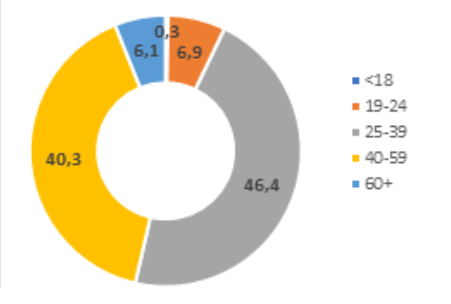
The number of prisoners in Portugal is about 14.000 on 2017, for a theoretical capacity of approximately 13.000, generating, thus, a panorama of indisputable overcrowding of the prison system. In addition there is also a high turn-over of inmates2. The most relevant characteristics of Portuguese prisoners are summarized in Table 1 and Figure 1.

Figure 1. Prisoners, by age. Portugal 20172

In order to achieve the goals to 2020 outlined on Onusida/Unaids and reduce the morbimortality of viral hepatitis, the General Directorate for Reinsertion and Prisional Services (Direção-Geral da Reinserção e dos Serviços Prisionais) and 28 hospitals of the National Health Service (SNS) will sign a protocol for the treatment of human immunodeficiency virus (HIV) and viral hepatitis infections in the prison population, extending to the whole country the pilot project that runs between the Hospital de São João in Porto and the prison of Custóias.

This pilot project started on january 2017, in order to promote appropriate diagnostic procedures and to provide medication to cure hepatitis C.

This initiative enabled the elimination of Hepatitis C in prisons in Custóias and Santa Cruz do Bispo and is now being expanded geographically and to include other viral hepatitis and HIV4.

Table 1. Characteristics of the Portuguese Prison Population, Portugal, 20172,3

Up until now, prisoners were subject to security procedures when traveling to healthcare facilities, which caused constraints to clinical observation. From now on they will be treated in the prison itself. This new model will allow physicians – infecciologists, gastroenterologists and internists – to move to prisons to care for the HIV-infected, hepatitis B and C prison population of 45 prison facilities across the continent. In addition, screening will be done at the entrance, during and at the end of the sentence.

Thus, it is expected that this protocol will shape a new approach to health care for infectious diseases in prisons.

Tiago Carvalho

Public Health Resident, Portugal

José Rodrigues

Public Health Resident, Portugal

References:

  1. Sousa KAA, Araújo TME, Teles SA, Rangel EML, Nery IS, Sousa KAA, et al. Fatores associados à prevalência do vírus da imunodeficiência humana em população privada de liberdade. Rev da Esc Enferm da USP. 2017 Dec 18 [cited 2018 Aug 24];51(0)
  2. PORDATA- Justiça e Segurança: Prisões [Internet]. [cited 2018 Aug 14]. Available from: https://www.pordata.pt/Subtema/Portugal/Pris%C3%B5es-60
  3. Direção-Geral de Saúde. Infeção VIH e Sida- Desafios e estratégias. Lisboa: Direção Geral da Saúde; 2018
  4. Hospital de São João- Projeto do São João de eliminação da Hepatite C nas prisões replicado a todo o país [Internet]. [cited 2018 Aug 31]. Available from: http://portal-chsj.min-saude.pt/frontoffice/pages/16?news_id=537
EuroNet MRPH logo with the full name of the network, European Network of Multidisciplinary Residents in Public Health.

The health we breath: Porto air quality

Worldwide, outdoor (ambient) air quality is a serious threat to health, estimated to cause millions of premature deaths due to cardiorespiratory diseases and lung cancer. Affected regions include both urban and rural areas. In 2016, the majority of the world population was living in areas in which maximum concentration of air pollutants were not met (1). In what concerns to sources, anthropogenic factors are the most relevant to negative effects of ambient polluted air (2).

Since 2013, the International Agency for Research on Cancer has defined polluted ambient air and particulate matter (PM) (separately) as carcinogenic to humans (group 1). In addition to strong evidence that polluted air cause lung cancer, there is also an increased risk of bladder cancer. Despite local variations, these conclusions are valid globally (3).

It is expected that in 2050, two-thirds of world population will be living in cities. By converging all opportunities and services in one area, overpopulated cities are also a challenge in terms of health risks and hazards. Creating and transforming sustainable cities implies intersectoral work, particularly governors and policymakers. In order to monitor and recognise success, World Health Organization (WHO) developed core health indicators for different sectors, including one in urban air quality. The indicator evaluates annual average of 2.5 and 10 concentrations in relation with WHO air-quality guidelines (4).

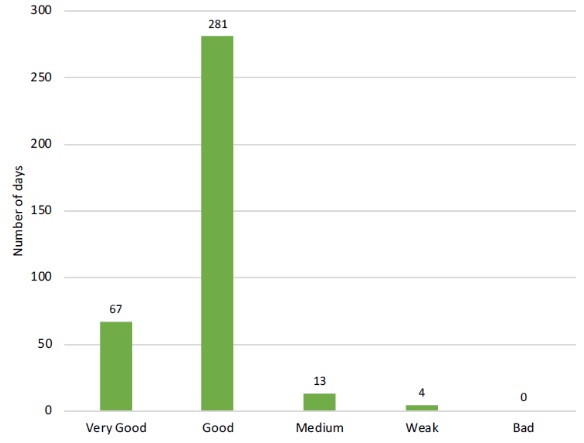
In 2016, Portugal had 91,3% of days classified as very good/good in terms of air quality index (IQAr) by the Portuguese Environment Agency. In the same year, Porto Litoral (coast) had 95,3% days with the same classification (Figure 1) (5). This index includes measures on five air polluted substances such as PM, ozone (O3), nitrogen dioxide (NO2), sulfur dioxide (SO2) and carbon monoxide (CO) (6).

Data on polluted air concentrations of 2.5 is provided by the WHO Global Observatory, including data on 190 countries. The Portuguese 2016 annual mean concentration of 2.5 was 8,1 µg/3, meeting WHO guidelines of lower than 10 µg/3 (7) (8). In the same year, the annual mean concentration of 2.5 (204 days of validated data) was 2.9 µg/3 in Porto (Sobreiras – Lordelo do Ouro station) (9). Data on both country and city levels of 10 was not available in the same sources. While Porto results are suitable so far, the predictions of research data using modelling methods are not optimistic. Even if precursor emissions and population remain constant, Porto will be the district most affected concerning 10 high concentration days and related health impact in 2100 (10).

Though in 2016, Portugal and Porto results on 2.5 met WHO guidelines, climate change and inaction specially on anthropogenic factors will be responsible for worse scenarios with serious consequences to human health.

Figure 1. Porto Coast Air Quality Index 2016 (adapted from Portuguese Environment Agency)

_________________________

References

  1. World Health Organization. Ambient (outdoor) air quality and health [Internet]. Fact sheets. 2018. Available from: http://www.who.int/news-room/factsheets/detail/ambient-(outdoor)-air-quality-and-health
  1. World Health Organization. Ambient air pollution: Pollutants. Air Pollution; Available from: http://www.who.int/airpollution/ambient/pollutants/en/)
  1. World Health Organization. IARC: Outdoor air pollution a leading environmental cause of cancer deaths; Available from: http://www.iarc.fr/en/mediacentre/iarcnews/pdf/pr221_E.pdf
  1. World Health Organization. Health Indicators of sustainable cities in the Context of the Rio+20 UN Conference on Sustainable Develpment. 2012; Available from: http://www.who.int/hia/green_economy/indicators_cities.pdf?ua=1
  1. Fernandes AC, Guerra MD, Ribeiro R, Rodrigues S. Relatório do Estado do Ambiente 2018. Agência Port do Ambient. 2018; Available from: https://sniambgeoviewer.apambiente.pt/GeoDocs/geoportaldocs/rea/REA2018/REA2018.pdf
  1. Portuguese Environment Agency. Air quality; Available from: (https://qualar.apambiente.pt/qualar/index.php?page=5&subpage=6).
  1. World Health Organization. Concentrations of fine particulate matter (PM2.5); Available from: http://apps.who.int/gho/data/node.sdg.11-6-viz?lang=en
  1. Lodgejr J. Air quality guidelines. Global update 2005. Particulate matter, ozone, nitrogen dioxide and sulfur dioxide. Environ Sci Pollut Res. 1996; Available from: http://apps.who.int/iris/bitstream/handle/10665/69477/WHO_SDE_PHE_OEH_06.02_eng.pdf?sequence=1
  1. Portuguese Environment Agency. Station statistics; Available from: https://qualar.apambiente.pt/qualar/index.php?page=4&subpage=4).
  1. Dias D, Tchepel O, Carvalho A, Miranda AI, Borrego C. Particulate matter and health risk under a changing climate: Assessment for Portugal. Sci World J. 2012; Available from: https://www.ncbi.nlm.nih.gov/pmc/articles/PMC3361258/)

_________________________

Mariana Perez Duque
Public Health Resident
Public Health Unit ACeS Porto Ocidental, ARS Norte, Portugal

EuroNet MRPH logo with the full name of the network, European Network of Multidisciplinary Residents in Public Health.

A crossroads for Public Health in Ireland: Slaintecare and proportionate universalism

This July the UK celebrated 70 years of the National Health Service which famously entitled healthcare to all “from cradle to grave”. Unfortunately progress on universal healthcare in the post-colonial Irish state has been much slower. In May 2017, a cross-party parliamentary committee produced a 10-year plan for the future of healthcare. Their report was called the “Sláintecare Report” (Sláinte translated from Irish means health) (1). It was ambitious with many recommendations including:

  1. The phasing out of private care in public hospitals
  2. Eliminate charges for access to public hospital care
  3. Reduce drug prescription charges
  4. Universal access to GP care without charge
  5. Expand public hospital capacity
  6. Reduce waiting lists for first outpatient department appointments and hospital treatment

However, progress on implementation has been slow and the signs are that the required funding will not be made available in the next budget. This is not the only barrier to implementation, doctors’ unions including the Irish Medical Organisation have come out against the plan to remove private medical practice from public hospitals (2).

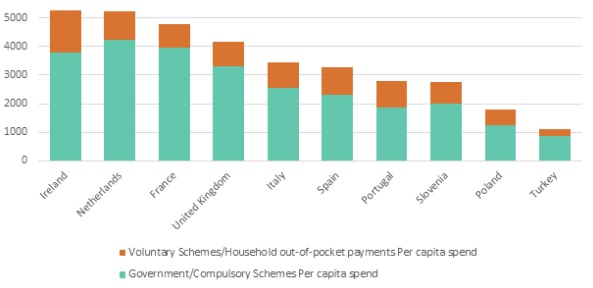
This points to an important aspect within an Irish healthcare system which is the role of private healthcare. Figure 1 shows that amongst Euronet countries for which data is available from the OECD, Ireland has the highest per capita spend on healthcare and the highest spend on voluntary private health care and out of pocket payments (3).

Figure 1. OECD data on per capita spending on health (all functions) of Euronet countries in 2016, based on current prices and current purchasing power parity in US dollars

The Whitehall Studies, led by Sir Michael Marmot, was a prospective cohort study of civil servants in the UK between 1967 and 1988 which examined the relationship between mortality and employment status. They demonstrated that even when controlled for lifestyle factors such as, smoking status, blood pressure, obesity and cholesterol, mortality rates followed a gradient from those of lowest status to those of highest status. For instance, those men in the lowest grade had a mortality rate three times that of the highest grade (4).

This result showing a social gradient in health outcomes has been replicated many times and the idea of “Proportionate Universalism” was coined by Sir Michael Marmot and proposed as a means of addressing this gradient of health inequalities in the “Marmot Review” (5). It describes public health interventions which are aimed at the entire population, universal, but which are proportionally weighted in favour of those in most need.

Proportionate Universalism has shown success in reducing health inequalities in the UK by addressing inequalities in healthcare provision and in the social determinants of health (6). However, it is not clear this means of addressing health inequalities would be sufficient to make a meaningful difference in an Irish context.

The continuum of health need in Ireland is not linear, with a major influence on this based on the marketization of healthcare within the system. Those who can afford Private Health Insurance have better access to hospital consultants and diagnostics, even within the public system (7). On top of this there are further financial barriers in out-of-pocket payments for primary care and prescriptions. Like Julian Tudor Hart described in his paper on the “Inverse Care Law”, those with most need have the least access to services (8).

The two tiered nature of the Irish healthcare system was encapsulated in the name of a book written 10 years ago on the subject called “Irish Apartheid”. If a Proportionate Universalism public health strategy is to be effective in Ireland we must follow the example of our European neighbours and move towards universal healthcare, oppose doctors who wish to protect their private practice and give our support to the spirit of Sláintecare.

_________________________

References 

  1. Shorthall R. Houses of the Oireachtas Committee on the Future of Healthcare Slaintecare Report. Houses of the Oireachtas: Oireachtas; 2017.
  2. Irish Medical Organisation. Irish Medical Organisation Submission to the Independent Review Group on Private Practice in Public Hospitals. Dublin: Irish Medical Organisation; 2018.
  3. Health expenditure and financing: Health expenditure indicators [Internet]. OECD Health Statistics  (database). 2018 [cited 29 July 2018]. Available from: https://www.oecd-ilibrary.org/content/data/data-00349-en.
  4. Marmot MG, Stansfeld S, Patel C, North F, Head J, White I, et al. Health inequalities among British civil servants: the Whitehall II study. The Lancet. 1991;337(8754):1387-93.
  5. Marmot M, Allen J, Goldblatt P, Boyce T, McNeish D, Grady M. Fair society, healthy lives. The Marmot Review. 2010;14.
  6. Egan M, Kearns A, Katikireddi SV, Curl A, Lawson K, Tannahill C. Proportionate universalism in practice? A quasi-experimental study (GoWell) of a UK neighbourhood renewal programme’s impact on health inequalities. Social Science & Medicine. 2016;152:41-9.
  7. Burke SA, Normand C, Barry S, Thomas S. From universal health insurance to universal healthcare? The shifting health policy landscape in Ireland since the economic crisis. Health policy. 2016;120(3):235-40.
  8. Hart JT. The inverse care law. The Lancet. 1971;297(7696):405-12.

_________________________

Christopher Carroll
Specialist Registrar in Public Health Medicine, Ireland

EuroNet MRPH logo with the full name of the network, European Network of Multidisciplinary Residents in Public Health.

Service sanitaire: a first step towards the decompartmentalisation of the French health system?

In September 2018, more than 45 thousand French health students will be involved in the “sanitary service” (service sanitaire). This program has been launched by the French government in January 2018 and it concerns medical, dental, nursing, physiotherapy, and midwifery students; all other health students will be involved from 2019 on. The objective is to train them in prevention and health education, competencies that are now missing from most health training curricula, through the elaboration an implementation of a practical project to the benefit of the population.

The sanitary service responds to the first axe of the national health strategy 2018-2022, which is to develop a prevention and health promotion policy. Throughout three weeks, the students will be trained in public health, project management, prevention, health promotion and they will then have three weeks of hands-on experience in a interdisciplinary team. They will be supported by a pedagogic referent (référent pédagogique) from their university and a proximity referent (référent de proximité) from the structure where they will intervene. The places of intervention will mostly be middle and high schools, but also retirement houses and structures managed by social services.

The biggest challenge for universities, at one month from the beginning of the program, is to provide a quality training and support to the students, in order to respond to the expectations and needs of the structures where they will intervene, the population and the students themselves.

Sources (in French) :

_________________________

Maria Francesca Manca
Public Health Resident, France

EuroNet MRPH logo with the full name of the network, European Network of Multidisciplinary Residents in Public Health.

Pertussis vaccination in pregnancy in Ireland

Between 2011-2017, pertussis notifications in Ireland were most commonly notified in infants and young children. The age specific incidence rate among the 0-5 month age group peaked in 2012 (ASIR 395/100,000) with smaller peaks in 2016 (235/100,000) and 2017 (225/100,000) Between 2012-2017, of all infant cases, 67% were hospitalised and several infant deaths due to pertussis were notified. None of the mothers of these fatal cases were vaccinated during pregnancy.

Vaccination of pregnant women has been shown to be safe and effective in preventing pertussis in infants. Evidence from data published in England1and Spain2 indicates that protection against pertussis is as high as 90% or more in infants whose mothers were vaccinated in pregnancy.

Antenatal care in Ireland is delivered in three ways: either private care through a maternity unity, free public care through a maternity unit or as free combined care between maternity units and general practitioners (GP). Since 2012, pertussis vaccination in pregnancy has been recommended in Ireland and is available free of charge to maternity units and general practitioners.

However, though the vaccine itself is free, all patients still incur a fee for administration. There is also no clarity or definition regarding where the vaccine should be administered, whether by a GP or in the maternity units. This is thought to contribute to the very low vaccine uptake seen. An audit of maternity units conducted in 2013 showed an uptake rate of 6.2% amongst pregnant women in Ireland. This is far lower than the uptake rate in the UK (73%) where pertussis vaccine is available to pregnant women free of charge.

The lack of a defined pathway for administration and full funding of pertussis vaccination in pregnancy represents a key barrier to increasing uptake. Clarifying a pathway of vaccine delivery and reimbursement should be a priority issue for the Irish health service to ensure that vulnerable infants are protected. Pertussis is a vaccine preventable disease and, as such, every effort should be made to prevent further infant morbidity and mortality.

_________________________

References

1 – https://www.ncbi.nlm.nih.gov/pubmed/25037990

2 – http://www.eurosurveillance.org/ViewArticle.aspx?ArticleId=22809

_________________________

Fiona Cianci
Specialist Registrar in Public Health Medicine
Department of Public Health, HSE East, Dublin (Ireland)

EuroNet MRPH logo with the full name of the network, European Network of Multidisciplinary Residents in Public Health.

Residency access in Italy: how did it change?

In Italy, procedures of application in medical residency have been deeply re-elaborated in the last four years. Until 2013, in order to pursue their own careers, young graduate doctors had to choose the University and the affiliated healthcare facility where they wanted to specialize, and take an entree exam there in these structures, through a local competition.

A first fundamental reform took place in 2014, when the introduction of a national competition replaced the hundreds of exams in the different Italian universities. Therefore, candidates were asked to individually choose up to six different branches of medicine, as well as to locate some preferred facilities; after the competition, the Ministry of Education, University and Research (MIUR) issued several national rankings, one for each medical specialization. The examination consisted of a multiple-choice test subdivided into a first general part identical for all, a second one based on three different macro-areas (medical area, surgical area, and area of health services), and a final ten-question test specific to different branches. In the following two years, residency access competitions remained almost unchanged.

Yet, the 2017 edition, albeit being structured along the lines of the previous ones, has been developed following a new regulation adopted by the MIUR on September 6th, with the purpose of streamlining and making the test procedures more transparent. Moreover, access to the different Schools of Specialization is now regulated by an annual national multiple-choice test. This test is the same for all students throughout the country, and it consists of 140 questions about key topics related to Medical School’s programmes, as well as some questions more specific to all the different medical branches.

A single national ranking including all the participants is then drafted based on the test’s scores. Starting from top of the list, each participant doctor who won a place as a resident is contacted in order to let him choose and declare both the preferred school of specialization and the selected city facilities. Each doctor is given the possibility of choosing up to three different kind of residencies, in order of preference. The achievement of high test scores allows to get a good ranking. The final score is calculated by summing the number of correct answers (that are worth 1 point each, while each wrong answer means losing 0.25 a point) to “extra-test” points, represented by University curriculum, which weighs definitely less than it used to in the previous tests ; in fact, now it is less than 7 points – rather than 15 – consisting of: up to 2 points for the degree grade, up to 3 points assigned after the weighted average of university exams’ grades, 0.5 a point per an experimental graduation thesis, and 1.5 points for a previous Ph.D.

Each annual edition of this new modality of residency access has to be specifically addressed by a competition notice published around the month of May.

In conclusion, this new national test was held last November, and, starting from December 4th, the awarded candidate doctors were able to choose the preferred available facilities, in a batch process depending on their score and rank position. The last residents’ allocation was held on December 22nd.

To those who have just started their training activities, all that remains for us to do is to wish you good luck, or if you prefer, buona fortuna!

More details at: MIUR, Italy – www.miur.gov.it

_________________________

Pietro Ferrara
Public Health Resident, University of Campania “L. Vanvitelli”, Naples, Italy

Viola Del Prete
Public Health Resident, University of Campania “L. Vanvitelli”, Naples, Italy

(As published in EuroNews #13)

EuroNet MRPH logo with the full name of the network, European Network of Multidisciplinary Residents in Public Health.

Portuguese seasonal influenza 2017/2018

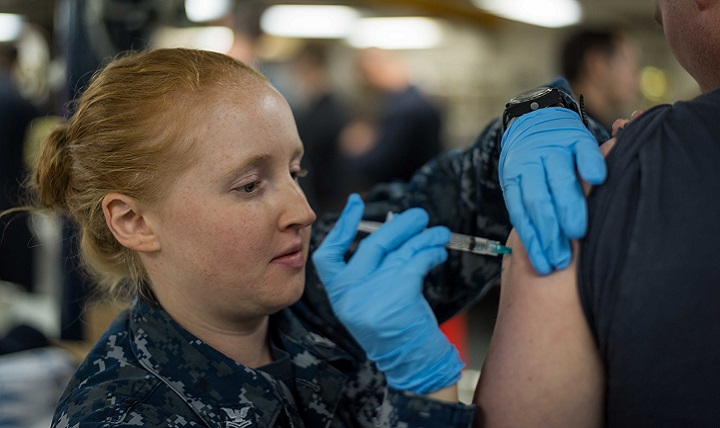
(U.S. Navy photo by Mass Communication Specialist Seaman Cole C. Pielop / Released)

Based on the analysis of influenza virus activity in previous seasons, every year WHO launches a recommendation on the strains to be included in the trivalent and quadrivalent influenza virus vaccine (in March for the Northern Hemisphere and September for the Southern Hemisphere). The need to update this vaccine is due to phenomena of antigenic derivation of the virus that, like the previous issue, obliges the annual study of the vaccine that will present greater coverage. Based on circulating types and subtypes, this year a viral strain A (H1N1)pdm09 identical to A/Michigan/45/2015 was recommended for the trivalent vaccine; a virus strain A (H3N2) identical to A/Hong Kong/4801/2014; and a viral strain B (Victoria strain) identical to B/Brisbane/60/2008.

The quadrivalent vaccine contains the three viruses described above, and in addition another strain of virus B/Phuket/3073/2013. (1) Evaluating sentinel sites until December 2017, there was a dominance of virus B circulating in relation to type A. Of the latter, the most prevalent subtype with about 2/3 of detected cases was A (H3N2), and the remaining third H1N1 subtype. In the same surveillance period last year, type A (H3N2) virus circulated almost exclusively, with high immunity expected; however, the presence of emerging sub-strains and variants that were not covered by this year vaccine could be possible the source of suboptimal coverage. Among B viruses, type B/Yamagata was almost exclusive with 85% and the remaining 15%, type B/Victoria. For the 4th consecutive year, the trivalent influenza vaccine does not correspond to the circulating B virus subtypes, since most of the prevalent B virus strains, Yamagata, are antigenic and genetically related to B/Phuket, which is only included in the quadrivalent vaccine. In this sense, and to increase vaccination coverage of the type B virus in the coming years, ECDC advises the use of the quadrivalent vaccine. (2) (3)

Another factor to be discussed that may be among the causes of lower vaccination coverage is due to the use of eggs in vaccines production. This substrate may interact with different groups of aminoacids present and consequently, alter proteins responsible for the antibody receptors, creating minor viral amendments that may change the effectiveness of the vaccine. (4)

Influenza virus vaccine is the most effective prophylactic measure against influenza severity. Thousands of vaccines are distributed in primary health care, completely free of charge to priority groups such as population over 65 years of age, chronic and immunosuppressed patients, pregnant women, health professionals and other caregivers. During flu season and up to the first week of 2018, approximately 478,291 influenza vaccines were administered in Portugal northern health region. Along with this measure, it is also recommended to conduct respiratory etiquette and hand hygiene, as well as the use of appropriate face masks for patients diagnosed or with symptoms suggestive of influenza. (3) (5) (6)

_________________________

References

  1. World Health Organization. Recommended composition of influenza virus vaccines for use in the 2017- 2018 northern hemisphere influenza season. http://www.who.int. [Online] Março 2, 2017. http://www.who.int/influenza/vaccines/virus/recommendations/201703_recommendation.pdf?ua=1..
  2. European Centre for Disease Prevention and Control. Risk assessment for seasonal influenza, EU/EEA. Estocolmo, Estocolmo, Suécia : s.n., Dezembro 20, 2017.
  3. Administração Regional de Saúde do Norte, Departamento de Saúde Pública. Gripe sazonal – vigilância epidemiológica – Semana 40 de 2017 a semana de 1 de 2018. ARS Norte. [Online] Outubro-Janeiro 2017-2018. www.arsnorte.min-saude.pt.
  4. Paules, Catharine I, et al. Chasing Seasonal Influenza — The Need for a Universal Influenza Vaccine. N Negl J Med. DOI: 10.1056/NEJMp1714916, 2018, Vols. 378:7-9.
  5. Centro Emergências de Saúde Pública. RONDA número 2. Lisboa : Direção Geral da Saúde, 2018.
  6. Direção Geral da Saúde. Vacinação contra a gripe – Época 2017/2018. Lisboa : s.n., Setembro 26, 2017. Orientação nº 018/2017 de 26/09/2017.

_________________________

Mariana Perez Duque
Public Health Resident
West Porto Public Health Unit, Portugal

(As published in EuroNews #13)