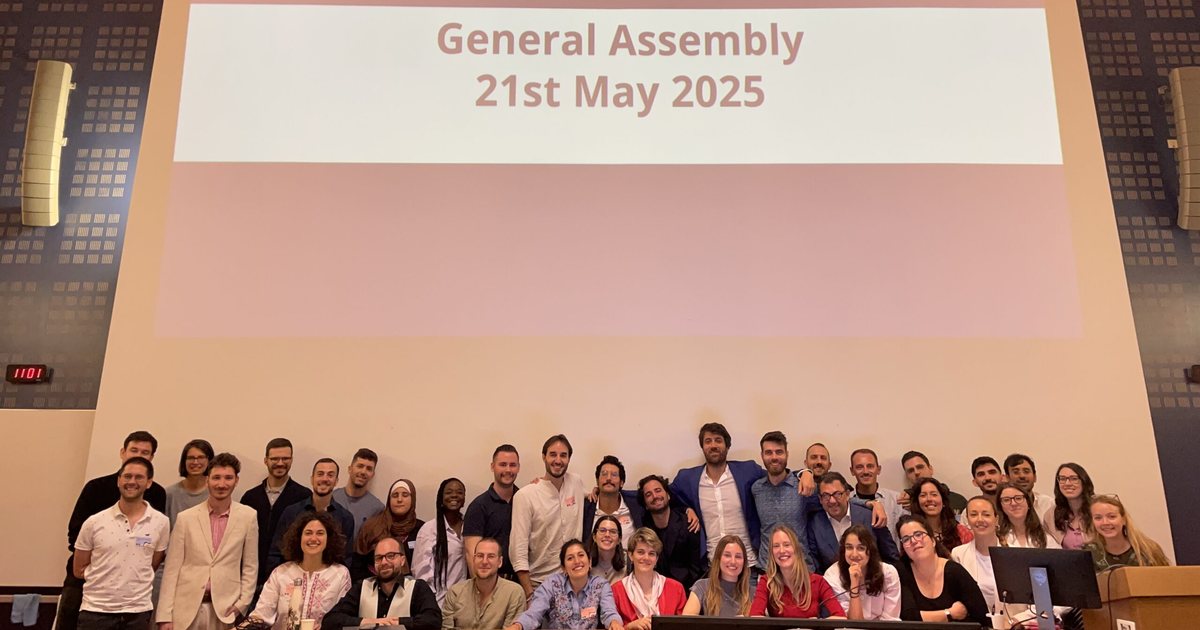
EuroNet MRPH residents at the General Assembly of the 2025 Spring Meeting in Paris, 21 May 2025.

Spring Meeting 2025 in Paris: 121 Residents on the Digital Future of Public Health

From 19 to 21 May 2025, EuroNet MRPH held its Spring Meeting in Paris, hosted across the Pitié-Salpêtrière and Saint-Antoine hospitals. 121 public health residents from across Europe came together under this year’s theme, “Transforming Public Health Professions in the Digital Age.”

EuroNet MRPH residents at the General Assembly of the 2025 Spring Meeting in Paris, 21 May 2025.

The programme wove together keynote sessions and expert roundtables, interactive capacity-building workshops and design challenges, and a high-level European Scientific Contest, alongside the social moments that make these meetings memorable, from walking tours of the city to a shared dinner at a classic Parisian Bouillon.

Paris also marked a milestone for the network: the official launch of the EuroNet MRPH Alumni Section, opening the door to long-term professional exchange across generations of residents. During the meeting we opened the call to host the 2026 Spring Meeting, a call that would take us to L’Aquila.

Congratulations to Tasnim Fareh, winner of the 2025 European Scientific Contest, for work on the association between particulate air pollution and the incidence of breast cancer. The scientific level across the session was exceptional, and every participant left having learned from one another’s work.

What participants told us

We surveyed attendees afterwards (n = 67 responses on satisfaction; n = 121 on travel):

  • Satisfaction: 69% satisfied or very satisfied; 72% said the meeting met or exceeded their expectations.
  • Scientific level: 67% rated it good or very good.
  • Reach: residents joined from Italy, France, Portugal, the Netherlands, Spain, Slovenia, the UK, Ireland and Croatia.
  • Sustainability: most travelled by train (32%), a figure we’d like to grow, as the network keeps sustainability in view when choosing hosts and formats.

Thank you to the Boards and Leads, the Organising Committee, and every participant who made Paris 2025 a success. The future of public health is something we shape collectively. See you at the next edition.

SM25 Paris Banner Small

EuroNet MRPH Spring Meeting 2025: Transforming Public Health Professions in the Digital Age

Join us in the beautiful city of Paris for the EuroNet MRPH Spring Meeting 2025, taking place from May 19th to May 21st!

This year’s theme, “Transforming Public Health Professions in the Digital Age,” reflects our shared ambition to explore how digital innovation is reshaping public health practices across Europe. Digital technologies offer incredible opportunities and solutions, transforming healthcare delivery, decision-making, and health communication. At this event, public health residents and professionals from across Europe will come together to discuss, innovate, and prepare for this digital revolution in public health.

The Spring Meeting will be hosted at two prestigious locations:

  • Pitié-Salpêtrière Hospital, 105 Boulevard de l’Hôpital, 75013 Paris, France
  • Saint Antoine Hospital (Day 2), Amphithéâtre Siège, 34 Rue Crozatier, 75012 Paris, France

We have reasons to use two different venues, you will discover why in time!

A detailed schedule with all activities, workshops, and roundtables is now available: Download the full program (PDF)

Sustainability at Our Core

Environmental responsibility and sustainability are core values for this Spring Meeting. To minimize our environmental impact, catering will be exclusively vegetarian and vegan, provided by Funky Mama. All meals and coffee breaks will feature locally-sourced seasonal fruits and vegetables, sustainably sourced coffee and tea, and we are committed to avoiding single-use plastics entirely.

Networking & Social Activities

Our scientific sessions are perfectly complemented by a vibrant social program, now fully confirmed, offering fantastic opportunities to connect with fellow participants and enjoy the magic of Paris together!

  • Day 1 (Monday, May 19th): Kick things off with your choice of three themed guided walking tours (€12 each) exploring Classical Paris, its dynamic Street Art scene, or Health Landmarks. Later that evening, join us at the lively Le Food Society Paris, a perfect chance to mingle!
  • Day 2 (Tuesday, May 20th): We invite you to a convivial Social Dinner at the charming Bistrot Mon Café. For those looking for a more casual option, a nearby bar, Les Blouses Blanches, offers a great alternative.

Full details for each event, including times and how to secure your spot for the walking tours and dinner, are available on our program. Also, stay connected and catch all the latest updates by following us on Instagram @euronetmrphig!

Registration Is Open!

We kindly ask for a registration fee of €50 per participant. This contribution helps us cover all lunches, coffee breaks, and ensures we can maintain our sustainability standards throughout the event.

Spots are limited, so secure yours now! Click here to register

UPDATE: Already registered? You can add social program events you missed by using the same registration form.

Call for Abstract for Scientific Contest

Don’t forget to submit an abstract and participate in the European Scientific Contest! A jury of peers will evaluate the quality of the projects and select the best entry. The winner will receive free accommodation and complimentary access to the social program during the next Spring Meeting. The deadline for submissions is 23:59 CET, April 21st, 2025.

UPDATE: Submissions to the Scientific Contest are now closed!

We look forward to welcoming you to Paris, ready to shape together the future of Public Health in this exciting digital era.

See you there!

EuroNet MRPH logo with the full name of the network, European Network of Multidisciplinary Residents in Public Health.

Which Social Platform is preferred between Turkish Public Health Residents’ for Communication?

I suppose that this is the first article from Turkey in EURONET-MRPH Newsletter. So, I want to share our experience for communication as first. It is very exciting and important to communicate between European students for us. It is also very important to provide a good communication medium between Turkish residents.

However, it is very difficult to choose best social medium, especially if there are hundreds of residents. For example, it is estimated that there are about 500 public health residents in more than 50 medical schools in Turkey. We use google mail group and whatsapp application to get in contact. Well, most of the residents have hesitations to write or to ask to the mail group, and they find whatsapp more practical then the mail group.

They think that they could get answers to their questions rapidly in whatsapp. Although, whatsapp is preferable for notifications, all residents couldn’t participate to residents’ group due to participant limitation.

As a representative of residents in HASUDER (Turkish Society of Public Health Specialists), i had carried out an online survey to choose the best social medium / media which had continued for ten days in November 2018. Then, we discussed the results to decide communication media in Medical Residents Session of 20th National Public Health Congress, Antalya.
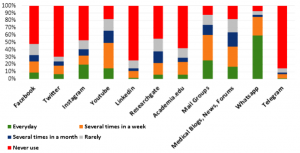
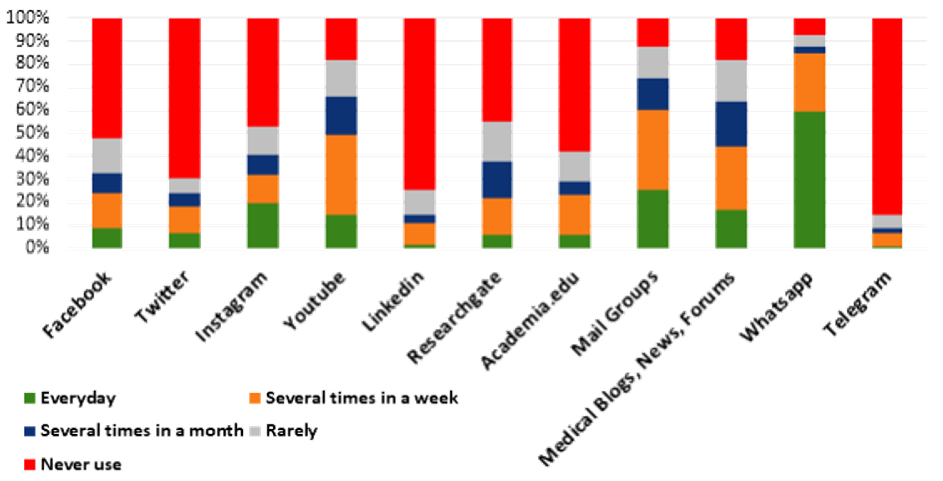
Figure 1. Social Media Use of Public Health Residents for Academic Purposes

Total 156 residents completed the online survey (about 1/3 of all residents). Mean age of participants was 29.3±3.2 years and mean duration of residency was 23.5±15.6 months. About three quarters of the residents (73.7%) was female. Please don’t worry; it is not an error, there is apparently female predominance in Turkish public health residents. Most of the participants (84.5%) specified that they used social media every day. More than 90.0% of residents could interest in social media several times in a week. However, only 76.3% of residents specified that they could interest in social media for academic purposes several times in a week.

Youtube, mail groups and whatsapp application were the most used media for academic purposes (Figure 1).

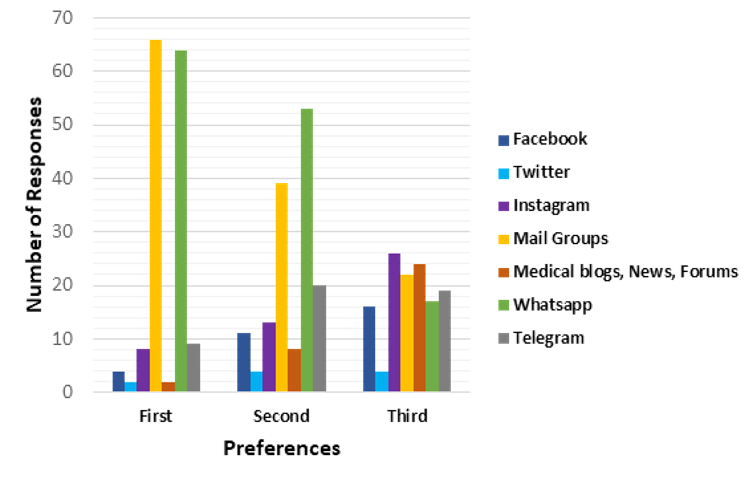
Residents preferred to communicate mostly with mail groups, whatsapp, telegram and instagram for academic communication (Figure 2).
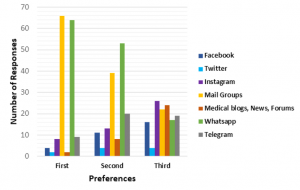
Figure 2. Social Media Communication Preferences of Public Health Residents for Academic Purposes

Youtube, researchgate, linkedin and academia.edu  were excluded for academic communication preferences. Because, they were not suitable for mutual and group communication. Few residents chose medscape and discord under the title of “others” for both in Figure 1 and 2.

It could be concluded that mail groups and whatsapp are trending media. In public health conference , we discussed that whatsapp was not enough, maybe it would be better to change it to telegram according to survey results. Instagram was a surprise in this survey. Perhaps, it might have a function in the future in terms of the public health.

Ferhat Yildiz
MD, Representative of Residents, HASUDER, Turkey

Aydin Adnan Menderes University, School of Medicine

Department of Public Health

Merhaba (Hello)!

References and Social Media resources used

  1. Facebook, www.facebook.com (Accessed in 19th Nov 2018)
  2. Twitter, www.twitter.com (Accessed in 19th Nov 2018)
  3. Instagram, www.instagram.com (Accessed in 19th Nov 2018)
  4. Youtube, www.youtube.com (Accessed in 19th Nov 2018)
  5. Linkedin, www.linkedin.com (Accessed in 19th Nov 2018)
  6. Researchgate, www.researchgate.net (Accessed in 19th Nov 2018)
  7. Academia.edu, www.academia.edu (Accessed in 19th Nov 2018)
  8. Google groups, https://groups.google.com/forum/#!overview (Accessed in 19th Nov 2018)
  9. Whatsapp, www.whatsapp.com (Accessed in 19th Nov 2018)
  10. Telegram, https://telegram.org (Accessed in 19th Nov 2018)
  11. Medscape, www.medscape.com (Accessed in 19th Nov 2018)
  12. Discord, https://discordapp.com (Accessed in 19th Nov 2018)
Telemedicine computer

Telemedicine and virtual healthcare in Ireland

While we wait for the new issue of the Newsletter in the making, we bring you an article from the last Euronet Newsletter, about “Telemedicine and virtual healthcare in Ireland”:

Virtual healthcare and telemedicine have burgeoned in Ireland in recent years, with many private companies offering online services including video General Practitioner  (GP) consultations, prescriptions for medications and home testing kits for sexually transmitted infections (STIs). As an example, there are now at least seven different online companies offering STIs testing to individuals in Ireland without the need to see a doctor or health worker. Some of these companies are based in Ireland, others are based in other countries such as the UK.

Health insurance companies have come on board and many now have contracts with online GP consultation services offering video consultations with one of these companies as part of their health insurance package.

So what are the implications for health and health care in Ireland from the advent of such companies? Certainly there are potential benefits to using online platforms in health and health care.

They have the potential to improve access to patients who live in rural or remote areas.  In the area of STIs testing they may increase testing and treatment of STIs particularly in young people. Telemedicine may increase the number of patients who can be seen and treated during a given period of time, important at a time when many GPs in Ireland are emigrating to other countries.

Virtual platforms have been used to improve communication and delivery of healthcare between services. In Ireland, a pilot programme between family doctors and hospital specialists involving an online forum for discussion and advice on cases has been used to reduce admissions to hospital.

However, this new and developing field raises many questions for health and healthcare. Because these are private companies, without an established relationship with patients, the loss of the central pillars of primary care that include continuity of care, the management of multi-morbidities, the doctor-patient relationship and the delivery of a holistic model of care are concerns. Testing for STIs through this system may also affect notification, contact tracing and sexual health promotion. Other questions arise; for example will rates of antibiotic prescribing increase, given that physical examination will not be possible in a video consultation for a respiratory tract infection?

There are many questions to be answered as to how the advent of such systems of delivering healthcare can affect health and healthcare in Ireland, both good and bad. It’s an opportunity for Public Health in Ireland to engage with the issue as it is likely that telemedicine and virtual healthcare will continue to expand both in Ireland and internationally.

Chantal Migone

EuroNet MRPH Ireland

HH Symbol Red RGB

Hacking Health Camp, March 19 – 22, Strasbourg

HH-Newsletter-img1Hacking Health Camp, the largest health hackathon in Europe, will be back again in 2015, stronger than ever!
This international event will take place in Strasbourg, on March 19-22, 2015, and is dedicated for anyone interested in health innovation and the amazing possibilities for tomorrow’s health. HH Camp is a place of innovation in action and the event was designed according to the following principles: Inspire, Learn, Act.

Part 1 – The Future of Health
Part 2 – Health Data Day: Big Data in Healthcare is here, how can we use it?
Part 3 – Health Hackathon: Prototyping Weekend
Bonus – Health Pitch Challenge : Health startup’s contest evening party

Don’t miss this high profile event! Register today! And if you can’t wait for March? See the website of this event!