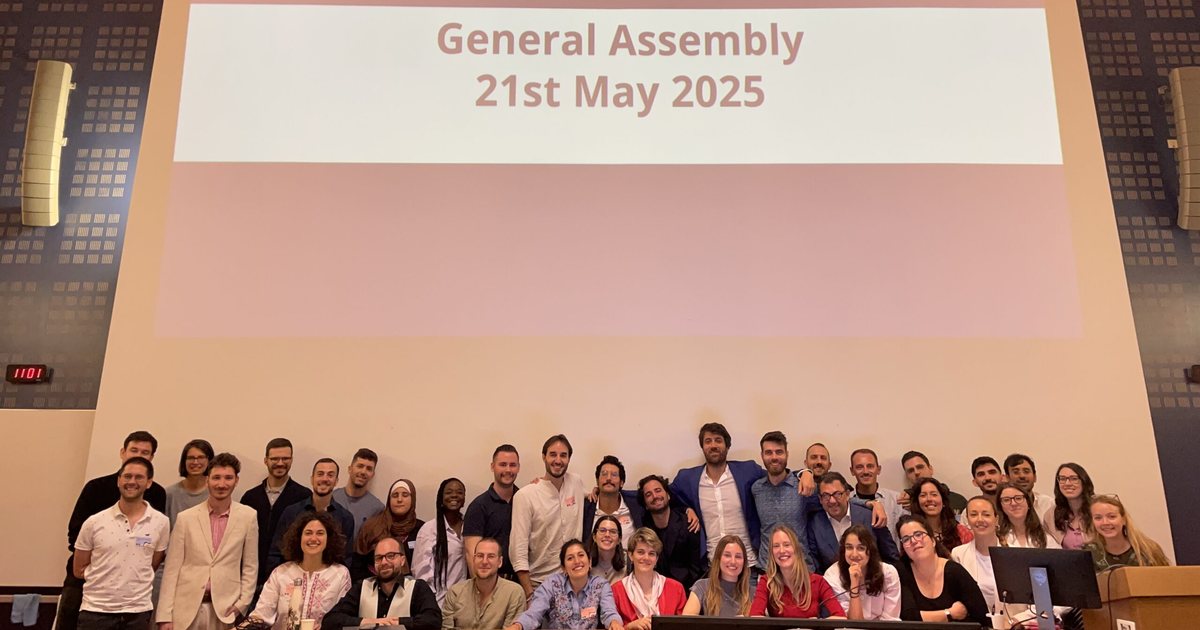
EuroNet MRPH residents at the General Assembly of the 2025 Spring Meeting in Paris, 21 May 2025.

Spring Meeting 2025 in Paris: 121 Residents on the Digital Future of Public Health

From 19 to 21 May 2025, EuroNet MRPH held its Spring Meeting in Paris, hosted across the Pitié-Salpêtrière and Saint-Antoine hospitals. 121 public health residents from across Europe came together under this year’s theme, “Transforming Public Health Professions in the Digital Age.”

EuroNet MRPH residents at the General Assembly of the 2025 Spring Meeting in Paris, 21 May 2025.

The programme wove together keynote sessions and expert roundtables, interactive capacity-building workshops and design challenges, and a high-level European Scientific Contest, alongside the social moments that make these meetings memorable, from walking tours of the city to a shared dinner at a classic Parisian Bouillon.

Paris also marked a milestone for the network: the official launch of the EuroNet MRPH Alumni Section, opening the door to long-term professional exchange across generations of residents. During the meeting we opened the call to host the 2026 Spring Meeting, a call that would take us to L’Aquila.

Congratulations to Tasnim Fareh, winner of the 2025 European Scientific Contest, for work on the association between particulate air pollution and the incidence of breast cancer. The scientific level across the session was exceptional, and every participant left having learned from one another’s work.

What participants told us

We surveyed attendees afterwards (n = 67 responses on satisfaction; n = 121 on travel):

  • Satisfaction: 69% satisfied or very satisfied; 72% said the meeting met or exceeded their expectations.
  • Scientific level: 67% rated it good or very good.
  • Reach: residents joined from Italy, France, Portugal, the Netherlands, Spain, Slovenia, the UK, Ireland and Croatia.
  • Sustainability: most travelled by train (32%), a figure we’d like to grow, as the network keeps sustainability in view when choosing hosts and formats.

Thank you to the Boards and Leads, the Organising Committee, and every participant who made Paris 2025 a success. The future of public health is something we shape collectively. See you at the next edition.

SM25 Paris Banner Small

EuroNet MRPH Spring Meeting 2025: Transforming Public Health Professions in the Digital Age

Join us in the beautiful city of Paris for the EuroNet MRPH Spring Meeting 2025, taking place from May 19th to May 21st!

This year’s theme, “Transforming Public Health Professions in the Digital Age,” reflects our shared ambition to explore how digital innovation is reshaping public health practices across Europe. Digital technologies offer incredible opportunities and solutions, transforming healthcare delivery, decision-making, and health communication. At this event, public health residents and professionals from across Europe will come together to discuss, innovate, and prepare for this digital revolution in public health.

The Spring Meeting will be hosted at two prestigious locations:

  • Pitié-Salpêtrière Hospital, 105 Boulevard de l’Hôpital, 75013 Paris, France
  • Saint Antoine Hospital (Day 2), Amphithéâtre Siège, 34 Rue Crozatier, 75012 Paris, France

We have reasons to use two different venues, you will discover why in time!

A detailed schedule with all activities, workshops, and roundtables is now available: Download the full program (PDF)

Sustainability at Our Core

Environmental responsibility and sustainability are core values for this Spring Meeting. To minimize our environmental impact, catering will be exclusively vegetarian and vegan, provided by Funky Mama. All meals and coffee breaks will feature locally-sourced seasonal fruits and vegetables, sustainably sourced coffee and tea, and we are committed to avoiding single-use plastics entirely.

Networking & Social Activities

Our scientific sessions are perfectly complemented by a vibrant social program, now fully confirmed, offering fantastic opportunities to connect with fellow participants and enjoy the magic of Paris together!

  • Day 1 (Monday, May 19th): Kick things off with your choice of three themed guided walking tours (€12 each) exploring Classical Paris, its dynamic Street Art scene, or Health Landmarks. Later that evening, join us at the lively Le Food Society Paris, a perfect chance to mingle!
  • Day 2 (Tuesday, May 20th): We invite you to a convivial Social Dinner at the charming Bistrot Mon Café. For those looking for a more casual option, a nearby bar, Les Blouses Blanches, offers a great alternative.

Full details for each event, including times and how to secure your spot for the walking tours and dinner, are available on our program. Also, stay connected and catch all the latest updates by following us on Instagram @euronetmrphig!

Registration Is Open!

We kindly ask for a registration fee of €50 per participant. This contribution helps us cover all lunches, coffee breaks, and ensures we can maintain our sustainability standards throughout the event.

Spots are limited, so secure yours now! Click here to register

UPDATE: Already registered? You can add social program events you missed by using the same registration form.

Call for Abstract for Scientific Contest

Don’t forget to submit an abstract and participate in the European Scientific Contest! A jury of peers will evaluate the quality of the projects and select the best entry. The winner will receive free accommodation and complimentary access to the social program during the next Spring Meeting. The deadline for submissions is 23:59 CET, April 21st, 2025.

UPDATE: Submissions to the Scientific Contest are now closed!

We look forward to welcoming you to Paris, ready to shape together the future of Public Health in this exciting digital era.

See you there!

EuroNet MRPH logo with the full name of the network, European Network of Multidisciplinary Residents in Public Health.

Service sanitaire: a first step towards the decompartmentalisation of the French health system?

In September 2018, more than 45 thousand French health students will be involved in the “sanitary service” (service sanitaire). This program has been launched by the French government in January 2018 and it concerns medical, dental, nursing, physiotherapy, and midwifery students; all other health students will be involved from 2019 on. The objective is to train them in prevention and health education, competencies that are now missing from most health training curricula, through the elaboration an implementation of a practical project to the benefit of the population.

The sanitary service responds to the first axe of the national health strategy 2018-2022, which is to develop a prevention and health promotion policy. Throughout three weeks, the students will be trained in public health, project management, prevention, health promotion and they will then have three weeks of hands-on experience in a interdisciplinary team. They will be supported by a pedagogic referent (référent pédagogique) from their university and a proximity referent (référent de proximité) from the structure where they will intervene. The places of intervention will mostly be middle and high schools, but also retirement houses and structures managed by social services.

The biggest challenge for universities, at one month from the beginning of the program, is to provide a quality training and support to the students, in order to respond to the expectations and needs of the structures where they will intervene, the population and the students themselves.

Sources (in French) :

_________________________

Maria Francesca Manca
Public Health Resident, France

EuroNet MRPH logo with the full name of the network, European Network of Multidisciplinary Residents in Public Health.

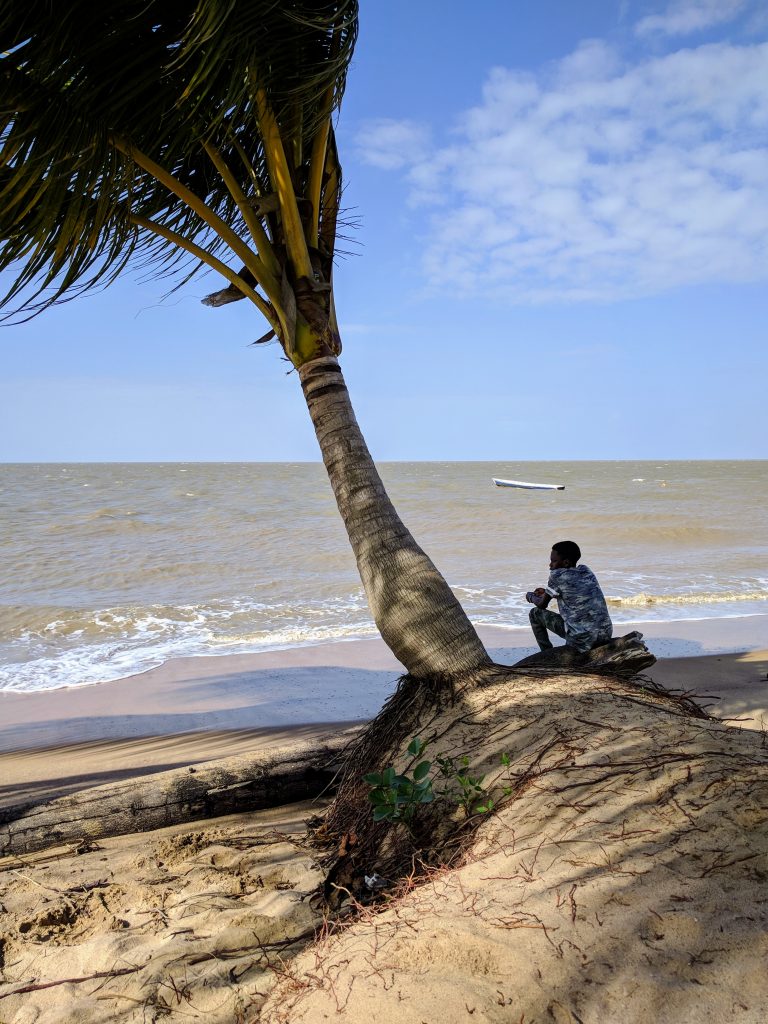
French Guiana – Who is the stranger?

In France, as residents, we have the possibility to do a maximum of three rotations in a different place from the one where we are doing our residency. One lazy autumn evening I went through the list of the available rotations in French overseas departments, and I chose Saint-Laurent du Maroni, French Guiana. The choice was simple: a 37 years-old public health doctor had opened a whole public health department in Western French Guiana hospital 5 years before, just out of her residency, while getting a PhD with a thesis on migrants’ health. I could not ask for anything better.

French Guiana is a French overseas department, a former penal colony, wedged between Brazil and Suriname. It is a European outermost region and the only border of Europe with South American countries, it hosts a European spaceport from where Ariane rockets are launched every month and, of course, Euro is the currency.

I vaguely imagined what expected me. I read the data: the epidemiological profile of the region is similar to that of developing countries, where communicable diseases like dengue fever and leishmaniasis persist alongside a high prevalence of cardiovascular diseases and diabetes. HIV is epidemic (>1%), half of the population is less than 25 years old and the fertility rate is 3.5%.

The first thing I noticed when I arrived in Saint-Laurent, which has more than 40 thousands inhabitants and lies on the shore of the Maroni river, was the lack of public transportation. Being born and bred in cities, public transportation for me is a fundamental part of the landscape and the absence of it struck me immediately. Public transportation has practical implications, but also a symbolic meaning. It carries communities together and fights geographical isolation. In its absence, people living in the peripheries are left out of the public life. They cannot easily access services, which are historically aggregated in the city center. It did not take long to discover that isolation, lack of access to services, inequalities, structural discrimination would be key words of my experience here.

I participate in most of the activities of the public health department, whose mission spaces from prevention activities – an IST clinic, therapeutic patient education for chronic illnesses, cultural mediation, school interventions on sexual health… – to research and training, to international cooperation with neighboring Suriname, to providing medical missions to the health centers along the Maroni river. This allows me to have a glance at population needs and the difficulties to tackle them.

There is no single cause for the particular obstacles that may be encountered in health care in French Guiana. Part of the problem are practical issues: the scarcity of means – In terms of money but above all in terms of human resources – , the complexity of the territory – the road stops 50 km south of Saint-Laurent and you can only reach further towns by boat or by plane -, the distance from the capital city, where decisions are taken.  

However, it is not as straightforward as that. Working in this environment is the concrete exemplification of how determinants of health act.

Here, as professionals or laypeople, we are obliged to confront with theoretical and political questions that we do not usually think about in our day-to-day life, such as the subject of decentralization, the role and responsibilities of the State, the scars of colonialism, how societies form and develop. Questions arise about migrations and nationality3. We wonder who is a foreigner, is it the person who was born here but who does not speak French, is it the person who comes from across the river, is it the Parisian doctor, is it me, is it no one or are we all?

And the list of questions continues. How can we support sexual violence survivors, which can be count in hundreds every year? What is the best way to advocate for undocumented migrants and to provide appropriate services to mobile people? How do you tackle the complex ties between health, education, (lack of) job opportunities, social structures? What about indigenous population?

I do not have simple answers. However, I had the great opportunity to combine practice and reflection and to learn from dedicated professionals and for that I am grateful. I hope I leave you craving for more French Guiana.

_________________________

References

  1.  Inamo J. et al. Existe-t-il des spécificités dans la prévalence et la prise en charge de l’hypertension artérielle aux Antilles-Guyane par rapport à la France métropolitaine ? BEH thématique, 16 décembre 2008 ; 49-50. Romon I. et al. Le poids important du diabète sur la mortalité dans les départements d’outre-mer. InVS, Mars 2007.
  2. Jaries R. et al. Population movements and the HIV cascade in recently diagnosed patients at the French Guiana -Suriname border., 2017; 13:1-5
  3. Carde E. Les discriminations selon l’origine dans l’accès aux soins. Access to health care and racial discrimination. Santé publique 2007, volume 19, n° 2, pp. 99-109.

_________________________

Maria Francesca Manca
Public Health Resident, France

(As published in EuroNews #13)
EuroNet MRPH logo with the full name of the network, European Network of Multidisciplinary Residents in Public Health.

Spring Meeting 2017 in Strasbourg

As you may have read elsewhere on this website, EuroNet members meet each other face to face three times a year to exchange experiences and ideas and to make sure the network keeps running smoothly. The 2017 Spring meeting took place in Strasbourg, France.

What made this meeting extra special was the launch of EuroNet Platform, a unique new digital platform that gives residents the opportunity to collaborate on public health research projects (see www.euronetplatform.com). This launch took place on Friday morning in an equally unique location: the European Parliament in Strasbourg. After the launch, there was a tour of the Parliament, to give those with political aspirations their very first taste of Europarliamentarianship.

Friday afternoon was filled with interesting lectures by various public health professionals from Strasbourg University. On Saturday, we had our General Assembly and we worked on the various EuroNet MRPH working groups. You can read all about these working groups elsewhere on this website.

Two very full days indeed! Luckily, fun is also an important objective of EuroNet MRPH, and so there was enough time left in the program for tarte flambée, sauerkraut, wine and French karaoke. Pictures of this part of the program will remain in an undisclosed location.

HH Symbol Red RGB

Hacking Health Camp, March 19 – 22, Strasbourg

HH-Newsletter-img1Hacking Health Camp, the largest health hackathon in Europe, will be back again in 2015, stronger than ever!
This international event will take place in Strasbourg, on March 19-22, 2015, and is dedicated for anyone interested in health innovation and the amazing possibilities for tomorrow’s health. HH Camp is a place of innovation in action and the event was designed according to the following principles: Inspire, Learn, Act.

Part 1 – The Future of Health
Part 2 – Health Data Day: Big Data in Healthcare is here, how can we use it?
Part 3 – Health Hackathon: Prototyping Weekend
Bonus – Health Pitch Challenge : Health startup’s contest evening party

Don’t miss this high profile event! Register today! And if you can’t wait for March? See the website of this event!