EuroNet MRPH logo with the full name of the network, European Network of Multidisciplinary Residents in Public Health.

A National Immunisation Information System in Italy

The Ministry of Health has recently established a National Immunisation Information System (IIS), through the Ministerial Decree of 17 September 2018 published in the Gazzetta Ufficiale n. 257/20181. The aim of the electronic registry is to facilitate estimation of vaccine coverage, monitor the nation-wide implementation of the National Immunisation Plan (NIP) throughout the national territory; and to provide information both to the international bodies and for administrative tasks.

The need to create a single IIS from 21 regional registers was agreed upon in the State-Regions Conference of 19 January 2017, and highlighted on the National Immunisation Plan 2017-20192. The Ministerial Decree of 17 September 2018 defines the information that all Italian regions and autonomous provinces must provide to the Ministry of Health, including:

1) vaccinated individuals;

2) individuals to be vaccinated;

3) subjects already immunised after natural infection;

4) subjects temporarily or permanently exempted for health reasons;

5) doses and timing of administrated vaccines.

The IIS should be linked to the national databases of communicable diseases and adverse events.

The national IIS will aggregate individual records from the regional registries and, through a more precise estimate of vaccination coverage, will improve the monitoring activities of the programs in place, and identify areas where extraordinary interventions are required. Furthermore, in order to maintain updated regional vaccine registries, the national IIS will make available to the Regions information related to citizens who will modify their residence. The Ministry of Health will have access only to anonymised information. The first upload of files from the regional authorities is expected by April 2019.

The last update of Italian regional IISs characteristics and functionalities are presented elsewhere3.


Vincenza Gianfredi

PH resident,  University of Perugia, Italy


References:

1. Ministero della Salute [Ministry of Health]. Decreto del Ministero della Salute: Istituzione dell’Anagrafe nazionale vaccini [Decree of Ministry of Health: Establishment of a National Immunisation Information System] 17 September 2018 published in the Gazzetta Ufficiale n. 257/2018

2. Ministero della Salute [Ministry of Health]. Piano Nazionale di Prevenzione Vaccinale 2017-2019 [National Plan of Vaccination Prevention 2017-2019]. 3 Apr 2018. Rome: Ministry of Health; 2018. Available from: http://www.salute.gov.it/imgs/C_17_pubblicazioni_2571_allegato.pdf

3. D’Ancona F, Gianfredi V, Riccardo F, Iannazzo S. Immunisation Registries at regional level in Italy and the roadmap for a future Italian National Registry. Ann Ig. 2018 Mar-Apr;30(2):77-85. doi: 10.7416/ai.2018.2199.
EuroNet MRPH logo with the full name of the network, European Network of Multidisciplinary Residents in Public Health.

What can we do to reduce vaccine hesitancy?

The SAGE Working Group on Vaccine Hesitancy defined vaccine hesitancy as ‘the delay in acceptance or refusal of vaccination despite availability of vaccination services. Vaccine hesitancy is complex and context specific, varying across time, place and vaccines. It is influenced by factors such as complacency, convenience and confidence’ (1).  Indeed, it is complex and the reasons cited in the literature are varied, from fears about vaccine safety, worries about ‘overloading’ the child’s immune system, distrust of the pharmaceutical industry and collective amnesia regarding the dangers of vaccine preventable diseases (2). Many parents, unfamiliar with diseases like tetanus and meningitis, make incorrect conclusions when it comes to calculating the risk-benefit of vaccinating their children.

The current measles outbreak in Europe is the direct result of vaccine hesitancy. 13,234 cases have been reported across Europe since July 2017 (3). Sadly, there were also 18 deaths due to measles in this period (3). In Ireland, we have had 76 cases of measles in 2018 so far, with an ongoing outbreak in Dublin as I write this. What can we do to end this outbreak and prevent the resurgence of other vaccine preventable diseases?

Reviewing the current evidence on what can be done to address vaccine hesitancy is not particularly inspiring. Reminders, whether they are telephone, text or postal, and family incentive rewards have been proven to increase vaccine uptake, but there is limited evidence that they work for vaccine-hesitant individuals (4). A trusted health care professional can also have an impact on changing parental attitudes, but the evidence for the various communication tools that have been designed as aids for these professionals to use is mixed (4). More research and better measurement of outcomes is needed in this area (4). It is not enough just to measure change in attitude to vaccines, we must see if this change in attitude actually leads to increased vaccine uptake.

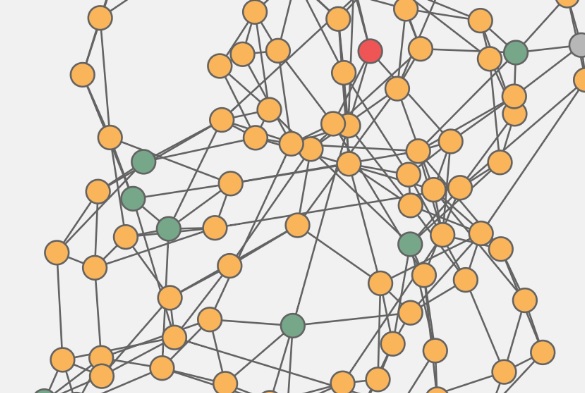
Example of the spread of an outbreak in the game Vax!

There are advocates for more innovative approaches. Some argue that social marketing frameworks could provide solutions (5). Others propose that children should be taught positive messages about vaccinations in school, as part of their health education, science or even citizenship classes, in order to ‘inoculate’ them against vaccine hesitancy in the future (6). A friend of mine, who teaches teenagers, created a lesson to teach her students critical analysis skills, using information on the benefit and safety of HPV vaccination. These kind of skills are vital for navigating the ‘fake news’ widespread on social media. For younger children, there are online games demonstrating how vaccines work (7). One review found 16 different games in 2016 (7). I lost 20 minutes trying to stop an outbreak with rapid vaccination at this particular link: https://vax.herokuapp.com/game  

It’s a little bit addictive! Could positive attitudes to vaccines be engrained at a young age using these methods?

A mixture of targeted interventions to deal with parents in the midst of today’s crisis, as well as methods targeting future generations, will be necessary to tackle this complex issue. It is time to try new approaches.

_________________________

References

  1. MacDonald NE, the SAGE Working Group on Vaccine Hesitancy. Vaccine hesitancy: Definition, scope and determinants. Vaccine. 2015; 33:4161–4164
  2. Marti M, de Cola M, MacDonald NE, Dumolard L, Duclos P. Assessments of global drivers of vaccine hesitancy in 2014 Looking beyond safety concerns. PLoS ONE. 2017; 12(3):e0172310.
  3. European Centre for Disease Prevention and Control. Monthly measles and rubella monitoring report. Stockholm: ECDC; 2018
  4. Dube E, Gagnon D, MacDonald N. Strategies intended to address vaccine hesitancy: Review of published reviews. Vaccine. 2015; 33: 4191-4203.
  5. Nowaka GJ, Gellinb BG, MacDonald NE, Butler R, the SAGE Working Group on Vaccine Hesitancy. Addressing vaccine hesitancy: The potential value of commercial and social marketing principles and practices. Vaccine. 2015; 33:4204–4211
  6. Wilson K, Atkinson K, Crowcroft N. Teaching children about immunization in a digital age. Human Vaccines & Immunotherapeutics. 2017; 13 (5):1155–1157.
  7. Ohannessian R, Yaghobian S, Verger P, Vanhems P. A systematic review of serious video games used for vaccination. Vaccine. 34 2016; 34: 4478–4483.

_________________________

Laura Heavey
Specialist Registrar in Public Health Medicine
Department of Public Health, HSE, Sligo, Ireland

EuroNet MRPH logo with the full name of the network, European Network of Multidisciplinary Residents in Public Health.

Vaccine hesitancy: how to communicate with hesitant parents: the C.A.S.E. approach

The SAGE Working Group on Vaccine Hesitancy concluded that vaccine hesitancy refers to delay in acceptance or refusal of vaccination despite availability of vaccination services. It is characterized by different factors in different contexts (political, ideological, social, etc.). Vaccine hesitancy is complex and context-specific, varying across time, place and vaccines. [1]

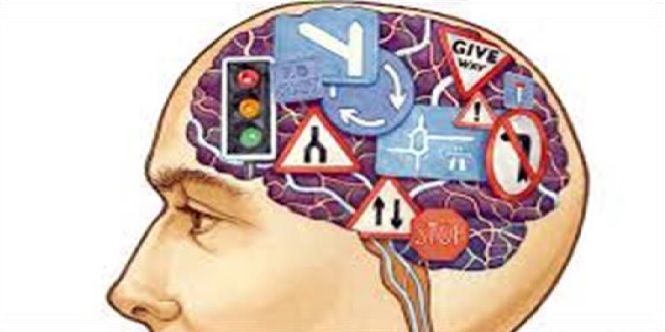
When approaching a hesitant parent, one must never forget that all his doubts are dictated by a strong perception of risk and by the consequent concern for the safety of his offspring. In this context, information concerning the “danger” or the factor considered as such, is connected and elaborated not only at the cortical level, but also in the limbic system which, thanks to its connections with the pre-frontal cortex, comes into play in the decision-making process, based on emotional reactions.

For this reason, any information you want to transmit to the defaulting mother or father, this must be simple, immediate and preferably proposed using the visual means (eg: simple graphs or sample images that can visually reproduce what you intend to explain), according to the rules of cognitive ergonomics. [2]

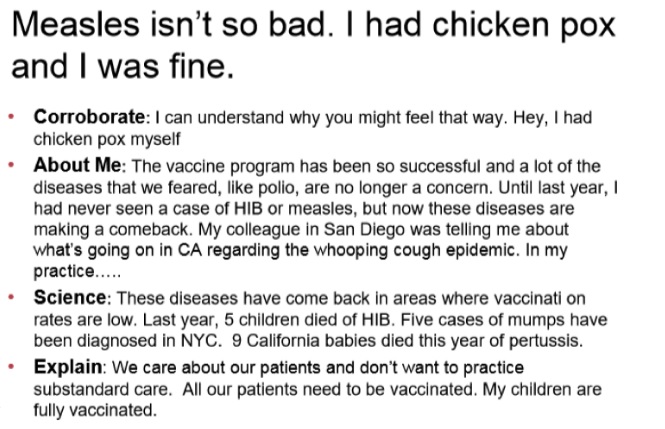
In the United States in 2010 Dr. Singer developed a communication model that, referring to Aristotelian rhetoric, provides an effective and efficient approach to communicate with the hesitant parents (C.A.S.E. approach). C.A.S.E. is an acronym that identifies the four phases of the communicative approach, Corroborate, About me, Science, Explain / advise (Fig.1). [2,3]

The first phase, Corroboration, which coincides with the Aristotelian technique of pathos, consists in proving emphatic towards parents who do not want to vaccinate their children, that is to listen, welcome and understand their doubts and their fears. Parents must perceive that who they are in front of is not an enemy whose purpose is to oppose them and impose on them a different way of thinking and acting, but it is a person who shares their primary interest, the health of the child. To achieve this, it is very important to find a point of agreement from which to start. [3,4]

In the second phase, About me, or ethos according to Aristotle’s rhetoric, the health worker should explain to parents what is his working mission (e. g. to advance the health of all people, the children’s sake) and what path he has taken to realize it (the studies, conferences or courses in which he participated, various studies). [3,4] The objective is to qualify the speaker, increasing its credibility and making it an authoritative source of information.

The logos of Aristotle is taken up again in the Science phase of Dr. Singer, in which the scientific evidence about the vaccines is presented to the parents. [3,4] It is in this phase when the cognitive ergonomics, mentioned above, comes into play strongly. To make the interview less dispersive, it is advisable for the doctor, already in the corroboration phase, to let the parents express the factors of greatest concern. This on one hand allows to partially reduce the anxiety of mothers and fathers, on the other hand allows the doctor to focus only on some aspects related to the vaccines and not on all the knowledge about the subject.

Fig. 1 Example of C.A.S.E. approach proposed by dr. Singer (2010)

Finally, to conclude the interview, the explain / advise phase should allow to sum up what has been said and give advice to the hesitant parents based on scientific evidence. [4]

The effectiveness of the C.A.S.E. method against hesitant parents has not yet been evaluated in any study. Therefore, assessing effectiveness in the field would be appropriate.

_________________________

References

  1. Mac Donald N, the SAGE Working Group on Vaccine Hesitancy. Vaccine hesitancy: Definition, scope and determinants. Vaccine 33(2015) 4161-4164 2)
  2. Pezzullo L. “The psychological mechanisms underlying the fear of the vaccine”. From the Congress “Vaccines, how to embrace and dispel parents’ doubts”. Treviso, 3rd February 2018
  3. Singer A. Making the CASE for vaccines: A new model for talking to parents about vaccines. NJP CORE VFC Conference 2010. Retrieved from http://www.aapnj.org/uploadfiles/documents/f73.pd
  4. Stevens JC. The C.A.S.E. approach (Corroboration, About me, Science, Explain/advise): improving communication with vaccine-hesitant parent. https://arizona.openrepository.com/ ,2016

_________________________

Davide Pezzato
School of Specialization in Hygiene and Preventive Medicine – University of Padua, Italy

Stefania Bellio
School of Specialization in Hygiene and Preventive Medicine – University of Padua, Italy

EuroNet MRPH logo with the full name of the network, European Network of Multidisciplinary Residents in Public Health.

Pertussis vaccination in pregnancy in Ireland

Between 2011-2017, pertussis notifications in Ireland were most commonly notified in infants and young children. The age specific incidence rate among the 0-5 month age group peaked in 2012 (ASIR 395/100,000) with smaller peaks in 2016 (235/100,000) and 2017 (225/100,000) Between 2012-2017, of all infant cases, 67% were hospitalised and several infant deaths due to pertussis were notified. None of the mothers of these fatal cases were vaccinated during pregnancy.

Vaccination of pregnant women has been shown to be safe and effective in preventing pertussis in infants. Evidence from data published in England1and Spain2 indicates that protection against pertussis is as high as 90% or more in infants whose mothers were vaccinated in pregnancy.

Antenatal care in Ireland is delivered in three ways: either private care through a maternity unity, free public care through a maternity unit or as free combined care between maternity units and general practitioners (GP). Since 2012, pertussis vaccination in pregnancy has been recommended in Ireland and is available free of charge to maternity units and general practitioners.

However, though the vaccine itself is free, all patients still incur a fee for administration. There is also no clarity or definition regarding where the vaccine should be administered, whether by a GP or in the maternity units. This is thought to contribute to the very low vaccine uptake seen. An audit of maternity units conducted in 2013 showed an uptake rate of 6.2% amongst pregnant women in Ireland. This is far lower than the uptake rate in the UK (73%) where pertussis vaccine is available to pregnant women free of charge.

The lack of a defined pathway for administration and full funding of pertussis vaccination in pregnancy represents a key barrier to increasing uptake. Clarifying a pathway of vaccine delivery and reimbursement should be a priority issue for the Irish health service to ensure that vulnerable infants are protected. Pertussis is a vaccine preventable disease and, as such, every effort should be made to prevent further infant morbidity and mortality.

_________________________

References

1 – https://www.ncbi.nlm.nih.gov/pubmed/25037990

2 – http://www.eurosurveillance.org/ViewArticle.aspx?ArticleId=22809

_________________________

Fiona Cianci
Specialist Registrar in Public Health Medicine
Department of Public Health, HSE East, Dublin (Ireland)