EuroNet MRPH logo with the full name of the network, European Network of Multidisciplinary Residents in Public Health.

Sexual and reproductive health and rights in Europe: the case of abortion

Sexual and reproductive health and rights (SRHR) are at the intersection of health care and the legal and moral system of a country. Issues related to SRHR are not only under the control of the woman herself, eventually her partner, and healthcare professionals, but also of lawmakers and often religious leaders. Matters as abortion, contraception, fertility and reproduction, the definition of consent, the choice of a partner, are hence both extremely intimate and public, influenced by power dynamics and contextual factors.

Of abortion, in 1992 H. David wrote: “Although universally practiced, no other elective surgical procedure has evoked as much divisive public debate, generated such emotional and moral passion, or received greater sustained attention from the media”1.

Abortion is indeed universally practiced, but an estimated 25% of the world’s population lives in the 66 countries where abortion is either prohibited or permitted only to save a woman’s life2.  Of these, eight countries are in Europe: Northern Ireland in the United Kingdom, Ireland, Monaco, Liechtenstein, San Marino, Poland, Andorra and Malta. In the first six countries, abortion is forbidden outside extremely limited circonstances, for example, depending on the country, to avert a substantial risk to a woman’s life, in case of severe foetal impairment or if the pregnancy is a result of a sexual assault. Andorra and Malta do not allow it in any situation3.

A report published in December 2017 by the Council of Europe details the effects of restrictive laws on women in Europe3. In countries with restrictive laws, womens are forced to travel outside the country to receive care, or they have to access illegal abortion, for example by buying abortion pills online, with the fear to seek post-abortion care, because of the legal implications. Travelling outside the country in fact is not always an option, for administrative and financial barriers, especially for adolescents, undocumented migrants or women at risk for domestic violence.

Restrictive laws can have tragic effects on the health and lives of women, as we know from the most covered country with restrictive laws in Europe, which is Ireland. In Ireland, the 8th amendment of the Constitution, which was introduced in 1983 to recognise the right to life of the unborn as an equal to that of the mother, was repealed by referendum, on the 25th of May 2018. The repeal came after appalling events like the death by sepsis of Savita Halappavanar in 20124 and the stories of some of the around 3’000 women who every year travel to the UK to access abortion services and the efforts of grassroot activism. Activism that extends across the border to Northern Ireland, in support of the women who may theoretically face a life sentence if found guilty of having an abortion5.

However, the possibility to access safe, prompt abortion care can be limited even in the European countries with liberal laws, meaning where abortion is accessible on request, for reasons of distress or on broad socio-economic grounds. For example, a mandatory waiting period, with or without mandatory counseling, exists in many countries, such as Germany, Italy and The Netherlands, and was recently reintroduced in countries in Central and Eastern Europe,6 while it was suppressed by the health law of 2016 in France7. The mandatory waiting period does not fulfill any medical purpose8.

Lack of professionals who provide abortion services is another barrier to access. The lack of professionals can be due to a shortage of professionals who are trained in this practice or because of the refusal to provide abortion services on grounds of conscience or religion.

Some solutions to the shortage of trained professionals exist: for example, France faces a lack of gynecologists, especially in rural areas, so the health law of 2016 introduced the possibility for midwife to provide medical abortion.

When refusals of care on grounds of conscience or religion are not well regulated, or the mechanisms to oversight the respect of regulations are not functional, the access to legal services is not guaranteed. For example, in Italy, in some regions more than 80% of gynecologists are objectors, and only 60% of the health care structures of the country provide abortions9, 10.

These circumstances can induce European women to travel to other countries, a theme that is being studied by a research project called Europe Abortion Access Project. The first results about cross-country travel will be available in the winter of 2018, while the results on in-country travel will be available in 202011.

These elements invite public health professionals to remain vigilant on abortion. The situation is ever changing and, in some cases, it is developing for the best, as we saw in Ireland, where representations on abortion have finally been shifted after years of reflections and advocacy12.  In others it is stagnating or there is even a real risk of retrogression, as in Poland, where since 2016 there have been different attempts at hardening what is already one of the most restrictive abortion laws in Europe13, 14.

Maria Francesca Manca
Public Health Resident, France

References

  1. David HP. Abortion in Europe, 1920-9: A public health perspective. Studies in family planning. 1992:23,1:1-22.
  2. The world’s abortion laws by the Center for reproductive rights: http://worldabortionlaws.com/
  3. Council of Europe, Commissioner for human rights. Women’s sexual and reproductive health and rights in Europe. December 2017.
  4. https://www.nytimes.com/2018/05/27/world/europe/savita-halappanavar-ireland-abortion.html (consulted on the 24th of august, 2018)
  5. Li A. From Ireland to Northern Ireland: campaigns for abortion law. The Lancet. 2018;391:2403-2404.
  6. Hoctor L. Mandatory waiting periods and biased abortion counseling in Central and Eastern Europe.Int J Gynecol Obstet 2017;139:253–258.
  7. Official website of information of abortion in France: https://ivg.gouv.fr/ivg-un-droit-garanti-par-la-loi.html
  8. WHO. Safe abortion: technical and policy guidance for health systems (2nd edn). 2012
  9. Ministry of health (Italy). Relazione del ministro della salute sulla attuazione della legge contenente norme per la tutela sociale della maternità et per l’interruzione volontaria di gravidanza (Legge 194/78). 2015
  10. Chavkin W. Regulation of conscentious objection to abortion: an international comparative multiple-case study. Health and human rights journal. 2017;19(1). Available at: https://www.hhrjournal.org/2017/06/regulation-of-conscientious-objection-to-abortion-an-international-comparative-multiple-case-study/
  11. https://europeabortionaccessproject.org/
  12. Shaw D, Norman WV. A tale of two countries: women’s reproductive rights in Ireland and the US. BMJ 2018;361:k2471.
  13. Davies C. Polish MPs back even tougher restrictions on abortion. The Guardian, 11 January 2018. Available at: https://www.theguardian.com/world/2018/jan/11/polish-mps-reject-liberalised-abortion-laws-but-back-new-restrictions (consulted on the 19th of august, 2018)
  14. Berer M. Abortion law and policy around the world – In search of decriminalization. Health Hum Rights. 2017;19(1):13-27.
EuroNet MRPH logo with the full name of the network, European Network of Multidisciplinary Residents in Public Health.

Working Groups Update

Research is one of the main projects of Euronet Medical Residents in Public Health (EuroNet MRPH) and its members represent an important part of the network workforce.

These groups constitute a great opportunity to develop disruptive works at an international level and allow the residents to work with colleagues from different European countries, and learn from their experience. The benefits you can take from participating in this unique and challenging work are unlimited.

Beside the working group established to provide the Association of Schools of Public Health in the European Region (ASPHER) with European residents’ feedback on the Professionalisation and Workforce Planning agenda, six research groups are currently active in the Network:

  • “Post-residency employability” led by Daniel Alvarez (ES);
  • “Conflict of interest” led by Stefano Guicciardi (IT);
  • “Residency educational climate” led by Špela Vidovič (SL);
  • “LGBT+ residents’ outness and work environment” led by Damiano Cerasuolo (FR);
  • “E-cigarettes” led by Pietro Ferrara (IT);
  • “Public Health informatics” led by Francesco D’Aloisio (IT).

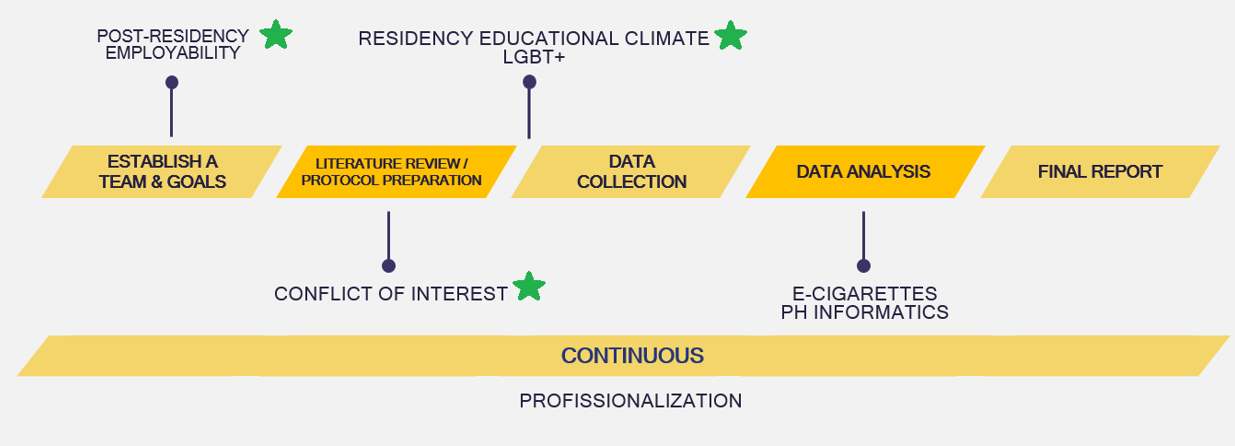
All working groups are in different stages of work (Figure 1), some still gathering a team, others piloting questionnaires, and the more advanced ones are analyzing the collected data. Three of the WG are still accepting new members to collaborate (marked with a green star in the figure).

Figure 1 – Working group stages.

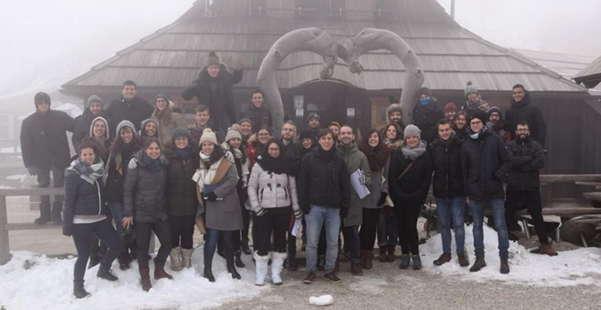
During the past meeting, at Velika Planina, we organized one workshop where all WG were presented by their leads or co-leads. It was an important moment to exchange ideas and get some feedback on their ongoing work. To the new members it was explained how to join one WG or submit a new one. Together we did some brainstorming and concluded that one of the preferred topics for forming a new WG was “Influence of Politics on Health”.

The challenges and strengths of a WG are several, and were also discussed:

  • Work at international level:

– Cultural and linguistic barriers (we’ve learnt some of the difficulties and strategies to translate a questionnaire for example);

– Communication problems;

– Acquire motivation, teamwork and leadership skills;

– Be able to replicate a research in different countries;

– Learn more about health systems and PH residency in other countries;

  • Perform a research work:

– Ethical approvals have proved to be one of the biggest barrier to some groups;

– Time management and planification skills;

– Generate knowledge;

– Promote PH.

At the end, you can even end up presenting your work at a big conference, like Špela Vidovič did during the European Public Health (EPH) Conference in Ljubljana (Figure 2).

Don’t waste this opportunity and get more involved in this project. You can get more information about each WG on the website, or by sending an email to research@euronetmrph.org.

You can participate in a currently active WG or suggest a new one.

Gisela Leiras

Public Health resident, Portugal

EuroNet MRPH logo with the full name of the network, European Network of Multidisciplinary Residents in Public Health.

Euronet Meeting First Impressions – Velika Planina 2018

“My first EuroNet meeting. In Velika Planina I had the opportunity to attend my first EuroNet meeting. My colleagues who previously participated told me some stories about EuroNet-meetings so I was really looking forward to being a part of it and connecting with new people.

Having the opportunity to meet colleagues from other countries and get to know them was definitely a great experience and my expectations were matched. I was able to meet great people enthusiastic of our work and exchange ideas, views and see first hand the commitment and the willingness to cooperate and how they can lead to a great teamwork. The work groups  give the possibility to everyone to suggest new ideas and see who is on board with them or to give your own contribution to work groups that already exist and need some extra help. Of course the social programme is an important part of the meetings and fun is assured!”

Yves Adja

Public Health resident in Italy


“As a fresh new resident in Public health, I had the great opportunity to attend the Euronet MRPH Winter Meeting in Velika planina, Slovenia. I couldn’t imagine a better way to begin the residency and to discover EuroNet.

I would like to thank the warm and welcoming Slovenian team, everything was there to spend an unforgettable week-end: a wonderful landscape, a great atmosphere, tasty Slovenian food (and wine), cozy cottages, snowball fights and more important all the great people who were there and made this time amazing.

It was so rewarding to discover EuroNet, all the projects and workgroups in progress between different countries. There were many interesting topics discussed, demonstrating the wide diversity of Public Health residency around Europe. It was also very stimulating and inspiring to see what can be done and to hear different professional experiences and initiatives during the pitch presentations.

I came back to France with my head full of nice memories, ideas for the internship, and the aspiration to learn more about Public Health.

To conclude, thank you so much EuroNet and all of its members for this beautiful meeting and nice moments, hopefully there will be plenty of others!”

Alice Vadre

Public Health resident in France

“Recently I attended my first EuroNet Meeting in Lubiana and it greatly exceeded expectations. Firstly, I had the opportunity to informally know about other public health residency programs, different directions and trajectories, new topics and interesting projects in the field. I especially liked the open organization of the working groups and now I’m very willing to participate.

Moreover, I got to know amazing people and colleagues that shifted my research horizons and my way to intend what a public health professional may potentially be. And of course,  networking was fun! Snowy chalets, cozy rooms and very nice people, what else?

I would certainly recommend the experience to anyone interested in EuroNet and its activities and in networking to other public health residents across Europe. The richness of confronting with them is something I will bring home preciously.”

Mattia Quargnolo

Public Health Resident in Italy

EuroNet MRPH logo with the full name of the network, European Network of Multidisciplinary Residents in Public Health.

Winter Meeting Report – Velika Planina 2018

For a brief moment Ljubljana was the center of European public health. From November 29th until December 1st it hosted the biggest European public health conference. The EPH conference is – among other things – a meeting point for residents, recent residents and those who wished they could still remember how it felt like to be a resident.

But they are simply too far into their careers and those feelings and memories are getting harder and harder to recall. Let us all take a minute of mindful meditation to sympathize with our experienced colleagues.

Having an event of such a scale hosted by one of the EuroNet MRPH member countries made a solid case for organizing one of the regular meetings EuroNet members cherish so much in Slovenia. Many residents from EuroNet countries were attending the conference and we could feed two birds with one scone if we organised the winter meeting back-to-back with EPH.

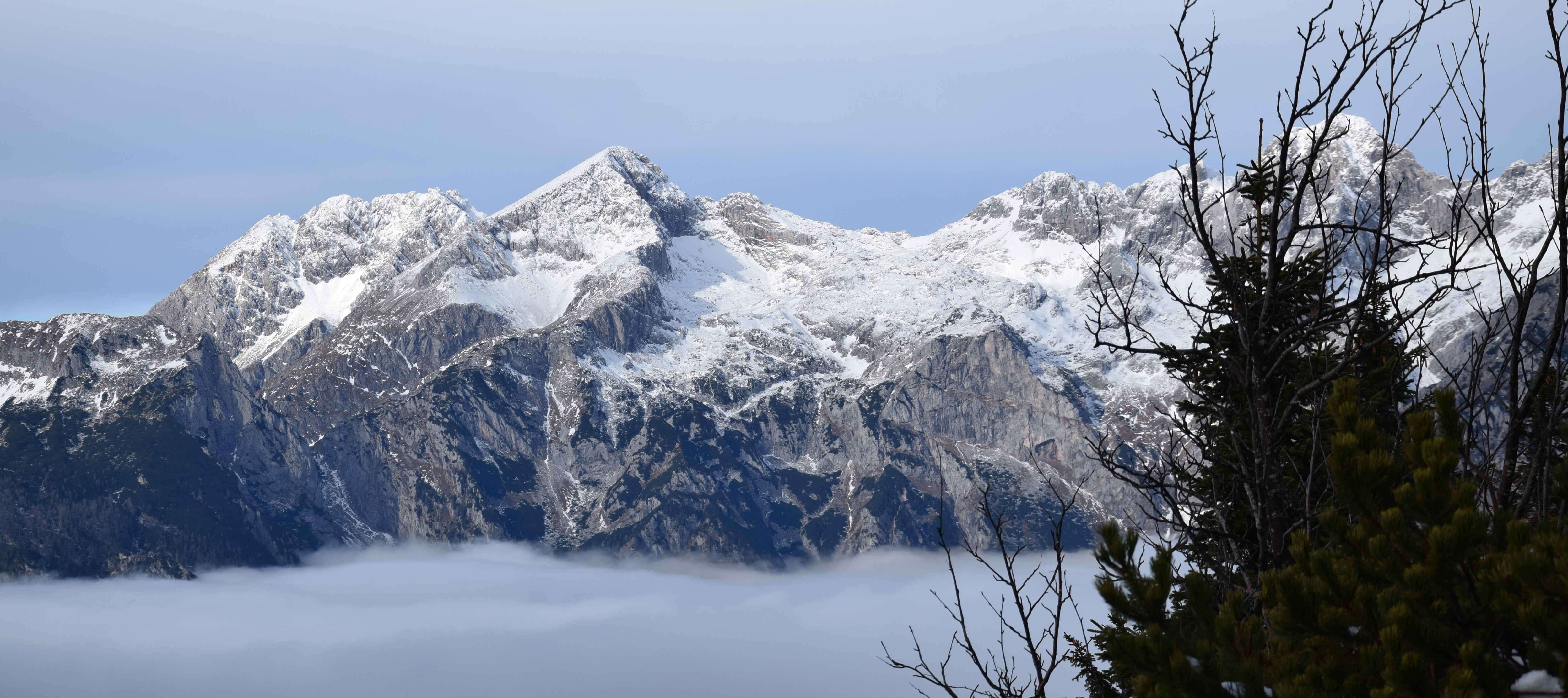
The only problem, if we can put it this way, was that most of the residents planning to come to the winter meeting were experiencing the city of Ljubljana, listening to presentations, and sitting in lecturing halls already for at least 4 days of the EPH conference. We assumed they could use a change of scenery and so we decided to organize the winter meeting in a secluded snow-capped mountain not that far away from our green capital. And so we booked buses, funiculars, chairlifts (yes, chairlifts) to take us up to the mountain called Velika planina where chalets with wood-burning fireplaces awaited us and kept us warm for the 3 days we’ve spent there.

Programme of the meeting had a clear focus on EuroNet inner workings and projects of our fellow residents. General assembly was split in two parts this time. We started the meeting with a dinner and continued with the first part of the general assembly in the same restaurant which happened to be the only closed space on the mountain big enough for 45 people to occupy at the same time. The second day was the day when majority of work was done. First on schedule were pitch presentations where some of the work EuroNetters are involved in was showcased.

Topics covered ranged from surveillance of communicable diseases, public health advocacy initiatives to ethics of vaccine hesitancy. Afternoon sessions kicked off with working groups focusing on internship facilitation, communication and research activities. A new format of session was introduced during the meeting as we conducted the first ever EuroNet-athon (mimicking the well-known hackathon format). Three teams were tackling three challenges of further EuroNet growth identified by a committee comprised of old and new board members. Winner of the EuroNet-athon was announced during the second part of the general assembly.

Even though not everyone followed our advice on warm clothing and footwear we managed to end the winter meeting with 0 casualties. We would even go as far as to say that the winter meeting we held at Velika planina was a big success. The idyllic location and the programme of the meeting had little to do with it.

It was a big success primarily because of the people who attended. And with this in mind we are looking forward to new success stories ahead. Because EuroNet MRPH is nothing more than people that represent it.

And, to borrow a line from the great James Brown, those people look like success, smell like success, feel like success and they make success happen.

The Euronet Organizing Committee Slovenia

EuroNet MRPH logo with the full name of the network, European Network of Multidisciplinary Residents in Public Health.

Conflict of interest between Professional Medical Societies and industry: a cross-sectional of the European Medical Societies’ websites

The relationship between industry and medical societies has been widely studied by the international literature and has been recognized as a potential condition for biases and conflicts of interest. A recent study analysed the relationship between industry and medical societies through the assessment of the Italian medical societies’ websites, finding some relevant correlations. Despite this scenario, little is known about the relationship between medical societies and industry in Europe.

The aim of the work conducted by Euronet MRPH is to extend the Italian research to seven European countries (Croatia, France, Ireland, the Netherlands, Portugal, Slovenia, and Spain). The study is important because it is a first such project addressing the conflict of interest between medical societies and industry in a comparative European setting. In addition to its scholarly contribution that will enhance the understanding of the nature of this relationship, the study has implications for the development of policy regulating the relationship between industry and medical societies, from disclosure requirements, to restriction on what industries can fund, among others. The working group already developed a structured flowchart to systematically produce comprehensive lists of all the medical societies in the included countries.
Up to date, a significant effort has been done in assessing the differences between the national definitions of medical societies and, so far, a heterogeneous framework emerged.

Stefano Guicciardi
Public Health Resident, Italy


EuroNet MRPH logo with the full name of the network, European Network of Multidisciplinary Residents in Public Health.

EuroNet MRPH working group LGBT well-being and work environment survey

The improved visibility of Lesbian, Gay, Bisexual, Trans and other non-heterosexual (LGBT+) people has not always been accompanied by advancements in the working and living conditions of those identifying as LGBT+. In medical residency programmes across Europe, there is little research analysing how challenges of the residency period align with the challenges associated with concealable identities and their disclosure. This paucity of data may be due to the notion that identity is inconsequential or irrelevant to achievement and well-being in medical studies and health professions.

EuroNet MRPH LGBT+ working group aims to better understand the daily living and working condition of medical residents identifying themselves as LGBT+. The product of this year of work (the project started in late 2016) is a questionnaire, made up of 45 questions, and organised in 6 sections, focusing on identities, acceptance both at work and home, episodes of discrimination or harassment, and emotional well-being. It will be soon disseminated after its translation in most of the languages spoken in the countries part of the network. The process of forward and backward translation will ensure semantic and conceptual equivalence between different versions and it will make data analysis reliable.

This project addresses the need for an informative survey about working environment experiences and well-being of medical residents identifying themselves as LGBT+, and could help to get an insight into the wider topic of LGBT+ acceptance in our health system. If you want to learn more or give a little help, do not hesitate to contact us.

Damiano Cerasuolo
Public Health Resident, France


EuroNet MRPH logo with the full name of the network, European Network of Multidisciplinary Residents in Public Health.

EuroNet Summer Meeting Report – Valencia 2018

Summer meetings are always a special one: President’s word about the Valencia meeting

Summer meetings are always a special one. Two years ago, for the first time in EuroNet’s history, we decided to spend a few days in a Dutch farm. Last year, we managed to bring 30 Euroneters to a tiny village on the top of an Istrian hill. This year, it was the turn of Valencia.

We decided that, given the time and the venue, a relaxed format of meeting would be more appropriate. Yet, there are always three goals which must be achieved in a meeting: to improve EuroNet, to learn something and to have fun with other colleagues. Thanks to the work of the organising committee, all three were achieved. Presentations by Rocio Zurriaga, Robert Otok and Sara McQuinn taught us about the past of our network and how to look to the future by strengthening our partnerships with key European organisations such as ASPHER and EUPHAnxt. These were followed by our usual working group sessions. This year, we also introduced an innovative format of group discussions, whose outcomes you will be able to read in this report.

Nevertheless, this meeting will be always remembered as the meeting where Turkey joined our network. We are already the biggest network representing medical residents in Europe. However, expanding EuroNet is always an objective. By strengthening EuroNet we increase our capacities and become more influential. In this context, the admission of Turkey is a huge step forward. We are all really looking forward to meeting and learn from our Turkish colleagues.

But a EuroNet meeting would not be a EuroNet meeting without fun, and the Spanish committee (and Julio particularly) are experts on this. We enjoyed some fantastic days in which water buckets, paella and the beach were among the highlights.

Whether you are an established euroneter or someone hearing from our network for the first time, I hope you enjoy this report and, if you want to join us, do not hesitate to contact the board or your country representatives. I hope that you are able to join us on our next meeting, which will take place in Slovenia at the beginning of December. See you there!!

Alberto Mateo
2018 EuroNet President
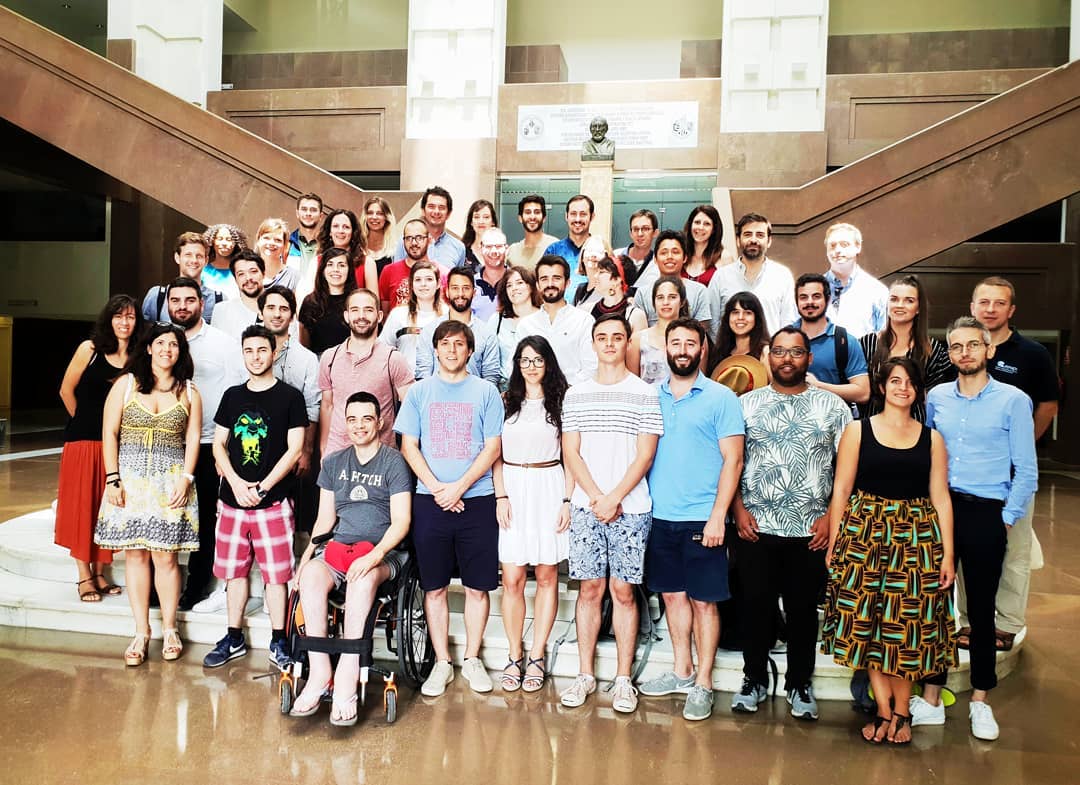
A paella for fifty: a word from the Organising Committee

In 1936, during an excavation on a hill near Kujut Rabua, a Hamlet southeast of Bagdad, members of the Iraqi State’s Railway Department found a tomb covered with a slab of Stone. The archaeologic recovery that ensued resulted in a magnificent number of small, decorated objects dated as far back as 248 a.C. . Among these were several odd looking recipients, shaped like a vase and light yellow in color. In these recipients they found fixed copper cylinders with iron rods in them. These objects would later be identified as crude batteries used for electroplating small objects and nicknamed the “baghdad batteries”, predating modern electroplating technology by almost two millennia.

We took on the challenge of organising the 2018 summer meeting with mediterranean optimism. We would start with Croatia’s victory against England (no disrespect to our british colleagues, but Croatia is a charming underdog with a little to no imperialist background) and finish on Sunday night by lighting a cigar after tapas with the last meeting survivors à la The A Team’s John Hannibal Smith exclaiming “I love it when a plan comes together”. Fade to black.

Unfortunately the world is a wild place full of real problems. It is physically impossible to make an A+ paella for fifty. Despite the different issues that were faced, organising this event was a blast. Sharing your city and hosting for colleagues and friends is a great experience that we are grateful for and we recommend. It also, as is usual in EuroNet meetings, produced several unique moments, some of which we would like briefly mention: Turkey’s historic entry in EuroNet. Croatia making it to the finals. The experimental discussion groups as a way of exploring common interests and generating ideas. The weird bar. Several impressive memes were also produced during this meeting: Angelo’s very big data, Euronet pushing me to achieve my fullest profesional potential and Clement and Antoine’s rather odd bed meme.

Back to the Baghdad batteries. Lost knowledge is a real thing. As good as we are in keeping a record of things, humanity sometimes has the tendency of starting things from scratch rather than stand on the shoulders of giants. We saw a glimpse of this during Rocio Zurriaga’s intervention on the beginnings of EuroNet, particularly in regards to the structure of assemblies. Meetings have varied greatly in the last couple of years. This is understandable considering the association’s impressive expansion (There is word that despite history’s lessons we will take on Russia in winter). We would however like to echo the feeling of discontinuity that was expressed by some during the meeting. Creative licenses set aside, there is perhaps a need to produce a template of what a meeting should look like, what sections should constitute one and what are the objectives or the expected interactions at the assemblies. At this point, the size of the association certainly justifies a quality control approach.

Next meeting couldn’t be more of a contrast with the last: from the mediterranean Playa de la Malvarrosa to snow covered cottages in the slovenian alps. The idyllic setting along with the coinciding EPH in Ljubljana and the guaranteed hosting qualities of the Association of Public Health Residents of Slovenia truly makes this one a no brainer. We hope to see you all there.

In words of our fellow JF Monteagudo, “together we are stronger”; and as  Professor Miroslav from the Andrija Stampar school of Public Health said one night:

Health to All.

The 2018 Valencia Meeting Organising Committee


Points of view: Ireen and Desmond

This summer I finally had the opportunity to join my first EuroNet MRPH meeting. Due to a lot of enthusiastic stories of my colleague (Lilian van der Ven) about EuroNet-meetings my expectations were sky high. And I can tell you that Valencia did not disappoint me at all!

On the first day of the meeting I have learned a lot about Public Health initiatives in Europe. There was a presentation about
EUPHAnxt (Sara Mc Quinn). Rocío Zurriago Carda, former president of EuroNet MRPH, taught us some history of our association. It included a very impressive movie of several former members, who are now working in different fields of Public Health all over the world. It showed me the importance of this network and the family-like involvement of all the individual members. Together we are stronger!
We were asked to use our brains and creativity in the working groups of internships, research and communication. I attended the one about internships. Did you already know that EuroNet MRPH facilitates internships throughout the continent? Read everything about it on the website! Cansu Erden Cengiz told us everything about the Turkish Public Health system and their network of residents. It led to an unanimous YES during the voting, which means that Turkey is now the 10th country joining the EuroNet MRPH. Together we are stronger!

The second day of the meeting started with a presentation of the new ethical statement of the association (Maria Francesca Manca) and an interesting update about the research working groups (Damir Ivankovic). Afterwards Robert Otok, the director of
ASPHER, presented the work of the association and the professionalization. There were discussion groups of several very interesting topics, like big data. The day ended with a fun movie contest to promote EuroNet MRPH. A lot of attendees told their individual positive experiences with this network, some of the attendees introduced the EuroNet-song ‘Viva EuroNet’, but the winner was Juan Francisco with a short movie with a very clear message: ‘Together we are stronger!’.

Beside the serious topics during the meeting, Julio Munoz did a very good job to show us all the best things of Valencia. He organized good weather, so we could enjoy the beach and the sea after the meetings. He arranged the 2018 FIFA World Cup for some international competition between the different EuroNet countries. He taught us some very useful Spanish sentences, like ‘Please try to keep the hamster alive’. He found the best restaurants to have shared dinner and the weirdest bars to have some good fiestas toda la noche. He took his profession as an audio tour guide very serious, so nobody could get lost, unless they were not listening of course. He constructed cycle paths throughout Valencia, so the Dutchies couldn’t stop smiling while riding their bikes. He showed us the biggest pan of paella I have ever seen, and the best paella I have ever tasted for breakfast. And even during the last night he arranged a huge firework show to let Valencia know that the EuroNet MRPH-meeting has officially ended. Muchas gracias Julio!

After another short night of sleep, it was time for me to fly back home. I’m really glad that I was able to attend this meeting and thanks to everyone for the warm welcome, the interesting presentations and all the fun. Luckily there will be more meetings and thanks to the preview of Matej Vinko of the winter meeting in Slovenia, I know it’s going to be another awesome weekend. Are you joining as well? Always remember this: together we are stronger!

Ireen Feenstra
Public health resident in the Netherlands


The recent Euronet meeting in Valencia proved a great opportunity to network with European colleagues. During the meeting I enjoyed listening to committed and enthusiastic public health residents from other European countries give their perspectives on their training and educational experiences. I also learned of some excellent practical initiatives that have been developed by Euronet including the internship programme which I believe will help interested public health residents strengthen their knowledge and experience in various areas of public health.

It is clear that Euronet is a growing organisation which is helping to connect public health residents across Europe. I would encourage any public health resident who is interested in Euronet to come along to the next meeting and take the opportunity to meet and develop links with European colleagues.

Desmond Hickey
Public health resident in Ireland


Discussion Groups Reports

Big Data
We organized a discussion group on themes related to Public Health Informatics (PHI), especially Big Data, during the Euronet Meeting in Valencia. Our group attracted much interest, becoming one of the biggest discussion group during the meeting.

The participants were involved in discussions about hot themes in the application of informatics and advanced data analysis to health problems: for example, what are Big Data, Electronic Health Records, machine learning and its possibilities and limitations, using geographic data for health planning, the range of possibilities for population studies allowed by the use of internet usage data, like search engines data, social network data (the so-called Digital Epidemiology), etc… We discussed such topics alternating request for information, personal experiences, and discussion of Public Health implications.

We also focused on the ethical implication of Big Data; we considered how essential is to get access to precise and rich data for better health programming, but much care must be taken regarding how this data is treated, stored and distributed. We made some examples, like being theoretically possible to identify specific persons using even anonymized data, or that insurance companies and employers could use genomic data about one person and treat them differently on a hypothetical risk of disease. We also discussed a bit regarding the new European law for General Data Protection Regulation (GDPR), and its implications for research purposes. It was also remarked that data digitalization without enough technical expertise could lead to data losses or worse to exposition to informatic attacks (e.g., ransomware). We cited how the technology called Blockchain, the backend of the bitcoin, that works by creating encrypted, redundant, decentralized copies of the modifications of the data can be a solution to health data management, interchange, and security. It was also discussed that too much privacy in certain settings could hinder the development of research that would be beneficial for Public Health but not possible in these days for privacy and corporate concerns. One example are the limitations on access to Google Search and Twitter data that would allow to follow health discussion and even identify possible cases of disease a lot faster than usual surveillance systems.

These discussions led us to wonder if training provided by our Public Health Schools on this matter is enough and coherent with the rapid evolution of information technology. We thought about creating a Euronet working group which aim is to map the presence of informatics courses in Public Health training schools along Europe and evaluate which topics are covered and whether the program is up to date with the latest development. Finally, we created a WhatsApp discussion group where people can share material about the application of informatics to Public Health.


Climate Change
The climate change discussion group started small but gradually grew in members by the minute as word reached the street that it was “pretty hip”. The discussion included both the public health related outcomes of climate change and the actual activities that influence the climate change phenomenon.

The broadness of the discussion prompt was thoroughly explored. Here are some of the ideas that received more attention:
-How droughts and reduced access to water, can make the resources an object of conflict and a cause of population displacement.
-The expected rise in sea levels as another cause of population displacement and its effect on medical infrastructure.
-The social and economic impact of extreme events and the probability that countries with little experience on these events may be underprepared for a potential hit.
-Changes in vector and pathogen habitats that result in the displacement of diseases towards unsuspecting countries in colder, drier climates.
-The grim effect of both heat and cold waves that result in increased mortality.
-The pollution of the seas, the effects of microplastic and the current initiatives to tackle these issues.
-The effects of increased air pollution on suicide rates, perhaps due to an exacerbation of patients’ symptoms.
-The surprising fact that climate change hinders animal growth, thus resulting in smaller and smaller animals every year.

Two distinct outcomes resulted from this discussion. 
On one hand there is the question of whether EuroNet MRPH can or should do anything to contribute in the fight against Climate Change. A campaign was proposed to promote awareness within and beyond the association. This, to an extent, can be considered a current “work in progress” in the form of a carbon footprint estimation project proposed for the Valencia Summer Meeting; the idea of which is to estimate the amount of emissions caused by our means of transportation and how much it would actually cost to neutralize such an impact. The other outcome is the proposal of a working group on one of the different discussed subjects. The lack of easily accessible data was observed although there are some free to access resources on things like rainfall, meteorology or air pollution. The review of different national policies in countries represented in EuroNet and beyond was also suggested.

Although a specific line of work was not identified, climate change turned out to be an issue that leaves no one indifferent. This fact along with its pressing nature make it an excellent research theme for members of the association.


Nutrition
The working group discussed food and nutrition problems and related issues in order to get together, share ideas and present possible solutions. The case of in vitro meat opened the debate, and talking about its environmental and animal welfare arguments for development got us thinking about the cultural aspect of food as well. The group concluded it to be not a solution to the excessive meat consumption, but a complement to traditional burgers, expanding consumer choices. However, the different food demands (kosher, vegan, etc) of present days can be seen as a threat, because of the sustainability issues and cultural aspects. Food becomes less of a bridge and more of a problem when in the same community/society there are different schools of thought and very different food demands. Insect eating was another issue that raised the debate on why food is such an important part of our cultural heritage, and got us discussing how it would be really difficult to change mindsets, and on it taking a number of generations to accept this practice. The present practices are unsustainable and we don’t believe this practice, needing such a long time to produce results, would be a primary solution for the environmental concerns.

When talking about food one can never ignore the way food is actually being grown and produced. We talked about environmental concerns, such as the amount of land needed to feed animals for consumption, and the fish farming policies that make the fish grow faster but with loss of nutrition properties. Permaculture, seed biodiversity and the Monsanto problem were also discussed. We also discussed how the new diets/alternative eating styles are having both a positive and negative impact on health, positive or negative depending on the consumption of unprocessed or highly processed foods, respectively, and sustainability, depending on sourcing of the food (local vs imported).
We then talked about how the future diet would look like, bringing up the subject of the vegetarian and the reducetarian diets. This would definitely have an impact on the fish and meat economical sector, both on the implementation phase (to get people into these diets) and the maintenance phase (keeping these diets going for generations). The policies needed to reduce the consumption of these products would probably be around creating quotas for producers and new taxes for consumers.

The subject of the Common Agricultural Policy, implemented since the 60’s came to discussion regarding the previous subject. We talked about how this set of policies was created to solve the problems at that time, and that we now need to reduce subsidization gradually for the meat industry, to raise the subsidization for food & veg companies and tax the consumption following different rules.
The need for vending machine policies and the tax on sugar closed the working group session, and different participants talked about their countries present concerns and policies.


Fake Therapies
The discussion group was very participative, and was greatly nourished by the contributions of many residents in whose countries the health policies are very varied in these subjects. One of the central aspects of the talk was the daily medical work that the doctor must do in Hospital or at the consultation room, with a patient user of fake therapies. It became clear, that many times the physician lacks the time and the opportunity to explain (or even, argue) with the patient, but it’s always important to provide a support and understanding (never blame the patients for being scammed nor ridicule them for their choices). At least, it would be great to refer to places where the information is clear to clarify his/her doubts. It would be interesting to have a list of websites or pages where the societies talk informatively and rigorously about the most common pseudotherapies (Homeopathy, Chiropractic, Reiki …).

The participants talked about the various media strategies recently carried out in different parts of the world, on campaigns against anti-vaccine movements. For example, the case of the United States was brought up, where several anti-vaccine videos were published, dramatizing the danger and the health risks of young women who were vaccinated against the Human Papillomavirus. Since they had a lot of social repercussion, the fire was fought with fire and the societies in favor of vaccination made a very similar type of video dramatizing the positive effects about safety and efficacy of the same vaccines, achieving even greater diffusion. Issues about the Health policy from various countries were also discussed (fines to parents in Australia, the requirement to present the vaccination cards for schooling in Italy, etc.)
Finally, experiences were exchanged on specific cases of users of pseudosciences and the legal perspective of many of them in Spain, through the legal gaps and jurisprudence of specific events.


Next Meeting: 1-3 December 2018, Velika Planina!
See you there!
 

EuroNet MRPH logo with the full name of the network, European Network of Multidisciplinary Residents in Public Health.

Heat waves and climate change

Climate change is deemed “the biggest global health threat of the 21st century”. (1) Global warming is now unequivocal; global average temperatures have risen by 0.85°C between 1880 and 2012. (2) Global mean temperature is projected to increase by about 1.6 to 2.6°C above the preindustrial period by the 2050s, depending on the scenario used.2 Using median values, projected temperature increases for Europe and America are between 2 and 4°C for the 2050s (relative to present-day climate). (2) Higher increases are projected over much of Asia and Australia. (3) Heat waves, defined as extended periods of extreme high temperature, are regarded as one of the primary weather-associated threats to human life. (4) As increased frequency, intensity, and duration of heat wave events occurred associated with global warming, impact of heat wave on health has drawn more and more attention worldwide. (5-7) It is well-established the relationship between extreme high temperatures and human morbidity and mortality. (8)

There is also now strong evidence that such heat-related mortality is rising as a result of climate change impacts across a range of localities. (9) For instance, the excess mortality during the extremely hot summer of 2003 in Europe and the 2010 Russia heat wave, resulted in more than 70,000 and 11,000 deaths, respectively. (10,11) Much of the excess mortality from heat waves is related to cardiovascular, cerebrovascular, and respiratory disease and is concentrated in some populations groups. These groups include women, young children and older people, people with existing health problems or disabilities, and poor and marginalised communities. They are particularly vulnerable to the health effects of climate change, whether because of existing socioeconomic inequalities, cultural norms or intrinsic physiological factors.

Other risks were associated with rising temperatures and changes in precipitation pattern. For example, the modification of viable distribution of disease vectors such as mosquitoes carrying dengue or malaria. Temperature affect the range and reproductive rates of malarial mosquitoes and also affect the lifecycle of the parasitic protozoa responsible for malaria, possibly increasing the incidence of a disease that causes 660 000 deaths per year. (12) There are equally complex relationships and important climate-related risks associated with dengue fever, cholera and food safety. (13-15)

Moreover, a heat wave can be a big threat in urban area because of the “urban heat island (UHI) effect”. The UHI effect results in the temperatures being somewhat higher in cities than in suburban and rural areas, primarily because of the abundance of heat-retaining surfaces such as concrete and black asphalt, that exacerbate the negative heat effect on residents compared with reflective, transpiring, shading, and air-flow-promoting vegetation-covered surfaces. (16,17)

The events occurred in Europe and Russia and those which occurred in Australia, 2012/2013 and 2016/2017; North America, 2012; India and Pakistan, 2015 and Europe 2015 have led to the implementation of specific policies to reduce heat-related mortality such as the National Heat Wave Plan in France, (18) and the Heatwave Plan for England. (19) Evidence suggests that effective adaptation measures would reduce the death rates associated with these heat waves. Adaptation measures also include increasing green infrastructures and urban green spaces, improving the design of social care facilities, schools, other public spaces, and public transport to be more climate-responsive. Adaptation options within health care include training of health-care workers and integrated heatwave early warning systems (HEWS). (20)

A communication and public education strategy is an essential part of the warning system, public health messages should be disseminated to all age and vulnerable groups to increase awareness of symptoms of heat-related illness.

____________________

References

  1. Costello A, Abbas M, Allen A, Ball S, Bell S, Bellamy R, et al. Managing the health effects of climate change. The Lancet. 2009; 373(9676): 1693–1733.
  2. IPCC, 2013a: Summary for Policymakers In: Climate Change 2013: The Physical Science Basis. Contribution of Working Group I to the Fifth Assessment Report of the Intergovernmental Panel on Climate Change Change [Stocker TF, Qin D, Plattner GK, Tignor M, Allen SK, Boschung J, Nauels A, Xia Y, Bex V, Midgley PM (eds.)]. Cambridge University Press, Cambridge, United Kingdom and New York, NY, USA, pp. 1–30.
  3. Bassil K, Cole D. Effectiveness of public health interventions in reducing morbidity and mortality during heat episodes: A structured review. Int J Environ Res Pub Health. 2010; 7: 991–1001.
  4. Luber G, McGeehin M. Climate change and extreme heat events. Am. J. Prev. Med. 2008; 35: 429–435.
  5. Wang C, Chen R, Kuang X, Duan X, Kan H. Temperature and daily mortality in Suzhou, China: a time series analysis. Sci Total Environ. 2014; 466–467.
  6. Gronlund C, Zanobetti A, Schwartz J, Wellenius G, O’Neill MS. Heat, heat waves, and hospital admissions among the elderly in the United States, 1992–2006. Environ Health Perspect. 2014; 122: 1187–1192.
  7. Gao J, Sun Y, Liu Q, Zhou M, Lu Y, Li L. Impact of extreme high temperature on mortality and regional level definition of heat wave: a multi-city study in China. Sci Total Environ. 2015; 505: 535–544.
  8. Forsberg, B. Heat-related respiratory hospital admissions in Europe in a changing climate: a health impact assessment. BMJ Open. 2013; 3: e001842.
  9. Smith K, Woodward A, Campell-Lendrum D. Human health—impacts adaptation and co-benefits. Climate change 2014: impacts, adaptation, and vulnerability Working Group II contribution to the IPCC 5th Assessment Report. Cambridge University Press, Cambridge, UK and New York, NY, USA; 2014.
  10. Robine J, Cheung S, Roy S, Oyen H, Herrmann F. Report on excess mortality in Europe during summer 2003. EU Community Action Programme for Public Health. Grant Agreement 2005114. 2007.
  11. Agence France-Press. Russian heat wave caused 11,000 deaths in Moscow: Official. 2010. Press release. 2010.
  12. WHO. World malaria report. World Health Organization, Geneva; 2012.
  13. Bhatt S, Gething P, Brady O. The global distribution and burden of dengue. Nature. 2013; 496: 504-507.
  14. Sutherst R. Global change and human vulnerability to vector-borne diseases. Clin Microbiol Rev. 2004; 17: 136-173.
  15. WHO. World Meteorological Organisation. Atlas of health and climate. World Health Organization, Geneva; 2012.
  16. Roth M. Review of urban climate research in (sub) tropical regions. Int J Climatol. 2007;27:1859–1873.
  17. Gabriel K, Endlicher W. Urban and rural mortality rates during heat waves in berlin and Brandenburg. Germany Environ Pollut. 2011;159(8–9):2044–2050.
  18. Pascal M, Le Tertre A, Saoudi A. Quantification of the heat wave effect on mortality in nine French cities during summer 2006. PLoS Curr. 2012: 4:RRN1307.
  19. Public Health England. 2015. Heatwave Plan for England. Protecting health and reducing harm from severe heat and heatwaves. Public Health England, London, UK.
  20. Ghasem S, FitzGerald G, Aitken P, Verrall K, Tong S. Are heat warning systems effective? Environmental Health. 2013: 12-27.

____________________

Ana Pinto de Oliveira
Public Health Resident
Arnaldo Sampaio Public Health Unit, Lavradio, Portugal

Catarina Oliveira
Public Health Specialist
Arnaldo Sampaio Public Health Unit, Lavradio, Portugal

EuroNet MRPH logo with the full name of the network, European Network of Multidisciplinary Residents in Public Health.

Interview with Robert Otok, Director of ASPHER

We have been reading ASPHER’s strategic Objectives 2016-2020. We are right now just in the middle of this period of time. Could you tell us some of the achievements ASPHER (Association of Schools of Public Health in the European Region) has accomplished so far regarding those strategic goals?

ASPHER 2020, which was inaugurated during the 50th anniversary year of the Association, presents a comprehensive and balanced agenda guiding the strategic development of ASPHER during an important period, critical in many ways for the future of Public Health in Europe and globally.

As we reach the midterm mark of this time period, several key achievements have been reached by ASPHER. These include the continued development of ASPHER’s core competences programme with the publication of the 5th edition of competences list. The list remains a core reference for the development of public health education in Europe, while also supporting public health careers and systems development.

A central project underway is the collaborative development of a series of tools for public health workforce development and professionalization in Europe. This is being undertaken as part of a groundbreaking agenda set by the WHO Regional Office for Europe within a framework of the European Action Plan (EAP) for Public Health Capacities and Services Strengthening. The tools will be presented at the European Public Health Conference in Ljubljana this November and will be made available for use by countries and other relevant stakeholders soon thereafter.

ASPHER has also made strides to bolster collaboration between keystone public health organizations. Cooperation across organizations that pool ideas, resources, and capacity can only strengthen Public Health today and brighten the outlook for the field in the future. ASPHER is maintaining historically close ties with the European Public Health Association (EUPHA), and forging new key partnerships – including those with the International Association of National Public Health Institutes (IANPHI) and the Association of Schools and Programs of Public Health (ASPPH), which is ASPHER’s counterpart organization across the Atlantic.

There are other exciting developments still to come under the ASPHER 2020 agenda. These include the launch of the Public Health Training Academy, which is meant to constitute a training platform for individuals seeking continuing professional development opportunities in public health. ASPHER is also improving the formula for its annual Deans’ and Directors’ Retreats – a major membership event of the Association.

We know one of the foremost pillars of ASPHER working is on Professionalization of the Public Health Workforce. Could you explain the ASPHER’s work in this area?

This project is primarily realized through ASPHER’s active engagement in WHO Europe’s Coalition of Partners (CoP) work on implementation of the EAP for Public Health Capacities and Services Strengthening. The relevant CoP projects include:

  1. Development of the Road Map towards professionalization of the public health workforce in the European Region. This is a tool meant to support countries in developing policies related to public health workforce professionalization. The Road Map recognizes the diversity of public health systems in place across Europe and should act as a guide to countries to choose the path that suits their culture and needs to strengthen and professionalize their workforce. The Road Map seeks to reinforce the professional identity of the current public health workforce and help to align public health services and operations with the public health workforce development.
  2. Development of a Handbook for managing public health professional credentialing and accreditation systems in the European Region to serve as a reference tool for the national education and health systems to ensure the competencies both required and presently possessed by the public health workforce.
  3. Development of a core competencies Framework for the public health workforce in the European Region. This should be of use for human resources practices to enable an ongoing standardized and consistent assessment and development of public health knowledge and skills at individual, service, organizational, and country levels, thus, supporting public health professionalization and credentialing.

Does ASPHER have any plan to facilitate the application of its proposals about professionalisation to medical residency programmes in Europe? What EuroNet and public health residents in general can do to support and participate in ASPHER?

The EuroNet Medical Residents in Public Health (MRPH) plays an important role in the development and the implementation of the public health professionalization agenda. The Network already actively contributes to the work of the CoP providing a specialist workforce and fresh perspectives from a younger generation. Input from EuroNet and its individual members is critical for the success of this effort.

The specialist training EuroNet MRPH members obtain makes them also particularly relevant to ASPHER. It is no surprise then that both associations actively collaborate, share mutual understanding and friendship. Italy is an interesting example of a country where all schools providing residency and specialist training in public health became ASPHER members – such a membership context provides powerful potential for working closely together.

To learn from your experience, which are the aspects of ASPHER that led you to get involved with the association? How did you benefit from being involved in ASPHER?

ASPHER is a family, with all the baggage that it brings – both pluses and minuses. Still, what I think keeps me (and I believe not only me) with ASPHER is its unique atmosphere and the people who are part of the organization.

Over the past years, I have sought to secure its professional shape and high performance standards. Being the Association of Schools of Public Health, (i.e. concrete institutions, with staff, students and graduates), extends the impact of ASPHER through the schools’ infrastructure, the services they provide in training, research and societal contributions. It is an extremely powerful organisation – essential for the growth of the Public Health in Europe and globally. Working at ASPHER is therefore an extraordinary journey, an eye-opening experience, reflecting the complexity of the truly unique field the Public Health is.

Which do you think are the future challenges for the future public health workforce and how young public health professionals could prepare to face those challenges?

My personal take is that we are currently challenged to identify clear career options/paths and to make quality training available to enable smooth navigation through the complexity of the public health field and the choices it offers. ASPHER makes continuous efforts to address this. Young public health professionals should remain courageous and pertinacious. I would recommend that they find someone they can trust to lead them in facing their career challenges and in their turn, mentor newcomers as they move forward and gain experience.


https://www.aspher.org/