Multinational survey assessing learning climate and satisfaction during Public Health residency: an update from the Working Group

Learning climate has an important impact on knowledge and skills we acquire during residency. It encompasses many important aspects, such as the quality of supervision, professional relations between colleagues, quality of formal education and others. Numerous studies in the literature have sought to assess quality of training in different areas of medicine. However, in the area of public health training, there are no published studies on learning climate assessment or residents’ satisfaction during the residency.

The lack of literature in the area of assessing Public Health training inspired us to start a working group, which will perform a multinational study assessing learning climate and satisfaction during Public Health residency. The purpose of the study is to prepare the basis for evidence-based improvement of public health training in Europe.

Literature review was performed to identify tools currently used to evaluate learning climate during medical residency. Of all the questionnaires available, the working group chose D-RECT as the most applicable for our study. With author’s permission, we modified the questionnaire to suit Public Health residency. The new adapted questionnaire consists of 50 questions divided into 12 subscales. We proposed a new name for the modified questionnaire: European Residency Educational Climate Test (E-RECT).

The study will start after receiving the Ethics Committee approval. At this stage of the study, the questionnaire is being translated via a back-and-forth process into the language of each country. The piloting and validation process will follow, before we distribute the questionnaire  to all public health residents in each country.

The data obtained in the study will provide the opportunity to compare results between different countries and see what are the differences, the good practices and the opportunities to improve national residency programs. We encourage residents to respond to the invitation, when they receive it – fill in the online questionnaire to ensure that your voice is heard.

_________________________

Špela Vidovič
National Institute for Public Health, Slovenia

Summer Reading: “Deadly Outbreaks”!

Summer time, hot weather, (almost) everyone on vacations… Well, not me! But during the weekends I choose to hang out at the terraces of nice cafes, enjoying the good weather with some friends. I could tell you I usually drink water and natural juices in these occasions but I would be lying: a glass of red wine or some nice sangria are my options on these relaxed afternoons.  It is the perfect timing to read a nice book, too. The last one I read was “Deadly Outbreaks” by Alexandra Levitt(1) and was result of a purchase on the internet, while searching for books on public health issues.

Before going to medical school, I was already working in infection control area at a 400 bed hospital, where epidemiological surveillance is an important component of our functions and, I must admit, one of my favorites. During these 13 years of work at this hospital, I already had to deal with few outbreaks but it was the one in the summer of 2006 I remember the most, when I was still a “freshman” in the Infection Control Committee. At the time, the microbiology laboratory gave us an alert: multidrug-resistant (MDR) Acinetobacter baumannii was isolated in sputum of a trauma patient transferred from a central hospital some days before.  After a first assessment we found out he was located in the Surgical Intermediate Care Unit, a small pos-op infirmary “packed” with 6 patients, where the distance between beds was roughly 1,5 meters and in which “our” patient was frequently coughing and in need of nursing care. This microorganism was not part of our local ecology, so this was considered an infection control “code blue”! The patient and the unit were immediately put in contact isolation, while the lab confirmed other two positive patients for MDR A. baumannii. An outbreak was officially declared and, with the support of the hospital management, rigorous infection control measures were taken: all contacts with this patient were identified and put in contact isolation, an epidemiological line list was done and an active surveillance protocol was implemented. The unit was closed to new admissions, environment hygiene measures were reinforced, patients were stratified by risk level and a cohort of healthcare workers (HCW) was put in place (specific teams of HCW took care of “confirmed”, “suspected” and “negative” patients). Meanwhile, the hospital that transferred the index patient warned us that they were experiencing problems with this microorganism but this information came to us too late… After eight months, 15 cases (8 of which died), 61 patients put in isolation and surveillance, and a lot of effort (and costs) for the hospital, HCW’s and patients, the outbreak was finally controlled. As a consequence of it, a surveillance protocol for MDR A. baumannii was implemented (applied for all patients transferred from other hospitals). In my opinion, one of the “lessons to be learned” from this outbreak is the importance of communication between and within healthcare units to be able to minimize infection control risks, related to patients mobility. Twelve years have passed and, today, this and other hospitals have a risk evaluation procedure that is applied to all admitted patients.
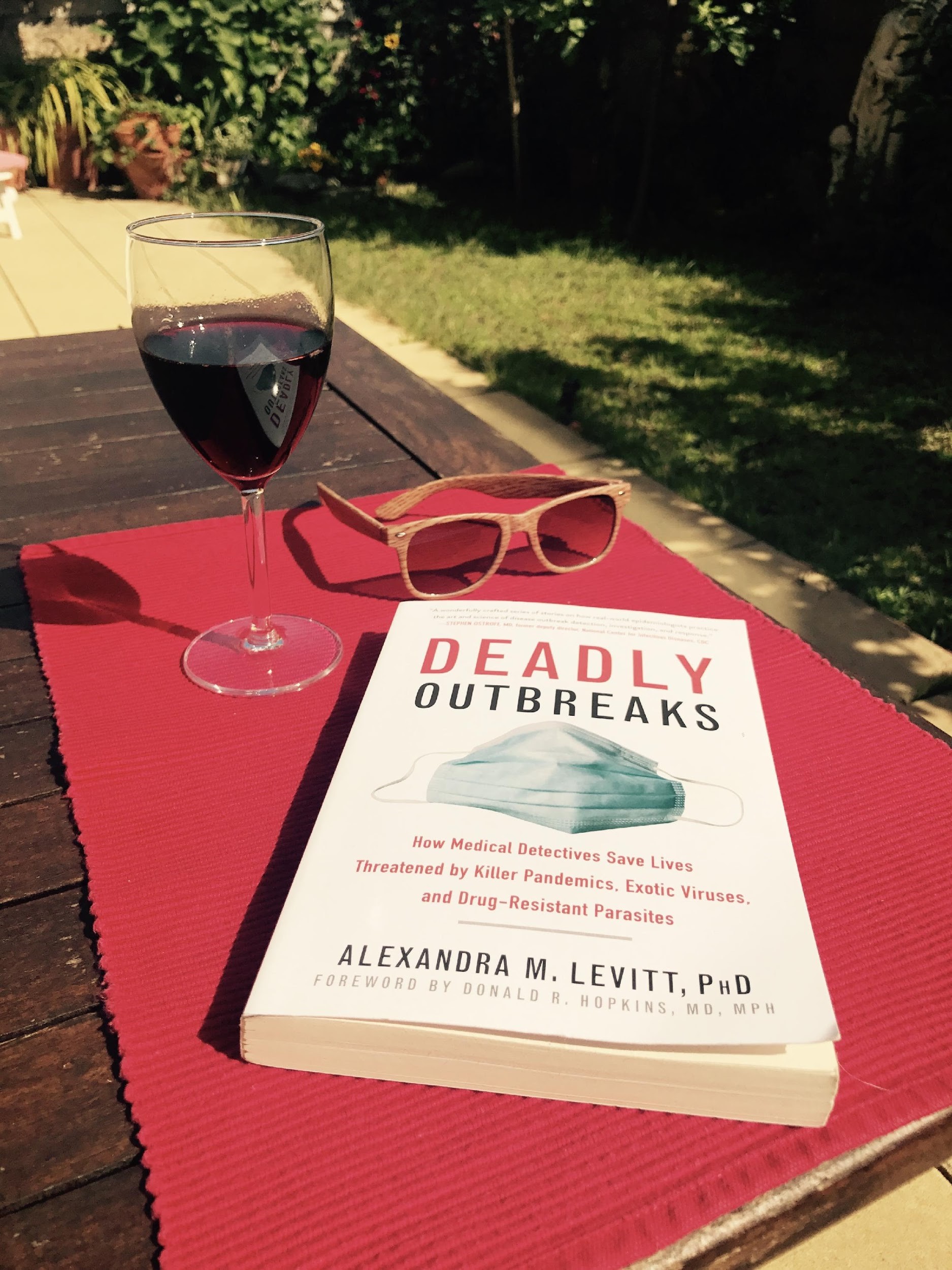
But back to the book: if you liked this outbreak description, you will LOVE “Deadly Outbreaks”1 and you won’t be able to sleep until you end it! The author, Prof. Alexandra Levitt, is an expert on emerging diseases and other public health threats and worked for the Center for Disease Control and Prevention (CDC). She dedicates this book to all field epidemiologists that “save lives threatened by killer pandemics, exotic viruses and drug-resistant parasites”. The book describes, in an exciting and pedagogical way, seven public health mysteries occurred in the United States of America between 1976 and 2006, through the learn-by-doing approach of the “medical detectives” of CDC´s Epidemic Intelligence Service. In the “author’s note”, three advices are given, namely: “be prepared for the unexpected” (when it comes to infectious microorganisms); “we are all in it together” (with the phenomena of globalization, wherever we live, we are all at risk) and the importance of participating in a strong public health system, in the pursuit of prevention of disease spread among the community.

In one outbreak described in the book, investigating the mysterious death of several infants at a Children´s Hospital, several epidemiological tools were used, including the “epi-curve” and the “relative risk of death” associated with each nurses’ shifts, estimating the risk of a baby dying when a specific person was on duty. The study concluded that the hospital should strengthen central control of medicines and implement a monitoring system of deaths, by time and place, within the hospital. (2)

Did you know that, as a consequence of an outbreak in a Philadelphia hotel affecting middle-aged Legionnaires, CDC fielded one of the biggest investigative team ever but couldn´t find its etiological agent for several months? In fact, it was a young microbiologist of CDC that discovered it when, later on, decided to review and explore the finding of some rods that he, first, assumed were contaminants of his cultures (“be prepared for the unexpected”, remember?). Did you know that, after its discovery in 1976, Legionella pneumophila was retrospectively implicated in cases as far as 1943?

More recently, did you know that an epidemiologic outbreak investigation, affecting abattoir workers exposed to porcine brain, led to the discovery of an immune-mediated polyradiculoneuropathy? (3)

Throughout the book, these and many other epidemiological and infectious diseases facts are given, engaging the reader to explore the scientific method, by testing various hypotheses through the use of the technologies available at the time of the outbreak. At the end of each chapter, the author reviews the main facts to illustrate the lessons learned. Did I catch your attention? Hope so! Despite the book portraying the modus operandi (and available associated resources) of the North-American reality, it’s full of interesting facts that, in my opinion, will enrich our knowledge in public health area. A “must-read”!

_________________________

References:

  1. Levitt, Alexandra M (2015) Deadly Outbreaks. 2nd edition. New York: Skyhorse Publishing.
  2. Buehler JW, Smith LF, Wallace EM, Heath CW Jr, Kusiak R, Herndon JL (1985) Unexplained deaths in a children’s hospital – An epidemiologic assessment. N Engl J Med; 313(4):211-6.
  3. Holzbauer SM, DeVries AS, Sejvar JJ, et al. (2010) Epidemiologic investigation of immune-mediated polyradiculoneuropathy among abattoir workers exposed to porcine brain. PLoS One. 5(3):e9782.

_________________________

David Peres
Public Health Resident
Public Health Unit – Community Health Center Group of Povoa de Varzim / Vila do Conde (Portugal)
What do you think #PublicHealthLooksLike? An unusual (but rewarding) PH resident attachment

In my experience it’s not very often that you get to combine your public health work with your hobbies, particularly when your outside interests include the arts as mine do. However, in my current role I am for the first time being able to do both daily, which has been exciting, rewarding and challenging!

For the last two months I have been working with the UK Faculty of Public Health (FPH) communications and policy team. They cover a lot of ground and I’m involved in several workstreams, but the main piece of work that I ‘own’ is the planning, implementation and promotion of their photography competition #PublicHealthLooksLike.

As the name suggests, the competition is aiming to improve the way FPH represent their members (i.e. the public health workforce) by showcasing what public health work really looks like in the UK and around the world, rather than using stereotypical ‘stock photo’ images of attractive models with stethoscopes. They’re offering some great prizes including £250 and a year’s free membership, but most importantly they’re planning an exhibition in London featuring the top ten photographs to celebrate the amazing diversity of public health.

Although the competition has only been running for six weeks and doesn’t close till October 19th, it’s already been incredibly inspiring to see both the engagement from public health professionals and the early entries coming in. I suppose we all know in the abstract that public health is a broad church, with people working in so many different areas, but there’s a big difference between knowing that and actually seeing it visually. We’ve had photos of anything and everything, from people supervising walking groups in the sunny English countryside to members hosting immunisation clinics in the Middle East.

From a personal point of view, I’ve loved being able to engage with potential entrants online, encouraging them to recognise their talents and the incredible work that they do every day without probably realising how interesting and engaging that might be to other people. It’s made me think seriously about how little I talk about or share my own public health work, and try to (slowly) increase the amount of personal and professional engagement I do on Twitter and other social networks. We should all talk more about what we do, because it’s often only by hearing and seeing the experiences of others that we become inspired to seek out new challenges – that’s partly why networks such as Euronet are so important.

The competition is still running, and I would definitely recommend Euronet members enter to showcase the work that we all do on a daily basis across Europe! You can enter up to five photos through the competition website. If you’re on Twitter it would be fantastic if you could take 10 seconds to RT this tweet to publicise the competition across Europe more widely, and if you fancy following either @FPH or me personally you can find us there as well.

I look forward to seeing your entries! If anyone is interested in hearing more about the competition or attachments with FPH, please just drop me an email at rachel.thomson8@nhs.net.

_________________________

Rachel Thomson
Public Health Resident
UK Faculty of Public Health, London

Local Health Plans: Value and Structure

Any health plan ultimate goal is to improve health and to reduce health inequities, with minimum resources, based on a value for health approach. A local health plan should follow strategic orientations from European, national and regional levels in order to achieve the sustainable development goals established by the World Health Organization. This idea of top-bottom guidelines is fundamental, although the usual short time frame may affect the evaluation of its implementation in terms of outcomes and impact.

Building Local health plans is responsibility of the public health team and health planning is its cornerstone. Also, it represents a social commitment, since it involves collaboration between stakeholders and individuals of a community in all of its phases. These interested parties are numerous actors that play a role in the community, taking direct or indirectly action in the health of the population. Their interventions should contribute to Health in All Politics (no longer policies) concept, and represent a stronger and empowered view of the results that all actions can have on community’s health and well-being. The plan should have a strategic format to provide all stakeholders with the right tools to take it into action; always in a whole-of-government and whole-of-society point of view. They should be diverse in their activities, in order to reach all citizens in different life settings. However, family, school, workplace, healthcare institutions and social environment are priority contexts and require the most adequate interventions.

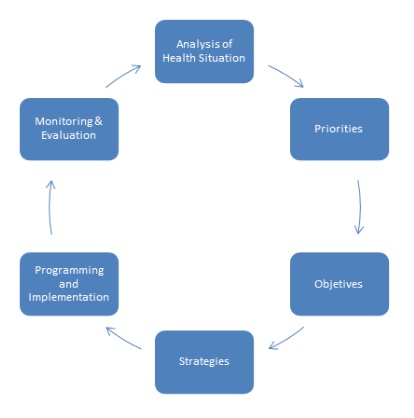
Figure 1 – Health planning cycle (Adapted from Imperatori and Giraldes 1982, Metodologia do Planeamento da Saúde, Lisbon)

Local health plans are based on the stages of the health planning cycle (figure 1) and start with an analysis of the local health situation assessment, withdrawn from the local health observatory. This information allows the drawing of the first list of health problems and their determinants, which, subsequently, are prioritized. The next step involves the setting of objectives and selection of strategies in collaboration with all stakeholders, taking into account the main health problems identified. During and after the implementation of the plan, it should be monitored and evaluated, as these are important components to ensure its fulfillment, using core indicators.

The health planning cycle should never be interpreted in a two dimensional (2D) perspective. Its structure allows transforming all outputs from evaluation phase to inputs used in the next step. Therefore, from a 3D analysis, the health planning cycle is a spiral which ends in an ideal health condition (utopian perception). It may be considered an iteration cycle, a process used to make anything better over time.

Therefore, a local health plan is a fundamental tool to implement the best practices available and improve population health. Its use must be encouraged and widespread. The importance of stakeholders in all course of action is their multisectoral response and their ability to build bridges between them, centered on population health and well-being. Thus, the interested parties should cover all society sectors based on Health in All Politics approach, leading decision makers to innovate and going beyond an ordinary policy plan.

_________________________

References

  1. World Health Organization. National health policies, strategies, and plans. http://www.who.int/nationalpolicies/resources/resources_tools/en/ [Online]
  2. Manual Orientador dos Planos Locais de Saúde. Direção-Geral da Saúde – Plano Nacional de Saúde. Lisboa. Janeiro, 2017
  3. Metodologia do Planeamento da Saúde. Imperatori and Giraldes. Lisboa. 1982
  4. La Planification Sanitaria. Pineault and Daveluy. Barcelona. 1994

_________________________

João Paulo Magalhães
Public Health Resident
Community Health Center Group of Porto Oriental, Public Health Unit

Vaccine hesitancy: how to communicate with hesitant parents: the C.A.S.E. approach

The SAGE Working Group on Vaccine Hesitancy concluded that vaccine hesitancy refers to delay in acceptance or refusal of vaccination despite availability of vaccination services. It is characterized by different factors in different contexts (political, ideological, social, etc.). Vaccine hesitancy is complex and context-specific, varying across time, place and vaccines. [1]

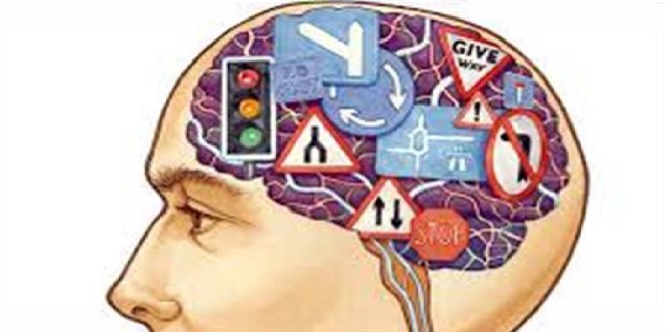
When approaching a hesitant parent, one must never forget that all his doubts are dictated by a strong perception of risk and by the consequent concern for the safety of his offspring. In this context, information concerning the “danger” or the factor considered as such, is connected and elaborated not only at the cortical level, but also in the limbic system which, thanks to its connections with the pre-frontal cortex, comes into play in the decision-making process, based on emotional reactions.

For this reason, any information you want to transmit to the defaulting mother or father, this must be simple, immediate and preferably proposed using the visual means (eg: simple graphs or sample images that can visually reproduce what you intend to explain), according to the rules of cognitive ergonomics. [2]

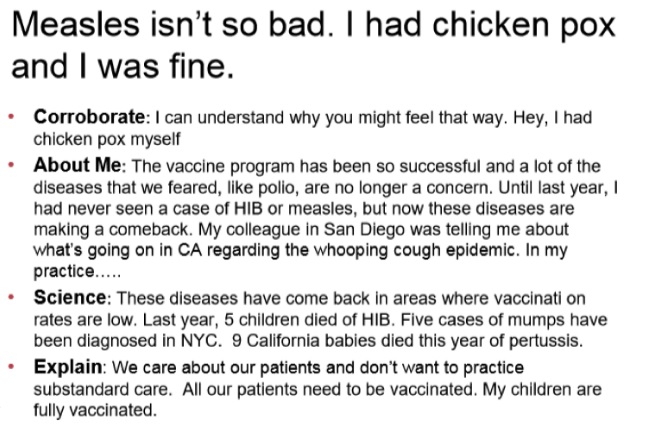
In the United States in 2010 Dr. Singer developed a communication model that, referring to Aristotelian rhetoric, provides an effective and efficient approach to communicate with the hesitant parents (C.A.S.E. approach). C.A.S.E. is an acronym that identifies the four phases of the communicative approach, Corroborate, About me, Science, Explain / advise (Fig.1). [2,3]

The first phase, Corroboration, which coincides with the Aristotelian technique of pathos, consists in proving emphatic towards parents who do not want to vaccinate their children, that is to listen, welcome and understand their doubts and their fears. Parents must perceive that who they are in front of is not an enemy whose purpose is to oppose them and impose on them a different way of thinking and acting, but it is a person who shares their primary interest, the health of the child. To achieve this, it is very important to find a point of agreement from which to start. [3,4]

In the second phase, About me, or ethos according to Aristotle’s rhetoric, the health worker should explain to parents what is his working mission (e. g. to advance the health of all people, the children’s sake) and what path he has taken to realize it (the studies, conferences or courses in which he participated, various studies). [3,4] The objective is to qualify the speaker, increasing its credibility and making it an authoritative source of information.

The logos of Aristotle is taken up again in the Science phase of Dr. Singer, in which the scientific evidence about the vaccines is presented to the parents. [3,4] It is in this phase when the cognitive ergonomics, mentioned above, comes into play strongly. To make the interview less dispersive, it is advisable for the doctor, already in the corroboration phase, to let the parents express the factors of greatest concern. This on one hand allows to partially reduce the anxiety of mothers and fathers, on the other hand allows the doctor to focus only on some aspects related to the vaccines and not on all the knowledge about the subject.

Fig. 1 Example of C.A.S.E. approach proposed by dr. Singer (2010)

Finally, to conclude the interview, the explain / advise phase should allow to sum up what has been said and give advice to the hesitant parents based on scientific evidence. [4]

The effectiveness of the C.A.S.E. method against hesitant parents has not yet been evaluated in any study. Therefore, assessing effectiveness in the field would be appropriate.

_________________________

References

  1. Mac Donald N, the SAGE Working Group on Vaccine Hesitancy. Vaccine hesitancy: Definition, scope and determinants. Vaccine 33(2015) 4161-4164 2)
  2. Pezzullo L. “The psychological mechanisms underlying the fear of the vaccine”. From the Congress “Vaccines, how to embrace and dispel parents’ doubts”. Treviso, 3rd February 2018
  3. Singer A. Making the CASE for vaccines: A new model for talking to parents about vaccines. NJP CORE VFC Conference 2010. Retrieved from http://www.aapnj.org/uploadfiles/documents/f73.pd
  4. Stevens JC. The C.A.S.E. approach (Corroboration, About me, Science, Explain/advise): improving communication with vaccine-hesitant parent. https://arizona.openrepository.com/ ,2016

_________________________

Davide Pezzato
School of Specialization in Hygiene and Preventive Medicine – University of Padua, Italy

Stefania Bellio
School of Specialization in Hygiene and Preventive Medicine – University of Padua, Italy

Drinking Water: A Public Health Issue

The access to safe drinking water is essential to health and a basic human right, as well as a structural part of an effective policy for health protection. (1)

Since 1958, aiming primarily to protect public health, the WHO has published several editions of a document, currently called WHO Guidelines for drinking-water quality, which has been regularly updated through rolling revision. This document establishes the principles and guidelines that are the base for the national programs of the United Nations members. (1)

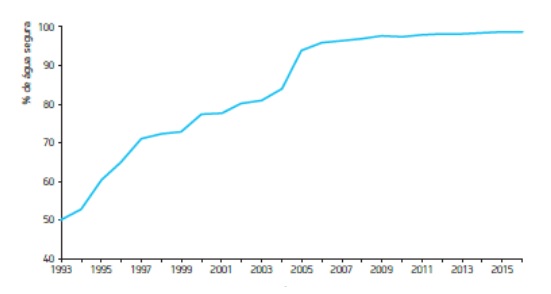
The model for regulating water quality in Portugal has been progressively consolidated through regular legislation revisions that reflect scientific and technical progress. The consequences have been globally positive and are evidenced in a favourable evolution of the indicator on “safe water”, which builds on the fulfilment of sampling frequency and the observance of parametric values (e.g. microbiological and chemical). Figure 1 shows the evolution of the quality level of drinking water; nowadays 99% of water is guaranteed to be controlled and of good quality (in 1993 this indicator was at a mere 50%). (2) (3) (4)

Fig. 1 – Evolution of the “Safe Water” indicator between 1993 and 2016 (3)

This excellence level is supported by strictly monitoring the stakeholders in this process, among them health authorities that may be integrated in Public Health Units (PHU). (3)

The Activity Plan of the ACeS Alto Ave PHU includes a program of sanitary surveillance for drinking water systems with public distribution. These systems undergo annual characterization as a way to promote risk analysis and management for health. I have recently followed my unit’s environmental health technician on his visits to the drinking water systems in the Fafe area.

These visits started at a Water Treatment Station, where water undergoes a complex treatment process after catchment and is then sent to several reservoirs in the area, which then distribute the water to consumers. Besides verifying the maintenance, hygiene and safety parameters, the process also identifies the treatment types for water (e.g. pre-oxidation, decantation and filtration).

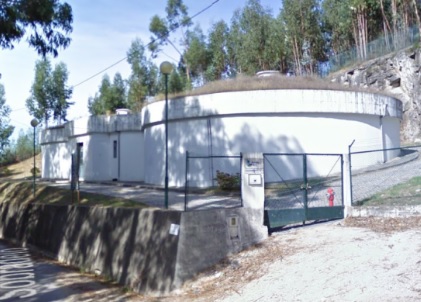
We have then visited all the storage reservoirs in the area where special care is given to the inner lining of tanks/cells, vent protection and latest sanitation date.

Some locations, due to their position and/or demographic rate, benefit from local water capture (e.g. water holes, water springs or wellheads). These Dispersed Systems have their own device for water purification with sodium hypochlorite and sometimes pH correction with caustic soda.

Fig. 2 – Reservoir in Revelhe, Fafe

These visits allow us to promote the conservation and maintenance of several infrastructures of the public water supply systems by the appropriate authorities. But they also allow Public Health physicians (as Health Authorities) to intervene in a stricter and more appropriate way in the case of potential infringements of the chemical or microbiological parameters reported. It may therefore be necessary to establish measures to minimize health hazards to the population. (2)

_________________________

References

  1. World Health Organization. Guidelines for drinking-water quality: four edition incorporating first addendum. Geneva, 2017.
  2. República Portuguesa. Diário da República, 1.ª série-N.º 164-27 de Agosto de 2007. Decreto-Lei n.º 306/2007. 2007.
  3. Entidade Reguladora dos Serviços de Águas e Resíduos (ERSAR). Relatório anual dos serviços de águas e resíduos em Portugal – 2017. 2017. Vols. Volume 2 – Controlo da qualidade da água para consumo humano.
  4. República Portuguesa. Diário da República, 1.ª série-N.º 235-7 de dezembro de 2017. Decreto-Lei n.º 152/2017. 2017.

_________________________

José Miguel Fernandes
Public Health Resident, Public Health Unit ACeS Alto Ave – Fafe
Portugal

EuroNet MRPH Winter Meeting


Dear friends!

Slovenian public health residents joined EuroNet MRPH in November 2016. Since then we have enjoyed attending every meeting and it is high time for us to organise one ourselves. We hope to take our collaboration to new heights both literally and figuratively. Thus, following on the heels of the EPH Conference in Ljubljana we will be hosting the EuroNet MRPH Winter Meeting on the spectacular alpine plateau of Velika Planina.

Our venue Velika Planina rises to 1,600m offering fantastic views of the surrounding mountains and is just a short drive, cable car and chairlift out of the capital – don’t worry we are organising transport. It is one of the last high alpine herdsmen’s villages in Europe with the plateau dotted with cute wooden huts though we’ll be staying in more comfortable lodgings than the herdsmen of the past (imagine saunas and outdoor wooden hot tubs;). It will be the perfect escape from the city’s public health hazards of noise and air pollution. Enjoying the clean air of the alps and with no distractions around we will be able to focus our energy on networking and the inner workings of EuroNet MRPH.

The General assembly will be hosted at the Zeleni rob restaurant, a snowball’s throw away from the cottages, with plenty of delicious traditional Slovenian food. As public health residents we think we can also be trusted to responsibly enjoy a drink together, just enough to facilitate the exchange of stories from past meetings as well as share our work and new ideas.

A winter fairy-tale is coming and we hope you are going to join us! Don’t forget to apply before October 7th!!
More info at: https://euronetmrph.org/velikaplanina-meeting-2018

Velika Planina, Slovenia 2018

Association of Public Health Residents of Slovenia

Pertussis vaccination in pregnancy in Ireland

Between 2011-2017, pertussis notifications in Ireland were most commonly notified in infants and young children. The age specific incidence rate among the 0-5 month age group peaked in 2012 (ASIR 395/100,000) with smaller peaks in 2016 (235/100,000) and 2017 (225/100,000) Between 2012-2017, of all infant cases, 67% were hospitalised and several infant deaths due to pertussis were notified. None of the mothers of these fatal cases were vaccinated during pregnancy.

Vaccination of pregnant women has been shown to be safe and effective in preventing pertussis in infants. Evidence from data published in England1and Spain2 indicates that protection against pertussis is as high as 90% or more in infants whose mothers were vaccinated in pregnancy.

Antenatal care in Ireland is delivered in three ways: either private care through a maternity unity, free public care through a maternity unit or as free combined care between maternity units and general practitioners (GP). Since 2012, pertussis vaccination in pregnancy has been recommended in Ireland and is available free of charge to maternity units and general practitioners.

However, though the vaccine itself is free, all patients still incur a fee for administration. There is also no clarity or definition regarding where the vaccine should be administered, whether by a GP or in the maternity units. This is thought to contribute to the very low vaccine uptake seen. An audit of maternity units conducted in 2013 showed an uptake rate of 6.2% amongst pregnant women in Ireland. This is far lower than the uptake rate in the UK (73%) where pertussis vaccine is available to pregnant women free of charge.

The lack of a defined pathway for administration and full funding of pertussis vaccination in pregnancy represents a key barrier to increasing uptake. Clarifying a pathway of vaccine delivery and reimbursement should be a priority issue for the Irish health service to ensure that vulnerable infants are protected. Pertussis is a vaccine preventable disease and, as such, every effort should be made to prevent further infant morbidity and mortality.

_________________________

References

1 – https://www.ncbi.nlm.nih.gov/pubmed/25037990

2 – http://www.eurosurveillance.org/ViewArticle.aspx?ArticleId=22809

_________________________

Fiona Cianci
Specialist Registrar in Public Health Medicine
Department of Public Health, HSE East, Dublin (Ireland)

Training experience in the UK – Haelo & Salford Royal NHS Foundation Trust

I am at the end of the fifth year of the school of Hygiene and Preventive Medicine at the University of Pisa and just before the end I wanted to taste some examples of the best european infection control. Thanks to a precious man, professor Peter Lachman, pediatrician and CEO of the ISQua, I was connected with Haelo that is a quality improvement agency collaborating with many hospitals, one of which is the Salford Royal Hospital. At Haelo they planned for me one-day full immersion on the programs they run routinely with professionals and academics, their methodology and strategies for QI. The next day I was directly into the hospital visiting the amazing A&E Village that is the result of a recent renovation structurally and organizationally: the workflow is designed to let the patient get out of the unit in less than 4 hours unless complications, major injuries or frailty and they normally obtain the >90% patients target! I spent the next days with the Infection Control Team, visiting wards, receiving explanations for every question I posed them, participating to a part of the Induction Package that every new employee must pass before beginning the job. I visited the lab too, talked to a clinical microbiologist about his occupation there and sharing the differences with my country hospital system. I followed a specialist nurse of the IV team in her activity and it was very impressive in matter of competence! Finally two running projects they showed me were the NAAS and CAAS (Nurse and Community Assessment and Accreditation System), examples for how to fix chronic problems like nurses’ professional update and the link between hospital and local health authorities. Outstanding!

Among the other things, have to flag an excellent restaurant inside the hospital, very nice meals consumed during my stay.

Outside I visited the city of Manchester in occasion of the Chinese New Year, the Salford University swimming pool, very nice indeed and the surroundings of Salford, in particular it is worth of remark the most modern area that is MediaCity.

In conclusion, it has been an intense and intensive experience, deep into the world of Infection Control to lean and bring back home a different way to tackle the antimicrobial resistance and the infection transmission in the hospital setting not to mention many ready-to-use tools for my hospital!

_________________________

Giulio Pieve
Public Health Resident, University of Pisa