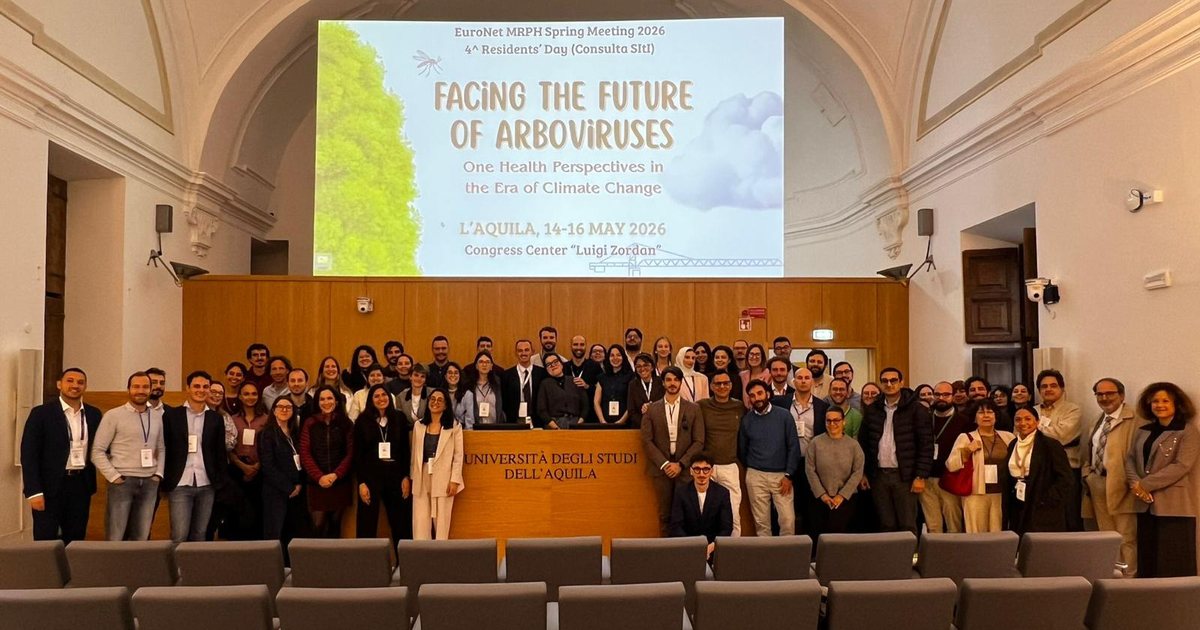
EuroNet MRPH residents at the 2026 Spring Meeting in L'Aquila, in front of the meeting banner.

Spring Meeting 2026 in L’Aquila: Facing the Future of Arboviruses

From 14 to 16 May 2026, EuroNet MRPH held its Spring Meeting in L’Aquila, 2026 Italian Capital of Culture, hosted by the University of L’Aquila at the “Luigi Zordan” Congress Center, jointly with the 4th Residents’ Day of the Consulta SItI, the Italian body of public health residents.

Poster of the EuroNet MRPH Spring Meeting 2026: Facing the Future of Arboviruses, One Health perspectives in the era of climate change. Congress Center Luigi Zordan, L'Aquila, 14 to 16 May 2026.

This year’s theme, “Facing the Future of Arboviruses: One Health Perspectives in the Era of Climate Change,” brought residents and experts together across human, animal and environmental health: the essence of a One Health approach to emerging threats.

A programme across three days

The scientific programme opened with Prof. Anna Odone (University of Pavia) on why arboviruses matter to public health, and ranged widely from there:

  • International cooperation and preparedness, and veterinary intelligence at the service of One Health (Experimental Zooprophylactic Institute of Abruzzo and Molise “G. Caporale”).
  • Genomic surveillance of emerging arboviruses and early warning in a warming world (Prof. Caterina Rizzo, University of Pisa).
  • The role of scientific communication in preparedness, and spatially-explicit modelling of invasive species under climate change (University of L’Aquila).
  • The urban-design dimension of One Health, travel in the era of climate change, and a front-line account of the Chikungunya outbreak in Carpi (Modena).

A record 19 abstracts, roughly double the previous year, competed in the European Scientific Contest, and the meeting hosted the EuroNet General Assembly (hybrid), the SItI Residents’ Committee meeting, and hands-on workshops turning evidence into public communication and advocacy.

Beyond the science, L’Aquila did what these meetings do best: it put residents from across Europe in the same room for three days. Conversations that start over coffee between sessions are how collaborations, exchanges and friendships across the network begin.

Our thanks to the Scientific Committee (Leila Fabiani, Elio Tolli), the Organising and Secretariat Committees, the University of L’Aquila, and the Consulta SItI, and to every resident who travelled to make it happen.

Full programme: download the PDF.

L'Aquila

Spring Meeting 2026 in L’Aquila: Call for Abstracts Now Open!

The EuroNet MRPH Spring Meeting 2026 will take place in L’Aquila, Italy on May 14–16! We invite you to save the dates for what promises to be an engaging scientific and cultural event.

The theme will be…

Facing the Future of Arboviruses

About the Venue

The meeting will take place in L’Aquila, a city located in the heart of the Apennines known for its stunning mountain views and lively university atmosphere.

L’Aquila is a city of resilience. Rebuilt with passion after the 2009 earthquake, it is now a hub of energy, culture, and creativity. As the designated Italian Capital of Culture for 2026, it provides the perfect backdrop to connect with colleagues and share ideas while discovering a unique European heritage.

Call for Abstracts: Now Open!

We invite early-career public health professionals, residents, and young researchers to submit abstracts on any topic related to Public Health. Research projects, reviews, innovative practices, and policy analyses are all welcome.

Submission deadline: 5 April 2026, 00:00 CET (extended through April 19!)

All selected abstracts will be presented as oral or poster presentations.

Logistics and Travel

While L’Aquila does not have its own airport, it is easily accessible via Rome:

  • Arrival: Fly into Roma Fiumicino or Roma Ciampino airports, or travel by train to Roma Tiburtina station.
  • Transfer: Direct buses run regularly from both airports and the train station to L’Aquila. The journey takes approximately 90 minutes.
  • Getting Around: Once you arrive in the city center, the venue and social activities are entirely walkable. You will not need additional transport during the event.

Stay Updated

This post will be updated as soon as the official program and registration details become available. To ensure you receive the latest announcements, we recommend subscribing to our channels:

We look forward to welcoming you to L’Aquila!

Planetary Health

2025 Strategic Collaborations: AJRAM and the Planetary Health Alliance

This year, EuroNet MRPH has established two strategic partnerships to enhance our capacity to address critical global health challenges. These collaborations align with our recently adopted policy documents and aim to foster cross-border cooperation among young professionals.

Collaboration with AJRAM In May 2025, we formalized a partnership with AJRAM (Actions des Jeunes contre La Résistance aux Antimicrobiens). Antimicrobial resistance remains a pressing public health threat, and this collaboration allows us to work closely with a dedicated youth network to promote better stewardship and awareness strategies across Europe.

Membership in the Planetary Health Alliance As of November, EuroNet MRPH has officially joined the Planetary Health Alliance (PHA). This membership underscores our commitment to the “One Health” approach, providing our residents with a platform to engage with the intersection of environmental sustainability and human health.

Through these alliances, we aim to contribute more effectively to the discourse on these urgent topics.

SM25 Paris Banner Small

EuroNet MRPH Spring Meeting 2025: Transforming Public Health Professions in the Digital Age

Join us in the beautiful city of Paris for the EuroNet MRPH Spring Meeting 2025, taking place from May 19th to May 21st!

This year’s theme, “Transforming Public Health Professions in the Digital Age,” reflects our shared ambition to explore how digital innovation is reshaping public health practices across Europe. Digital technologies offer incredible opportunities and solutions, transforming healthcare delivery, decision-making, and health communication. At this event, public health residents and professionals from across Europe will come together to discuss, innovate, and prepare for this digital revolution in public health.

The Spring Meeting will be hosted at two prestigious locations:

  • Pitié-Salpêtrière Hospital, 105 Boulevard de l’Hôpital, 75013 Paris, France
  • Saint Antoine Hospital (Day 2), Amphithéâtre Siège, 34 Rue Crozatier, 75012 Paris, France

We have reasons to use two different venues, you will discover why in time!

A detailed schedule with all activities, workshops, and roundtables is now available: Download the full program (PDF)

Sustainability at Our Core

Environmental responsibility and sustainability are core values for this Spring Meeting. To minimize our environmental impact, catering will be exclusively vegetarian and vegan, provided by Funky Mama. All meals and coffee breaks will feature locally-sourced seasonal fruits and vegetables, sustainably sourced coffee and tea, and we are committed to avoiding single-use plastics entirely.

Networking & Social Activities

Our scientific sessions are perfectly complemented by a vibrant social program, now fully confirmed, offering fantastic opportunities to connect with fellow participants and enjoy the magic of Paris together!

  • Day 1 (Monday, May 19th): Kick things off with your choice of three themed guided walking tours (€12 each) exploring Classical Paris, its dynamic Street Art scene, or Health Landmarks. Later that evening, join us at the lively Le Food Society Paris, a perfect chance to mingle!
  • Day 2 (Tuesday, May 20th): We invite you to a convivial Social Dinner at the charming Bistrot Mon Café. For those looking for a more casual option, a nearby bar, Les Blouses Blanches, offers a great alternative.

Full details for each event, including times and how to secure your spot for the walking tours and dinner, are available on our program. Also, stay connected and catch all the latest updates by following us on Instagram @euronetmrphig!

Registration Is Open!

We kindly ask for a registration fee of €50 per participant. This contribution helps us cover all lunches, coffee breaks, and ensures we can maintain our sustainability standards throughout the event.

Spots are limited, so secure yours now! Click here to register

UPDATE: Already registered? You can add social program events you missed by using the same registration form.

Call for Abstract for Scientific Contest

Don’t forget to submit an abstract and participate in the European Scientific Contest! A jury of peers will evaluate the quality of the projects and select the best entry. The winner will receive free accommodation and complimentary access to the social program during the next Spring Meeting. The deadline for submissions is 23:59 CET, April 21st, 2025.

UPDATE: Submissions to the Scientific Contest are now closed!

We look forward to welcoming you to Paris, ready to shape together the future of Public Health in this exciting digital era.

See you there!

Approved

Exciting Milestone: EuroNet MRPH Adopts Charter of Values and Important New Policy Documents

Exciting Milestone: EuroNet MRPH Adopts Charter of Values and Important New Policy Documents

EuroNet MRPH is thrilled to announce the official adoption and publication of the Charter of Values and four essential policy documents on February 1, 2025, marking a significant step in our continued commitment to promoting public health across Europe.

Following an extensive collaborative process initiated in 2024, involving our National Commissions and dedicated working groups, the Charter of Values and policy documents were finally formally approved! They represent EuroNet MRPH’s foundational principles and consolidated positions on critical public health issues.

Charter of Values:

The Charter of Values outlines EuroNet MRPH’s core principles, guiding our mission and actions. It emphasizes education, cooperation, innovation, empowerment, equality and non-discrimination, intercultural exchange, transparency, accountability, health advocacy, and sustainability. These values underpin all our policies and reinforce our dedication to building a stronger, more equitable, and healthier Europe.

Policy Documents:

  1. Climate Change, One Health, and Planetary Health
    Addressing the urgent need to tackle ecological crises through holistic, multidisciplinary frameworks such as One Health and Planetary Health, this document emphasizes integrating health considerations into climate policies and promoting sustainable healthcare practices.
  2. Economic Sustainability of Health and Care Systems
    Recognizing the economic pressures on healthcare systems, this policy highlights the necessity of innovative solutions, efficient resource use, and improved economic strategies to ensure the long-term sustainability and resilience of health services.
  3. Mental Health
    Focused on comprehensive mental health policies, this document underlines the importance of societal approaches to mental well-being, addressing stigma, advocating for community-based services, and prioritizing mental health in educational and workplace settings.
  4. Political Involvement of Public Health Bodies
    Advocating active participation in political processes, this policy promotes Health in All Policies (HiAP), urging public health professionals to engage politically to shape legislation and influence public health outcomes positively.

Each document includes a clear call to action, outlining specific internal and external actions to guide our members and partners in implementing these essential strategies.

We believe these policies and values will significantly impact public health practices and advocacy across Europe.

Explore the full Charter of Values and Policy Documents, and join us in our mission to advance public health in Europe!

EuroNet MRPH logo with the full name of the network, European Network of Multidisciplinary Residents in Public Health.

Spring Meeting 2023 in Genoa: Health in a Changing World

Health in a changing world – Climate change and environmental emergency: from prevention to consequences

Genoa EuroNet Spring Meeting 2023

Record number of participants and immense success for The Annual Spring Meeting of EuroNet MRPH, which was held in Genoa from the 21 to the 23 June 2023.

More than 200 professionals of the world of Public Health came from all over Europe such as Italy, the Netherlands, Portugal, Spain, Norway, England, Croatia, France, Ireland and Turkey. This helped make this conference a global forum for discussion and exchange of ideas.

For the first time in Genoa, the event touched on crucial points in the current debate in the scientific world, hosting speakers and moderators of considerable cultural depth and experience.

The congress, titled “Health in a changing world – Climate change and environmental emergency: from prevention to consequences” addressed several issues with a One Health and Circular Health approach: climate change and the consequent modifications of the planet in which we live, the effects of pollution on ecosystems, the new frontiers of vaccinology and biotechnology, as well as the compelling need to effectively communicate the importance of global health care not only to policy makers and academia, but also and especially to the general public, in order to induce the empowerment necessary for change.

Plenary sessions, interactive workshops and panel discussions among experts enriched the event and were received with enthusiasm and interest by all participants.

A particularly significant aspect of this congress was the commitment to sustainable environment. The organization made sure that the event was completely eco-friendly, using recycled and recyclable materials. In addition, instead of distributing traditional gadgets, a project was initiated in collaboration with ZERO CO2, which led to the planting of trees in the Corniglia area of the Cinque Terre with the aim of cutting down carbon dioxide emissions.

This Initiative demonstrates the awareness and concrete actions in contributing to the mitigation of climate change.

Particular audience participation was registered in the interactive workshops, which put the spotlight on the health of the planet, mental health and eco-anxiety, climate change education, and the communication of health and science topics, and the European science contest, which awarded research and innovations from across Europe.

Among the prominent national and international speakers who spoke at the congress, it is only right to mention the presence of Professor Ilaria Capua, who gave a concluding speech on the topic of Circular Health that left the audience in the hall with many insights to ponder.

In conclusion, the EuroNet MRPH Annual Spring Meeting, organized by the School of Hygiene and Preventive Medicine in Genoa, played a key role in raising the alarm about climate change and in indicating the importance of immediate action to protect the health of people around the world.

With the input of internationally renowned experts, unforgettable events and strong environmental sustainability, this congress will remain in the memory of all participants as a pivotal moment in the struggle for a healthier and more sustainable future.

EuroNet MRPH logo with the full name of the network, European Network of Multidisciplinary Residents in Public Health.

Heat waves and climate change

Climate change is deemed “the biggest global health threat of the 21st century”. (1) Global warming is now unequivocal; global average temperatures have risen by 0.85°C between 1880 and 2012. (2) Global mean temperature is projected to increase by about 1.6 to 2.6°C above the preindustrial period by the 2050s, depending on the scenario used.2 Using median values, projected temperature increases for Europe and America are between 2 and 4°C for the 2050s (relative to present-day climate). (2) Higher increases are projected over much of Asia and Australia. (3) Heat waves, defined as extended periods of extreme high temperature, are regarded as one of the primary weather-associated threats to human life. (4) As increased frequency, intensity, and duration of heat wave events occurred associated with global warming, impact of heat wave on health has drawn more and more attention worldwide. (5-7) It is well-established the relationship between extreme high temperatures and human morbidity and mortality. (8)

There is also now strong evidence that such heat-related mortality is rising as a result of climate change impacts across a range of localities. (9) For instance, the excess mortality during the extremely hot summer of 2003 in Europe and the 2010 Russia heat wave, resulted in more than 70,000 and 11,000 deaths, respectively. (10,11) Much of the excess mortality from heat waves is related to cardiovascular, cerebrovascular, and respiratory disease and is concentrated in some populations groups. These groups include women, young children and older people, people with existing health problems or disabilities, and poor and marginalised communities. They are particularly vulnerable to the health effects of climate change, whether because of existing socioeconomic inequalities, cultural norms or intrinsic physiological factors.

Other risks were associated with rising temperatures and changes in precipitation pattern. For example, the modification of viable distribution of disease vectors such as mosquitoes carrying dengue or malaria. Temperature affect the range and reproductive rates of malarial mosquitoes and also affect the lifecycle of the parasitic protozoa responsible for malaria, possibly increasing the incidence of a disease that causes 660 000 deaths per year. (12) There are equally complex relationships and important climate-related risks associated with dengue fever, cholera and food safety. (13-15)

Moreover, a heat wave can be a big threat in urban area because of the “urban heat island (UHI) effect”. The UHI effect results in the temperatures being somewhat higher in cities than in suburban and rural areas, primarily because of the abundance of heat-retaining surfaces such as concrete and black asphalt, that exacerbate the negative heat effect on residents compared with reflective, transpiring, shading, and air-flow-promoting vegetation-covered surfaces. (16,17)

The events occurred in Europe and Russia and those which occurred in Australia, 2012/2013 and 2016/2017; North America, 2012; India and Pakistan, 2015 and Europe 2015 have led to the implementation of specific policies to reduce heat-related mortality such as the National Heat Wave Plan in France, (18) and the Heatwave Plan for England. (19) Evidence suggests that effective adaptation measures would reduce the death rates associated with these heat waves. Adaptation measures also include increasing green infrastructures and urban green spaces, improving the design of social care facilities, schools, other public spaces, and public transport to be more climate-responsive. Adaptation options within health care include training of health-care workers and integrated heatwave early warning systems (HEWS). (20)

A communication and public education strategy is an essential part of the warning system, public health messages should be disseminated to all age and vulnerable groups to increase awareness of symptoms of heat-related illness.

____________________

References

  1. Costello A, Abbas M, Allen A, Ball S, Bell S, Bellamy R, et al. Managing the health effects of climate change. The Lancet. 2009; 373(9676): 1693–1733.
  2. IPCC, 2013a: Summary for Policymakers In: Climate Change 2013: The Physical Science Basis. Contribution of Working Group I to the Fifth Assessment Report of the Intergovernmental Panel on Climate Change Change [Stocker TF, Qin D, Plattner GK, Tignor M, Allen SK, Boschung J, Nauels A, Xia Y, Bex V, Midgley PM (eds.)]. Cambridge University Press, Cambridge, United Kingdom and New York, NY, USA, pp. 1–30.
  3. Bassil K, Cole D. Effectiveness of public health interventions in reducing morbidity and mortality during heat episodes: A structured review. Int J Environ Res Pub Health. 2010; 7: 991–1001.
  4. Luber G, McGeehin M. Climate change and extreme heat events. Am. J. Prev. Med. 2008; 35: 429–435.
  5. Wang C, Chen R, Kuang X, Duan X, Kan H. Temperature and daily mortality in Suzhou, China: a time series analysis. Sci Total Environ. 2014; 466–467.
  6. Gronlund C, Zanobetti A, Schwartz J, Wellenius G, O’Neill MS. Heat, heat waves, and hospital admissions among the elderly in the United States, 1992–2006. Environ Health Perspect. 2014; 122: 1187–1192.
  7. Gao J, Sun Y, Liu Q, Zhou M, Lu Y, Li L. Impact of extreme high temperature on mortality and regional level definition of heat wave: a multi-city study in China. Sci Total Environ. 2015; 505: 535–544.
  8. Forsberg, B. Heat-related respiratory hospital admissions in Europe in a changing climate: a health impact assessment. BMJ Open. 2013; 3: e001842.
  9. Smith K, Woodward A, Campell-Lendrum D. Human health—impacts adaptation and co-benefits. Climate change 2014: impacts, adaptation, and vulnerability Working Group II contribution to the IPCC 5th Assessment Report. Cambridge University Press, Cambridge, UK and New York, NY, USA; 2014.
  10. Robine J, Cheung S, Roy S, Oyen H, Herrmann F. Report on excess mortality in Europe during summer 2003. EU Community Action Programme for Public Health. Grant Agreement 2005114. 2007.
  11. Agence France-Press. Russian heat wave caused 11,000 deaths in Moscow: Official. 2010. Press release. 2010.
  12. WHO. World malaria report. World Health Organization, Geneva; 2012.
  13. Bhatt S, Gething P, Brady O. The global distribution and burden of dengue. Nature. 2013; 496: 504-507.
  14. Sutherst R. Global change and human vulnerability to vector-borne diseases. Clin Microbiol Rev. 2004; 17: 136-173.
  15. WHO. World Meteorological Organisation. Atlas of health and climate. World Health Organization, Geneva; 2012.
  16. Roth M. Review of urban climate research in (sub) tropical regions. Int J Climatol. 2007;27:1859–1873.
  17. Gabriel K, Endlicher W. Urban and rural mortality rates during heat waves in berlin and Brandenburg. Germany Environ Pollut. 2011;159(8–9):2044–2050.
  18. Pascal M, Le Tertre A, Saoudi A. Quantification of the heat wave effect on mortality in nine French cities during summer 2006. PLoS Curr. 2012: 4:RRN1307.
  19. Public Health England. 2015. Heatwave Plan for England. Protecting health and reducing harm from severe heat and heatwaves. Public Health England, London, UK.
  20. Ghasem S, FitzGerald G, Aitken P, Verrall K, Tong S. Are heat warning systems effective? Environmental Health. 2013: 12-27.

____________________

Ana Pinto de Oliveira
Public Health Resident
Arnaldo Sampaio Public Health Unit, Lavradio, Portugal

Catarina Oliveira
Public Health Specialist
Arnaldo Sampaio Public Health Unit, Lavradio, Portugal

EuroNet MRPH logo with the full name of the network, European Network of Multidisciplinary Residents in Public Health.

The health we breath: Porto air quality

Worldwide, outdoor (ambient) air quality is a serious threat to health, estimated to cause millions of premature deaths due to cardiorespiratory diseases and lung cancer. Affected regions include both urban and rural areas. In 2016, the majority of the world population was living in areas in which maximum concentration of air pollutants were not met (1). In what concerns to sources, anthropogenic factors are the most relevant to negative effects of ambient polluted air (2).

Since 2013, the International Agency for Research on Cancer has defined polluted ambient air and particulate matter (PM) (separately) as carcinogenic to humans (group 1). In addition to strong evidence that polluted air cause lung cancer, there is also an increased risk of bladder cancer. Despite local variations, these conclusions are valid globally (3).

It is expected that in 2050, two-thirds of world population will be living in cities. By converging all opportunities and services in one area, overpopulated cities are also a challenge in terms of health risks and hazards. Creating and transforming sustainable cities implies intersectoral work, particularly governors and policymakers. In order to monitor and recognise success, World Health Organization (WHO) developed core health indicators for different sectors, including one in urban air quality. The indicator evaluates annual average of 2.5 and 10 concentrations in relation with WHO air-quality guidelines (4).

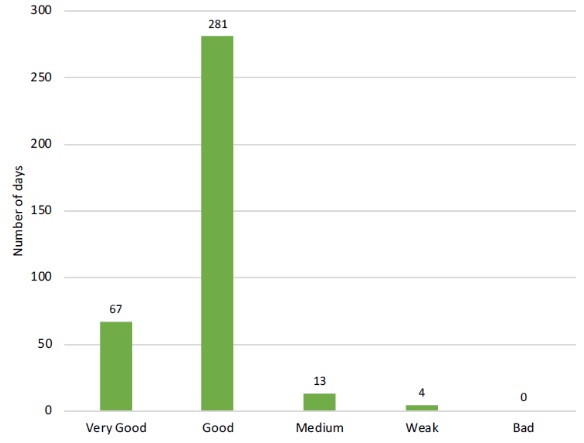
In 2016, Portugal had 91,3% of days classified as very good/good in terms of air quality index (IQAr) by the Portuguese Environment Agency. In the same year, Porto Litoral (coast) had 95,3% days with the same classification (Figure 1) (5). This index includes measures on five air polluted substances such as PM, ozone (O3), nitrogen dioxide (NO2), sulfur dioxide (SO2) and carbon monoxide (CO) (6).

Data on polluted air concentrations of 2.5 is provided by the WHO Global Observatory, including data on 190 countries. The Portuguese 2016 annual mean concentration of 2.5 was 8,1 µg/3, meeting WHO guidelines of lower than 10 µg/3 (7) (8). In the same year, the annual mean concentration of 2.5 (204 days of validated data) was 2.9 µg/3 in Porto (Sobreiras – Lordelo do Ouro station) (9). Data on both country and city levels of 10 was not available in the same sources. While Porto results are suitable so far, the predictions of research data using modelling methods are not optimistic. Even if precursor emissions and population remain constant, Porto will be the district most affected concerning 10 high concentration days and related health impact in 2100 (10).

Though in 2016, Portugal and Porto results on 2.5 met WHO guidelines, climate change and inaction specially on anthropogenic factors will be responsible for worse scenarios with serious consequences to human health.

Figure 1. Porto Coast Air Quality Index 2016 (adapted from Portuguese Environment Agency)

_________________________

References

  1. World Health Organization. Ambient (outdoor) air quality and health [Internet]. Fact sheets. 2018. Available from: http://www.who.int/news-room/factsheets/detail/ambient-(outdoor)-air-quality-and-health
  1. World Health Organization. Ambient air pollution: Pollutants. Air Pollution; Available from: http://www.who.int/airpollution/ambient/pollutants/en/)
  1. World Health Organization. IARC: Outdoor air pollution a leading environmental cause of cancer deaths; Available from: http://www.iarc.fr/en/mediacentre/iarcnews/pdf/pr221_E.pdf
  1. World Health Organization. Health Indicators of sustainable cities in the Context of the Rio+20 UN Conference on Sustainable Develpment. 2012; Available from: http://www.who.int/hia/green_economy/indicators_cities.pdf?ua=1
  1. Fernandes AC, Guerra MD, Ribeiro R, Rodrigues S. Relatório do Estado do Ambiente 2018. Agência Port do Ambient. 2018; Available from: https://sniambgeoviewer.apambiente.pt/GeoDocs/geoportaldocs/rea/REA2018/REA2018.pdf
  1. Portuguese Environment Agency. Air quality; Available from: (https://qualar.apambiente.pt/qualar/index.php?page=5&subpage=6).
  1. World Health Organization. Concentrations of fine particulate matter (PM2.5); Available from: http://apps.who.int/gho/data/node.sdg.11-6-viz?lang=en
  1. Lodgejr J. Air quality guidelines. Global update 2005. Particulate matter, ozone, nitrogen dioxide and sulfur dioxide. Environ Sci Pollut Res. 1996; Available from: http://apps.who.int/iris/bitstream/handle/10665/69477/WHO_SDE_PHE_OEH_06.02_eng.pdf?sequence=1
  1. Portuguese Environment Agency. Station statistics; Available from: https://qualar.apambiente.pt/qualar/index.php?page=4&subpage=4).
  1. Dias D, Tchepel O, Carvalho A, Miranda AI, Borrego C. Particulate matter and health risk under a changing climate: Assessment for Portugal. Sci World J. 2012; Available from: https://www.ncbi.nlm.nih.gov/pmc/articles/PMC3361258/)

_________________________

Mariana Perez Duque
Public Health Resident
Public Health Unit ACeS Porto Ocidental, ARS Norte, Portugal

EuroNet MRPH logo with the full name of the network, European Network of Multidisciplinary Residents in Public Health.

Drinking Water: A Public Health Issue

The access to safe drinking water is essential to health and a basic human right, as well as a structural part of an effective policy for health protection. (1)

Since 1958, aiming primarily to protect public health, the WHO has published several editions of a document, currently called WHO Guidelines for drinking-water quality, which has been regularly updated through rolling revision. This document establishes the principles and guidelines that are the base for the national programs of the United Nations members. (1)

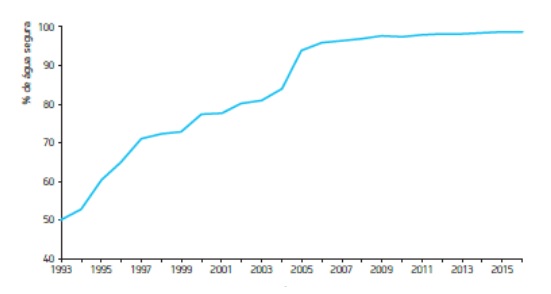
The model for regulating water quality in Portugal has been progressively consolidated through regular legislation revisions that reflect scientific and technical progress. The consequences have been globally positive and are evidenced in a favourable evolution of the indicator on “safe water”, which builds on the fulfilment of sampling frequency and the observance of parametric values (e.g. microbiological and chemical). Figure 1 shows the evolution of the quality level of drinking water; nowadays 99% of water is guaranteed to be controlled and of good quality (in 1993 this indicator was at a mere 50%). (2) (3) (4)

Fig. 1 – Evolution of the “Safe Water” indicator between 1993 and 2016 (3)

This excellence level is supported by strictly monitoring the stakeholders in this process, among them health authorities that may be integrated in Public Health Units (PHU). (3)

The Activity Plan of the ACeS Alto Ave PHU includes a program of sanitary surveillance for drinking water systems with public distribution. These systems undergo annual characterization as a way to promote risk analysis and management for health. I have recently followed my unit’s environmental health technician on his visits to the drinking water systems in the Fafe area.

These visits started at a Water Treatment Station, where water undergoes a complex treatment process after catchment and is then sent to several reservoirs in the area, which then distribute the water to consumers. Besides verifying the maintenance, hygiene and safety parameters, the process also identifies the treatment types for water (e.g. pre-oxidation, decantation and filtration).

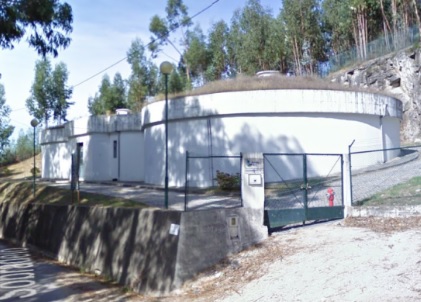
We have then visited all the storage reservoirs in the area where special care is given to the inner lining of tanks/cells, vent protection and latest sanitation date.

Some locations, due to their position and/or demographic rate, benefit from local water capture (e.g. water holes, water springs or wellheads). These Dispersed Systems have their own device for water purification with sodium hypochlorite and sometimes pH correction with caustic soda.

Fig. 2 – Reservoir in Revelhe, Fafe

These visits allow us to promote the conservation and maintenance of several infrastructures of the public water supply systems by the appropriate authorities. But they also allow Public Health physicians (as Health Authorities) to intervene in a stricter and more appropriate way in the case of potential infringements of the chemical or microbiological parameters reported. It may therefore be necessary to establish measures to minimize health hazards to the population. (2)

_________________________

References

  1. World Health Organization. Guidelines for drinking-water quality: four edition incorporating first addendum. Geneva, 2017.
  2. República Portuguesa. Diário da República, 1.ª série-N.º 164-27 de Agosto de 2007. Decreto-Lei n.º 306/2007. 2007.
  3. Entidade Reguladora dos Serviços de Águas e Resíduos (ERSAR). Relatório anual dos serviços de águas e resíduos em Portugal – 2017. 2017. Vols. Volume 2 – Controlo da qualidade da água para consumo humano.
  4. República Portuguesa. Diário da República, 1.ª série-N.º 235-7 de dezembro de 2017. Decreto-Lei n.º 152/2017. 2017.

_________________________

José Miguel Fernandes
Public Health Resident, Public Health Unit ACeS Alto Ave – Fafe
Portugal