EuroNet MRPH logo with the full name of the network, European Network of Multidisciplinary Residents in Public Health.

Colorectal cancer screening: a Public Health priority in Portugal

In Portugal, as in the rest of Europe, the incidence of cancer has been steadily increasing at a rate of about 3% per year.1,2 This increase is mainly related to the aging of the population and with changes in habits and lifestyles.3

According to the 2018 edition of Health at a Glance: Europe report (Organization for Economic Co-operation and Development – OECD), Portugal has one the lowest avoidable mortality rates in Europe, reflecting greater efficacy in the treatment of patients.4

However, cancer disease remains the second leading cause of death in Portugal after cardiovascular disease5,6, and the leading cause of premature death (defined as death before the age of 70).7

Colorectal cancer is currently one of the major forms of cancer in the world, with significant mortality and morbidity associated. In general, it is more common in older people (most patients are over 60 years at the time of diagnosis, being unusual in people with less than 40 years), in males and in urbanized regions.

According to the latest data from the International Agency for Research on Cancer (World Health Organization), colorectal cancer is currently the third most frequent type of cancer in the world and the second largest cause of death by cancer.

In Europe, it is the second most common type of cancer and the second deadliest. In Portugal, it is the second most frequent type of cancer in males (18,8% of the new cases, after prostate cancer) and females (16,2% of the new cases, after breast cancer) but ranks first in the most prevalent types of cancer for both genders.8

In 2018, Portugal has diagnosed 10 270 new cases of colorectal cancer (more than 20 cases per day), corresponding to 17,6% of the total number of new cases of cancer in the country.8 Despite the increasing therapeutic success in oncological disease, the number of deaths caused by this type of cancer has been increasing, especially in the most advanced ages.5,6 It is currently the second most deadly type of cancer (following lung cancer), accounting for approximately 4214 deaths (about 12 individuals per day)8 and about 12 years of potential life lost.9

The reduction of the mortality and morbidity associated with oncological disease depends mainly on preventive strategies and the early detection of the disease. However, the early stages of colorectal cancer are usually asymptomatic or produce little symptoms. The first manifestation of disease is often the asymptomatic loss of small amounts of blood in the stool, not visible to the naked eye, making the early detection difficult. For this reason, many countries now offer systematic population screening programs.

Most cancers of the colon and rectum develop from polyps or adenomas. These lesions are benign but have a significant risk of developing dysplasia, and therefore are considered pre-malignant. The screening programs aim to detect cancer in its initial phase but also to identify and remove these precursor lesions.

Due to the increasing number of cases, the screening for colorectal cancer is now considered a Public Health priority in Europe, and Portugal makes no exception.

Although the significance of the colorectal cancer screening program is unanimously proven (it has the potential do reduce mortality rates by at least 20%)3, there is no international consensus on the methodology that should be used. The strategies vary according to the human and financial resources available and the characteristics of each country. The most validated diagnostic exams currently in use are fecal occult blood tests (FOBT), rectosigmoidoscopy and complete colonoscopy. The fecal immunochemical test (FIT) is currently the most commonly used primary screening test worldwide and has been shown to contribute to increased participation rates, with appropriate sensitivity and cost-effectiveness10.

Portugal follows the European guidelines and has been developing the foundations for the implementation of a comprehensive population screening program. Thus, in Portugal, screening should be offered to the asymptomatic population aged between 50 and 74 years. As in most European countries, the primary screening test is the FIT, performed every 2 years. The convocation of patients for screening is ensured through their General Practitioners11.

In case of a positive result in the FIT (cut off of 100 ng/mL), the patient should be referred for colonoscopy, under informed consent and within the scope of the Portugal National Health Service, in an average period of no more than 30 days.

The referral algorithm after colonoscopy varies depending on the result of the exam and is performed according to the recommendations of the European Society of Gastrointestinal Endoscopy (ESGE)11.

Population-based screening programs for cancer have evolved significantly in Portugal during the last few years, with expansion of the geographic coverage, increased numbers of patients screened, and significant improvement in adherence rates. However, screening for colorectal cancer continues to present low countrywide coverage (about 19%)1, with significant regional asymmetry.

Portugal is currently making efforts to extend colorectal cancer screening throughout the country and to create the channels to adequately screen all the eligible individuals. As a result of the acknowledgement as a Public Health priority and the ongoing efforts, it is expected that in a few years, Portugal will be able to effectively reduce this problem.

Fábio Ricardo Elias Sousa Gomes

PH resident Aveiro, Portugal

References:

  1. Portugal. Ministério da Saúde. Direção-Geral da Saúde. Programa Nacional para as Doenças Oncológicas 2017. Lisboa: Direção-Geral da Saúde; 2017.
  2. Portugal. Ministério da Saúde. Direção-Geral da Saúde. Direção de Serviços de Informação e Análise. A Saúde dos Portugueses 2016. Lisboa: Direção-Geral da Saúde; 2016.
  3. Portugal. Ministério da Saúde. Direção-Geral da Saúde. Relatório de Monitorização e Avaliação dos Rastreios Oncológicos 2016. Lisboa: Direção-Geral da Saúde; 2017.
  4. Organisation for Economic Co-operation and Development. OECD Health Division. Health at a Glance: Europe 2018. Paris: OECD Publishing; 2018.
  5. Portugal. Instituto Nacional de Estatística. Causas de morte 2016. Lisboa: Instituto Nacional de Estatística; 2018.
EuroNet MRPH logo with the full name of the network, European Network of Multidisciplinary Residents in Public Health.

Treatment of HIV and viral hepatitis in the prison population

Access to health services in the prison system is conditioned by legal barriers, social marginalization and stigma which can increase infectious diseases among the prison population1.

The prison population is different from other populations and it’s in a situation of increased vulnerability. There are several factors that contribute to this, mainly: more exposure to violence; transmission of infectious diseases; increased unprotected sexual, confinement and overpopulation; difficulties in the patients flow up1.

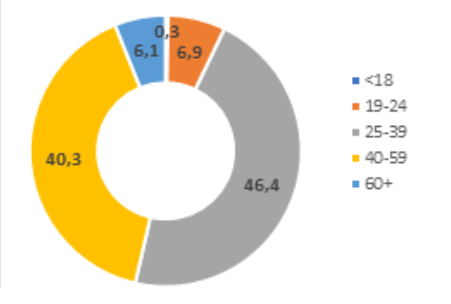
The number of prisoners in Portugal is about 14.000 on 2017, for a theoretical capacity of approximately 13.000, generating, thus, a panorama of indisputable overcrowding of the prison system. In addition there is also a high turn-over of inmates2. The most relevant characteristics of Portuguese prisoners are summarized in Table 1 and Figure 1.

Figure 1. Prisoners, by age. Portugal 20172

In order to achieve the goals to 2020 outlined on Onusida/Unaids and reduce the morbimortality of viral hepatitis, the General Directorate for Reinsertion and Prisional Services (Direção-Geral da Reinserção e dos Serviços Prisionais) and 28 hospitals of the National Health Service (SNS) will sign a protocol for the treatment of human immunodeficiency virus (HIV) and viral hepatitis infections in the prison population, extending to the whole country the pilot project that runs between the Hospital de São João in Porto and the prison of Custóias.

This pilot project started on january 2017, in order to promote appropriate diagnostic procedures and to provide medication to cure hepatitis C.

This initiative enabled the elimination of Hepatitis C in prisons in Custóias and Santa Cruz do Bispo and is now being expanded geographically and to include other viral hepatitis and HIV4.

Table 1. Characteristics of the Portuguese Prison Population, Portugal, 20172,3

Up until now, prisoners were subject to security procedures when traveling to healthcare facilities, which caused constraints to clinical observation. From now on they will be treated in the prison itself. This new model will allow physicians – infecciologists, gastroenterologists and internists – to move to prisons to care for the HIV-infected, hepatitis B and C prison population of 45 prison facilities across the continent. In addition, screening will be done at the entrance, during and at the end of the sentence.

Thus, it is expected that this protocol will shape a new approach to health care for infectious diseases in prisons.

Tiago Carvalho

Public Health Resident, Portugal

José Rodrigues

Public Health Resident, Portugal

References:

  1. Sousa KAA, Araújo TME, Teles SA, Rangel EML, Nery IS, Sousa KAA, et al. Fatores associados à prevalência do vírus da imunodeficiência humana em população privada de liberdade. Rev da Esc Enferm da USP. 2017 Dec 18 [cited 2018 Aug 24];51(0)
  2. PORDATA- Justiça e Segurança: Prisões [Internet]. [cited 2018 Aug 14]. Available from: https://www.pordata.pt/Subtema/Portugal/Pris%C3%B5es-60
  3. Direção-Geral de Saúde. Infeção VIH e Sida- Desafios e estratégias. Lisboa: Direção Geral da Saúde; 2018
  4. Hospital de São João- Projeto do São João de eliminação da Hepatite C nas prisões replicado a todo o país [Internet]. [cited 2018 Aug 31]. Available from: http://portal-chsj.min-saude.pt/frontoffice/pages/16?news_id=537
EuroNet MRPH logo with the full name of the network, European Network of Multidisciplinary Residents in Public Health.

The health we breath: Porto air quality

Worldwide, outdoor (ambient) air quality is a serious threat to health, estimated to cause millions of premature deaths due to cardiorespiratory diseases and lung cancer. Affected regions include both urban and rural areas. In 2016, the majority of the world population was living in areas in which maximum concentration of air pollutants were not met (1). In what concerns to sources, anthropogenic factors are the most relevant to negative effects of ambient polluted air (2).

Since 2013, the International Agency for Research on Cancer has defined polluted ambient air and particulate matter (PM) (separately) as carcinogenic to humans (group 1). In addition to strong evidence that polluted air cause lung cancer, there is also an increased risk of bladder cancer. Despite local variations, these conclusions are valid globally (3).

It is expected that in 2050, two-thirds of world population will be living in cities. By converging all opportunities and services in one area, overpopulated cities are also a challenge in terms of health risks and hazards. Creating and transforming sustainable cities implies intersectoral work, particularly governors and policymakers. In order to monitor and recognise success, World Health Organization (WHO) developed core health indicators for different sectors, including one in urban air quality. The indicator evaluates annual average of 2.5 and 10 concentrations in relation with WHO air-quality guidelines (4).

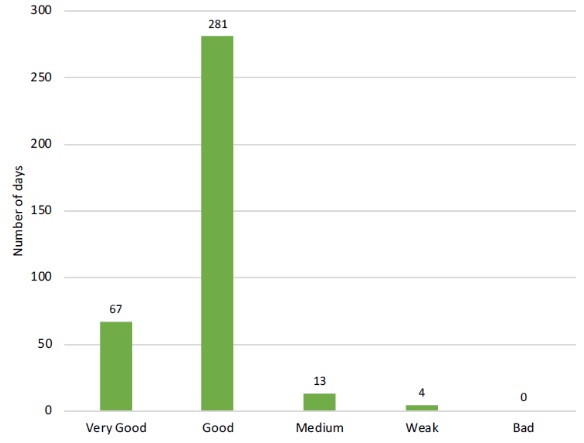
In 2016, Portugal had 91,3% of days classified as very good/good in terms of air quality index (IQAr) by the Portuguese Environment Agency. In the same year, Porto Litoral (coast) had 95,3% days with the same classification (Figure 1) (5). This index includes measures on five air polluted substances such as PM, ozone (O3), nitrogen dioxide (NO2), sulfur dioxide (SO2) and carbon monoxide (CO) (6).

Data on polluted air concentrations of 2.5 is provided by the WHO Global Observatory, including data on 190 countries. The Portuguese 2016 annual mean concentration of 2.5 was 8,1 µg/3, meeting WHO guidelines of lower than 10 µg/3 (7) (8). In the same year, the annual mean concentration of 2.5 (204 days of validated data) was 2.9 µg/3 in Porto (Sobreiras – Lordelo do Ouro station) (9). Data on both country and city levels of 10 was not available in the same sources. While Porto results are suitable so far, the predictions of research data using modelling methods are not optimistic. Even if precursor emissions and population remain constant, Porto will be the district most affected concerning 10 high concentration days and related health impact in 2100 (10).

Though in 2016, Portugal and Porto results on 2.5 met WHO guidelines, climate change and inaction specially on anthropogenic factors will be responsible for worse scenarios with serious consequences to human health.

Figure 1. Porto Coast Air Quality Index 2016 (adapted from Portuguese Environment Agency)

_________________________

References

  1. World Health Organization. Ambient (outdoor) air quality and health [Internet]. Fact sheets. 2018. Available from: http://www.who.int/news-room/factsheets/detail/ambient-(outdoor)-air-quality-and-health
  1. World Health Organization. Ambient air pollution: Pollutants. Air Pollution; Available from: http://www.who.int/airpollution/ambient/pollutants/en/)
  1. World Health Organization. IARC: Outdoor air pollution a leading environmental cause of cancer deaths; Available from: http://www.iarc.fr/en/mediacentre/iarcnews/pdf/pr221_E.pdf
  1. World Health Organization. Health Indicators of sustainable cities in the Context of the Rio+20 UN Conference on Sustainable Develpment. 2012; Available from: http://www.who.int/hia/green_economy/indicators_cities.pdf?ua=1
  1. Fernandes AC, Guerra MD, Ribeiro R, Rodrigues S. Relatório do Estado do Ambiente 2018. Agência Port do Ambient. 2018; Available from: https://sniambgeoviewer.apambiente.pt/GeoDocs/geoportaldocs/rea/REA2018/REA2018.pdf
  1. Portuguese Environment Agency. Air quality; Available from: (https://qualar.apambiente.pt/qualar/index.php?page=5&subpage=6).
  1. World Health Organization. Concentrations of fine particulate matter (PM2.5); Available from: http://apps.who.int/gho/data/node.sdg.11-6-viz?lang=en
  1. Lodgejr J. Air quality guidelines. Global update 2005. Particulate matter, ozone, nitrogen dioxide and sulfur dioxide. Environ Sci Pollut Res. 1996; Available from: http://apps.who.int/iris/bitstream/handle/10665/69477/WHO_SDE_PHE_OEH_06.02_eng.pdf?sequence=1
  1. Portuguese Environment Agency. Station statistics; Available from: https://qualar.apambiente.pt/qualar/index.php?page=4&subpage=4).
  1. Dias D, Tchepel O, Carvalho A, Miranda AI, Borrego C. Particulate matter and health risk under a changing climate: Assessment for Portugal. Sci World J. 2012; Available from: https://www.ncbi.nlm.nih.gov/pmc/articles/PMC3361258/)

_________________________

Mariana Perez Duque
Public Health Resident
Public Health Unit ACeS Porto Ocidental, ARS Norte, Portugal

EuroNet MRPH logo with the full name of the network, European Network of Multidisciplinary Residents in Public Health.

Portuguese seasonal influenza 2017/2018

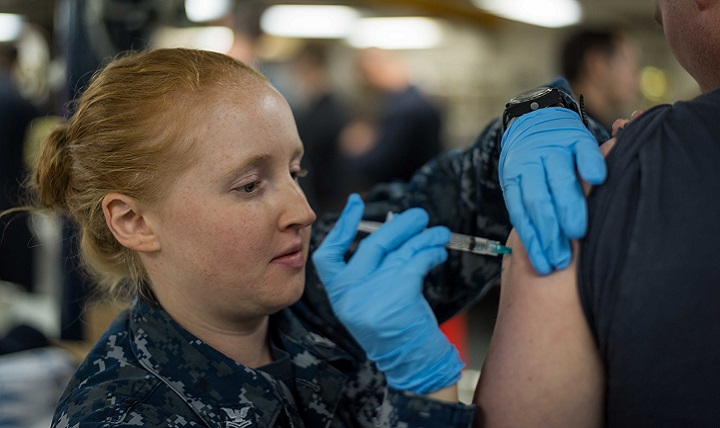
(U.S. Navy photo by Mass Communication Specialist Seaman Cole C. Pielop / Released)

Based on the analysis of influenza virus activity in previous seasons, every year WHO launches a recommendation on the strains to be included in the trivalent and quadrivalent influenza virus vaccine (in March for the Northern Hemisphere and September for the Southern Hemisphere). The need to update this vaccine is due to phenomena of antigenic derivation of the virus that, like the previous issue, obliges the annual study of the vaccine that will present greater coverage. Based on circulating types and subtypes, this year a viral strain A (H1N1)pdm09 identical to A/Michigan/45/2015 was recommended for the trivalent vaccine; a virus strain A (H3N2) identical to A/Hong Kong/4801/2014; and a viral strain B (Victoria strain) identical to B/Brisbane/60/2008.

The quadrivalent vaccine contains the three viruses described above, and in addition another strain of virus B/Phuket/3073/2013. (1) Evaluating sentinel sites until December 2017, there was a dominance of virus B circulating in relation to type A. Of the latter, the most prevalent subtype with about 2/3 of detected cases was A (H3N2), and the remaining third H1N1 subtype. In the same surveillance period last year, type A (H3N2) virus circulated almost exclusively, with high immunity expected; however, the presence of emerging sub-strains and variants that were not covered by this year vaccine could be possible the source of suboptimal coverage. Among B viruses, type B/Yamagata was almost exclusive with 85% and the remaining 15%, type B/Victoria. For the 4th consecutive year, the trivalent influenza vaccine does not correspond to the circulating B virus subtypes, since most of the prevalent B virus strains, Yamagata, are antigenic and genetically related to B/Phuket, which is only included in the quadrivalent vaccine. In this sense, and to increase vaccination coverage of the type B virus in the coming years, ECDC advises the use of the quadrivalent vaccine. (2) (3)

Another factor to be discussed that may be among the causes of lower vaccination coverage is due to the use of eggs in vaccines production. This substrate may interact with different groups of aminoacids present and consequently, alter proteins responsible for the antibody receptors, creating minor viral amendments that may change the effectiveness of the vaccine. (4)

Influenza virus vaccine is the most effective prophylactic measure against influenza severity. Thousands of vaccines are distributed in primary health care, completely free of charge to priority groups such as population over 65 years of age, chronic and immunosuppressed patients, pregnant women, health professionals and other caregivers. During flu season and up to the first week of 2018, approximately 478,291 influenza vaccines were administered in Portugal northern health region. Along with this measure, it is also recommended to conduct respiratory etiquette and hand hygiene, as well as the use of appropriate face masks for patients diagnosed or with symptoms suggestive of influenza. (3) (5) (6)

_________________________

References

  1. World Health Organization. Recommended composition of influenza virus vaccines for use in the 2017- 2018 northern hemisphere influenza season. http://www.who.int. [Online] Março 2, 2017. http://www.who.int/influenza/vaccines/virus/recommendations/201703_recommendation.pdf?ua=1..
  2. European Centre for Disease Prevention and Control. Risk assessment for seasonal influenza, EU/EEA. Estocolmo, Estocolmo, Suécia : s.n., Dezembro 20, 2017.
  3. Administração Regional de Saúde do Norte, Departamento de Saúde Pública. Gripe sazonal – vigilância epidemiológica – Semana 40 de 2017 a semana de 1 de 2018. ARS Norte. [Online] Outubro-Janeiro 2017-2018. www.arsnorte.min-saude.pt.
  4. Paules, Catharine I, et al. Chasing Seasonal Influenza — The Need for a Universal Influenza Vaccine. N Negl J Med. DOI: 10.1056/NEJMp1714916, 2018, Vols. 378:7-9.
  5. Centro Emergências de Saúde Pública. RONDA número 2. Lisboa : Direção Geral da Saúde, 2018.
  6. Direção Geral da Saúde. Vacinação contra a gripe – Época 2017/2018. Lisboa : s.n., Setembro 26, 2017. Orientação nº 018/2017 de 26/09/2017.

_________________________

Mariana Perez Duque
Public Health Resident
West Porto Public Health Unit, Portugal

(As published in EuroNews #13)

EuroNet MRPH logo with the full name of the network, European Network of Multidisciplinary Residents in Public Health.

Winter Meeting 2017 in Lisbon

The challenge was not only to organize the next EuroNet MRPH Winter Meeting in Lisbon, but also to create the first Medical Residents of Public Health Conference in just 4 months and with a very low budget!

The EuroNet’s Portuguese team was very enthusiastic about this idea, as the country has experienced an increase in the number of MRPH in the last few years; Lisbon is also now a very popular city for tourism and Portugal had not hosted a EuroNet MRPH meeting since the end of 2014. Also, there was no better way to celebrate 5 years of Portuguese EuroNet MRPH membership – a network that is also having an excellent year so far!

The YPHE – Young Public Health in Europe (EuroNet MRPH Winter Meeting) took place in Escola Nacional de Saúde Pública/Public Health National School, from the 30th November to the 2nd December. There were 71 participants, from 9 member countries, of which 33 were Portuguese, making it the biggest meeting in EuroNet MRPH history.
The well-prepared, rich and detailed Scientific program was great! The first session on 30th November – “From data to knowledge” – presented the importance of using data, especially in the emergency field. This was followed by two workshops: one about communication, with a fascinating journey through high-impact communication and some key points when storytelling; the other workshop was titled “inside the mind of an epidemiologist”. A session on training and professional development in Public Health raised a very interesting debate, where questions and interventions from participants were welcomed. Other stimulating workshops included: the using of social media in research; how to get what you want from meetings; and drug monitoring and effectiveness. The quality of the workshops caused the young MRPH some difficulty when choosing between sessions!

The 1st December was the highlight of the scientific programme: a session about how data will shape our cities from a PH perspective and then the last big challenge: “the elevator pitch”. Delegates were divided into small groups and tasked with looking for creative solutions for PH problems. It was an incredible adventure, every group prepared a 3 minute presentation. Some observations? Suffice to say, we loved developing HEALTH4ALL in this friendly, funny, amazing way. The afternoon provided the perfect opportunity to show so many of the 1st year MRPH the EuroNet style and its pillars: networking, internship and research.

However..…what would be a EuroNet meeting without the social events?
The social programme aimed to create strong bonds between EuroNet’s members and facilitate cultural exchanges and discoveries. And because we were in Portugal, the programme was as “quente” as the weather!

The first two social events occurred in the restaurants of Lisbon. During the first one, we listened to Fado, which is a popular kind of music with melancholy themes and strings instruments. The second night involved an European Public Health quiz! We split into mixed-country teams to try to answer the 30 questions and compete for the prize! (For the winning team: special thanks to Damir and the Croatian wine lovers.) Each event progressed to partying in the bars and clubs of the city.

For the third social event, the nightlife was traded for a cultural visit to the neighbourhood of Belém, accompanied by two guides. We walked through Belém, learning about all its history: from the big earthquake of 1755, to the story of boats leaving the harbours to discover the world, expanding the Portuguese empire; from the story of the royal family to the presidential palace of today. And of course the history of the “pastéis de Belém”, that we not only listened to but also tasted!

The consensus was that the 2017 Euronet meeting had been an enjoyable success. The choice of Lisbon allowed us to enjoy the sun and the Portuguese team did a fantastic job of organising an array of interesting speakers and workshops, information, lunches and other things. A lot of new faces joined the network in this meeting and we hope that more will continue to do so, to help the young European Public Health community flourish. Can’t wait to see 2018!

Mariana Carrapatoso, Viviana Santoro, Melchior de Giraud d’Agay, Matt Robinson
Public Health Medical Residents from Portugal, Italy, France and Ireland