A roadmap for Non-Governmental Associations’ cooperation in Public Health

“Proudly by ourselves” – this was a Portuguese nationalist slogan advertised before April 25th 1974 revolution. However, globalization changed the paradigm of international relationships and communication technologies connected the whole world by a simple click. We no longer live in a place where our actions have no consequences, but rather influence people and the environment around us – both as individuals and through organizations.

As you know, Public Health was defined by Acheson as “the science and art of preventing disease, prolonging life and promoting health through organized community efforts” and Ottawa Charter for Health Promotion called for “community health partnerships, health alliances or socio-ecological approaches to prevention and health promotion”.

Therefore, non-governmental organizations (NGO) play an interesting role in promoting community development while remaining independent from governments. Currently, some of the most important European NGOs in Public Health area are ASPHER (Association of School of Public Health in Europe), EHMA (European Health Management Association) and EUPHA (European Public Health Association)1. The aim of most of these kind of organizations is to bring together experts to develop innovative health research and implement it through effective policy making.

Another perfect example of cooperation between European public health professionals is the European Network of Medical Residents in Public Health (EuroNet MRPH), which gathers 10 national based Public Health associations training programs.

Following its mission, EuroNet MRPH aims to promote the sharing of educational opportunities, facilitate exchange internships and develop international scientific research. Euronet-like networks are keen on knowledge transferring, research collaboration and they create a unique environment for ideas to develop, encouraging the rapid spread of information in Europe.

The lack of bureaucracy (but not organizational anarchy) among networks is one of its strengths when comparing to governments and institutions, which makes it so useful in creating knowledge, exchanging information and spreading good practice2. Individuals from different organizations and areas can collaborate free from the constraints that exist in more hierarchical models3. Also, collaborative papers tend to get cited more often, which is an important “bonus”4.

Summing up, networks should focus on five specific pillars:

  • A common purpose that promote a sense of belonging of its members and a commitment in moving in the same direction;
  • A cooperative structure that allows people to work together across organizations;
  • A critical mass that increases value for members and society;
  • Collective intelligence, as members share and learn from each other and;
  • A sense of community built through relationships.

Figure 1. The 5C Wheel, including core features of an effective network4

Right now, in my opinion, EuroNet MRPH follows the main essentials for a successful network. That is amazing in such a short period of time, while having room for development, especially regarding partnerships and cooperation. Networks are just the bottom level of a collaboration hierarchy, gathering a huge potential for development and expansion for the following years, until they achieve a full collaboration status5.

Partnerships can be defined as “contextually relevant peer-to-peer collaborations which offer a platform for sharing knowledge and growing expertise globally, working towards a common goal, across disciplines and perspectives”6. This allows organizations to explore their differences and find solutions beyond their limited visions7.

Similar to networks’ main pillars, partnerships also need6:

  • Focus: a common goal that keeps partners focused on their objectives;
  • Values: a commitment and trust between partners;
  • Equity: adequate sharing of resources and respect for different capacities;
  • Mutual benefits: based on knowledge exchange and skills development;
  • Communication: through meetings, agendas and reports sharedon time;
  • Leadership: accountability and delegation of roles to organize common efforts and;
  • Resolution: determination and mediation in conflict resolution between partners.

As discussed in 2018’s Winter Meeting, communication and partnerships are fields where Euronet MRPH needs to invest some workforce and time, in order to develop proper foundations for the future. As referred by Rahman, EUPHA added value to members association through contact to other European Public Health Associations and more ideas for research and collaboration, among others1. Therefore, members of both organizations in a partnership also expect to develop future collaborations through existing ones.

Addressing the big elephant in the room, there are hundreds of public health related institutes and NGOs in Europe. Many of them are already connected but it’s crucial to align most important NGOs agendas in Public Health, strengthening integration policies and influence8. While integrating activities in a single network is already a complicated task, integration of activities between different organizations it’s even more problematic – but when well coordinated, they have a bigger impact.

Challenges in Public Health collaboration will be hard to tackle, but young professionals willingness to act and innovate play a crucial role. Today, in my opinion, Euronet MPRH is a successful network with a clear direction, encouraging innovation and quality improvement. There is a potential in advocacy for Public Health residents and promoting community driven initiatives which still remains on hold, while a broader influence in European Public Health can also be addressed through more meaningful and structured partnerships.

In the Velika Planina winter meeting, Euronet MRPH members discussed the role of partnerships for the future of the network and there was a call for reviewing Euronet MRPH partnerships in an objective way, highlighting the need for meaningful and relevant benefits for enrolled public health residents, like scholarships, reduced fees and opportunities for research collaboration. But most of all, is crucial to gather feedback from residents and understand what they expect from partnerships.

In the Velika Planina winter meeting, Euronet MRPH members discussed the role of partnerships for the future of the network and there was a call for reviewing Euronet MRPH partnerships in an objective way, highlighting the need for meaningful and relevant benefits for enrolled public health residents, like scholarships, reduced fees and opportunities for research collaboration.

But most of all, is crucial to gather feedback from residents and understand what they expect from partnerships. There will be many challenges in the future and it’s up to us to prepare and embrace the opportunities that they will bring.

Duarte Brito

Public Health Resident
Public Health Unit Lisboa Central, Portugal


References

  1. Rahman, SG. Public Health in Europe: the role of Non-Governmental Public Health associations in public health policy development. Karolinska Institutet.
  2. Cunningham, FC; Ranmuthugala, G; Plumb, J; Georgiou, A; Westbrook, JI; Braithwaite, J. Health professional networks as a vector for improving healthcare quality and safety: a systematic review. BMJ Quality & Safety. 2011
  3. The Health Foundation. Effective networks for improvement. The Health Foundation. 2014
  4. Adams, J. The rise of research networks. Nature. 2012
  5. Sommervile, M; Kumaran, K; Anderson, R. Public Health and Epidemiology at a Glance. Wiley-Blackwell. 2012
  6. Larkan, F; Uduma, O; Lawal, SA; van Bavel, B. Developing a framework for successful research partnerships in global health. Globalization and Health. 2016
  7. Axelsson, R; Axelsson SB. Integration and collaboration in public health – a conceptual framework. International Journal of Health Planning and Management. 2006
  8. Lang, PB; Gouveia, FC; Leta, J. Cooperation in Health: mapping collaborative networks on the web. PLOS One. 2013
The Government’s Role in Health Promotion

Nowadays many people die from weight related diseases, these can normally be prevented by improving eating habits and lifestyle choices. But, how easy is it for people to choose better?

As a dietitian and public health professional I find myself promoting healthy eating very often.  However, I have realised that it is not just up to the people to try to get healthier. It is the government’s job to make it easier for everyone to make these changes.

A year ago, I found myself moving to Barcelona, a city full of life and full of bars and restaurants. Asking for tap water in Barcelona is impossible as waiters argue that tap water is not drinkable in Spain. In fact, Barcelona’s water is safe to drink as it follows EU regulations and the company in charge of water in Barcelona has many ISO certifications that secure the water’s innocuousness. In addition to this, a bottle of water in Barcelona is sometimes either the same price or more expensive than a beer or sugary drinks. In contrast, countries in the European Union like the UK and France make it mandatory for bars and restaurants to give free tap water to customers, making it easier for people to choose healthier.

By the same token, in consultation, I always suggest patients to choose whole meal bread and pastas over white ones. Many of them stick to refined grains given that wholemeal products are normally more expensive. It is a fact that eating refined carbs lead to increased risk of obesity and type 2 diabetes, such as it is a fact that it is cheaper to make wholemeal products than to make heavily processed ones, and still people need to pay more for getting the healthier option.

The idea that to eat better is necessary to spend lots of money is a problem I have encountered many times. The current trend of organic foods makes it seem like eating healthily is only for those who can actually afford it. People from a low socioeconomic status find it impossible to eat the so-called organic products. Showing people that healthier does not necessarily mean organic or more expensive should be a public health priority.

Given these points, it is evident that support from the government is essential in order to make it easier for people to choose the healthier option.

José Carlos Flores

Masters in Public health student at the Universitat Pompeu Fabra in Barcelona

References:

  • Certificaciones de calidad – www.aiguesdebarcelona.cat [Internet]. Aiguesdebarcelona.cat. 2018. Available from: http://www.aiguesdebarcelona.cat/garantia-de-calidad
  • Aigües de Barcelona, Sustainability report 2017. [Internet]  Available from: http://www.aiguesdebarcelona.cat/documents/4176268/4286604/AiguesdeBarcelona_InformeSostenibilitat_2017_eng.pdf
  • Drinking Water – Environment – European Commission [Internet]. Ec.europa.eu. 2018. Available from: http://ec.europa.eu/environment/water/water-drink/regulation_en.html
  • Sun Q, Spiegelman D. White Rice, Brown Rice, and Risk of Type 2 Diabetes in US Men and Women. 2010.

Treatment of HIV and viral hepatitis in the prison population

Access to health services in the prison system is conditioned by legal barriers, social marginalization and stigma which can increase infectious diseases among the prison population1.

The prison population is different from other populations and it’s in a situation of increased vulnerability. There are several factors that contribute to this, mainly: more exposure to violence; transmission of infectious diseases; increased unprotected sexual, confinement and overpopulation; difficulties in the patients flow up1.

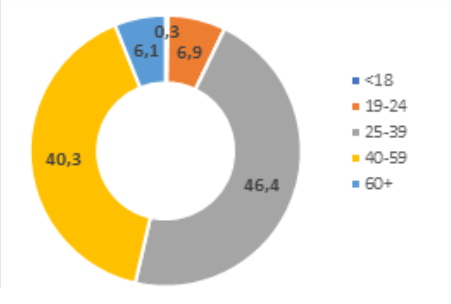
The number of prisoners in Portugal is about 14.000 on 2017, for a theoretical capacity of approximately 13.000, generating, thus, a panorama of indisputable overcrowding of the prison system. In addition there is also a high turn-over of inmates2. The most relevant characteristics of Portuguese prisoners are summarized in Table 1 and Figure 1.

Figure 1. Prisoners, by age. Portugal 20172

In order to achieve the goals to 2020 outlined on Onusida/Unaids and reduce the morbimortality of viral hepatitis, the General Directorate for Reinsertion and Prisional Services (Direção-Geral da Reinserção e dos Serviços Prisionais) and 28 hospitals of the National Health Service (SNS) will sign a protocol for the treatment of human immunodeficiency virus (HIV) and viral hepatitis infections in the prison population, extending to the whole country the pilot project that runs between the Hospital de São João in Porto and the prison of Custóias.

This pilot project started on january 2017, in order to promote appropriate diagnostic procedures and to provide medication to cure hepatitis C.

This initiative enabled the elimination of Hepatitis C in prisons in Custóias and Santa Cruz do Bispo and is now being expanded geographically and to include other viral hepatitis and HIV4.

Table 1. Characteristics of the Portuguese Prison Population, Portugal, 20172,3

Up until now, prisoners were subject to security procedures when traveling to healthcare facilities, which caused constraints to clinical observation. From now on they will be treated in the prison itself. This new model will allow physicians – infecciologists, gastroenterologists and internists – to move to prisons to care for the HIV-infected, hepatitis B and C prison population of 45 prison facilities across the continent. In addition, screening will be done at the entrance, during and at the end of the sentence.

Thus, it is expected that this protocol will shape a new approach to health care for infectious diseases in prisons.

Tiago Carvalho

Public Health Resident, Portugal

José Rodrigues

Public Health Resident, Portugal

References:

  1. Sousa KAA, Araújo TME, Teles SA, Rangel EML, Nery IS, Sousa KAA, et al. Fatores associados à prevalência do vírus da imunodeficiência humana em população privada de liberdade. Rev da Esc Enferm da USP. 2017 Dec 18 [cited 2018 Aug 24];51(0)
  2. PORDATA- Justiça e Segurança: Prisões [Internet]. [cited 2018 Aug 14]. Available from: https://www.pordata.pt/Subtema/Portugal/Pris%C3%B5es-60
  3. Direção-Geral de Saúde. Infeção VIH e Sida- Desafios e estratégias. Lisboa: Direção Geral da Saúde; 2018
  4. Hospital de São João- Projeto do São João de eliminação da Hepatite C nas prisões replicado a todo o país [Internet]. [cited 2018 Aug 31]. Available from: http://portal-chsj.min-saude.pt/frontoffice/pages/16?news_id=537

Sexual and reproductive health and rights in Europe: the case of abortion

Sexual and reproductive health and rights (SRHR) are at the intersection of health care and the legal and moral system of a country. Issues related to SRHR are not only under the control of the woman herself, eventually her partner, and healthcare professionals, but also of lawmakers and often religious leaders. Matters as abortion, contraception, fertility and reproduction, the definition of consent, the choice of a partner, are hence both extremely intimate and public, influenced by power dynamics and contextual factors.

Of abortion, in 1992 H. David wrote: “Although universally practiced, no other elective surgical procedure has evoked as much divisive public debate, generated such emotional and moral passion, or received greater sustained attention from the media”1.

Abortion is indeed universally practiced, but an estimated 25% of the world’s population lives in the 66 countries where abortion is either prohibited or permitted only to save a woman’s life2.  Of these, eight countries are in Europe: Northern Ireland in the United Kingdom, Ireland, Monaco, Liechtenstein, San Marino, Poland, Andorra and Malta. In the first six countries, abortion is forbidden outside extremely limited circonstances, for example, depending on the country, to avert a substantial risk to a woman’s life, in case of severe foetal impairment or if the pregnancy is a result of a sexual assault. Andorra and Malta do not allow it in any situation3.

A report published in December 2017 by the Council of Europe details the effects of restrictive laws on women in Europe3. In countries with restrictive laws, womens are forced to travel outside the country to receive care, or they have to access illegal abortion, for example by buying abortion pills online, with the fear to seek post-abortion care, because of the legal implications. Travelling outside the country in fact is not always an option, for administrative and financial barriers, especially for adolescents, undocumented migrants or women at risk for domestic violence.

Restrictive laws can have tragic effects on the health and lives of women, as we know from the most covered country with restrictive laws in Europe, which is Ireland. In Ireland, the 8th amendment of the Constitution, which was introduced in 1983 to recognise the right to life of the unborn as an equal to that of the mother, was repealed by referendum, on the 25th of May 2018. The repeal came after appalling events like the death by sepsis of Savita Halappavanar in 20124 and the stories of some of the around 3’000 women who every year travel to the UK to access abortion services and the efforts of grassroot activism. Activism that extends across the border to Northern Ireland, in support of the women who may theoretically face a life sentence if found guilty of having an abortion5.

However, the possibility to access safe, prompt abortion care can be limited even in the European countries with liberal laws, meaning where abortion is accessible on request, for reasons of distress or on broad socio-economic grounds. For example, a mandatory waiting period, with or without mandatory counseling, exists in many countries, such as Germany, Italy and The Netherlands, and was recently reintroduced in countries in Central and Eastern Europe,6 while it was suppressed by the health law of 2016 in France7. The mandatory waiting period does not fulfill any medical purpose8.

Lack of professionals who provide abortion services is another barrier to access. The lack of professionals can be due to a shortage of professionals who are trained in this practice or because of the refusal to provide abortion services on grounds of conscience or religion.

Some solutions to the shortage of trained professionals exist: for example, France faces a lack of gynecologists, especially in rural areas, so the health law of 2016 introduced the possibility for midwife to provide medical abortion.

When refusals of care on grounds of conscience or religion are not well regulated, or the mechanisms to oversight the respect of regulations are not functional, the access to legal services is not guaranteed. For example, in Italy, in some regions more than 80% of gynecologists are objectors, and only 60% of the health care structures of the country provide abortions9, 10.

These circumstances can induce European women to travel to other countries, a theme that is being studied by a research project called Europe Abortion Access Project. The first results about cross-country travel will be available in the winter of 2018, while the results on in-country travel will be available in 202011.

These elements invite public health professionals to remain vigilant on abortion. The situation is ever changing and, in some cases, it is developing for the best, as we saw in Ireland, where representations on abortion have finally been shifted after years of reflections and advocacy12.  In others it is stagnating or there is even a real risk of retrogression, as in Poland, where since 2016 there have been different attempts at hardening what is already one of the most restrictive abortion laws in Europe13, 14.

Maria Francesca Manca
Public Health Resident, France

References

  1. David HP. Abortion in Europe, 1920-9: A public health perspective. Studies in family planning. 1992:23,1:1-22.
  2. The world’s abortion laws by the Center for reproductive rights: http://worldabortionlaws.com/
  3. Council of Europe, Commissioner for human rights. Women’s sexual and reproductive health and rights in Europe. December 2017.
  4. https://www.nytimes.com/2018/05/27/world/europe/savita-halappanavar-ireland-abortion.html (consulted on the 24th of august, 2018)
  5. Li A. From Ireland to Northern Ireland: campaigns for abortion law. The Lancet. 2018;391:2403-2404.
  6. Hoctor L. Mandatory waiting periods and biased abortion counseling in Central and Eastern Europe.Int J Gynecol Obstet 2017;139:253–258.
  7. Official website of information of abortion in France: https://ivg.gouv.fr/ivg-un-droit-garanti-par-la-loi.html
  8. WHO. Safe abortion: technical and policy guidance for health systems (2nd edn). 2012
  9. Ministry of health (Italy). Relazione del ministro della salute sulla attuazione della legge contenente norme per la tutela sociale della maternità et per l’interruzione volontaria di gravidanza (Legge 194/78). 2015
  10. Chavkin W. Regulation of conscentious objection to abortion: an international comparative multiple-case study. Health and human rights journal. 2017;19(1). Available at: https://www.hhrjournal.org/2017/06/regulation-of-conscientious-objection-to-abortion-an-international-comparative-multiple-case-study/
  11. https://europeabortionaccessproject.org/
  12. Shaw D, Norman WV. A tale of two countries: women’s reproductive rights in Ireland and the US. BMJ 2018;361:k2471.
  13. Davies C. Polish MPs back even tougher restrictions on abortion. The Guardian, 11 January 2018. Available at: https://www.theguardian.com/world/2018/jan/11/polish-mps-reject-liberalised-abortion-laws-but-back-new-restrictions (consulted on the 19th of august, 2018)
  14. Berer M. Abortion law and policy around the world – In search of decriminalization. Health Hum Rights. 2017;19(1):13-27.

Working Groups Update

Research is one of the main projects of Euronet Medical Residents in Public Health (EuroNet MRPH) and its members represent an important part of the network workforce.

These groups constitute a great opportunity to develop disruptive works at an international level and allow the residents to work with colleagues from different European countries, and learn from their experience. The benefits you can take from participating in this unique and challenging work are unlimited.

Beside the working group established to provide the Association of Schools of Public Health in the European Region (ASPHER) with European residents’ feedback on the Professionalisation and Workforce Planning agenda, six research groups are currently active in the Network:

  • “Post-residency employability” led by Daniel Alvarez (ES);
  • “Conflict of interest” led by Stefano Guicciardi (IT);
  • “Residency educational climate” led by Špela Vidovič (SL);
  • “LGBT+ residents’ outness and work environment” led by Damiano Cerasuolo (FR);
  • “E-cigarettes” led by Pietro Ferrara (IT);
  • “Public Health informatics” led by Francesco D’Aloisio (IT).

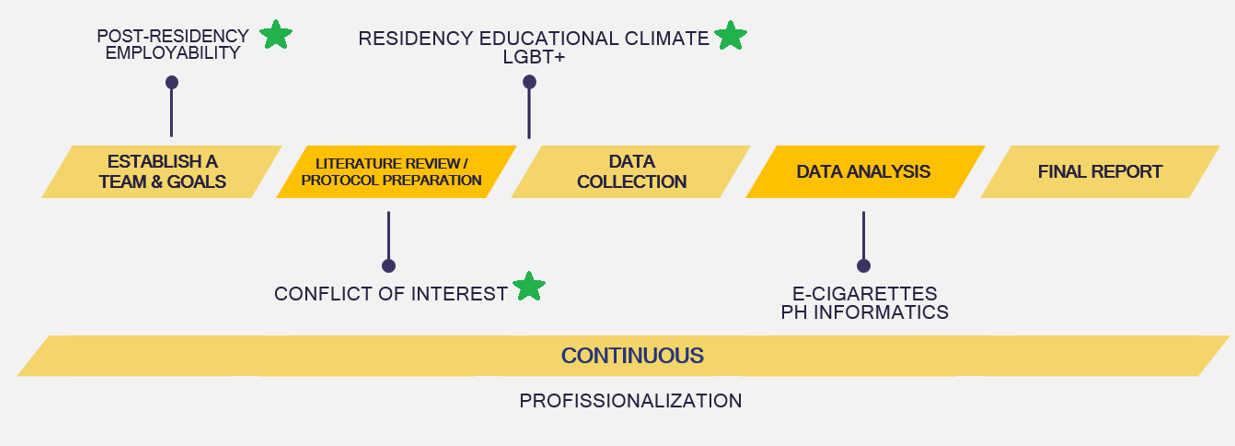
All working groups are in different stages of work (Figure 1), some still gathering a team, others piloting questionnaires, and the more advanced ones are analyzing the collected data. Three of the WG are still accepting new members to collaborate (marked with a green star in the figure).

Figure 1 – Working group stages.

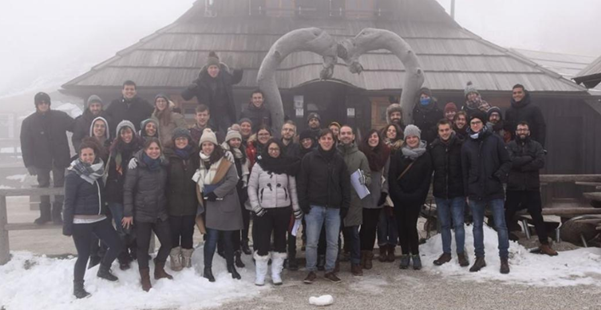
During the past meeting, at Velika Planina, we organized one workshop where all WG were presented by their leads or co-leads. It was an important moment to exchange ideas and get some feedback on their ongoing work. To the new members it was explained how to join one WG or submit a new one. Together we did some brainstorming and concluded that one of the preferred topics for forming a new WG was “Influence of Politics on Health”.

The challenges and strengths of a WG are several, and were also discussed:

  • Work at international level:

– Cultural and linguistic barriers (we’ve learnt some of the difficulties and strategies to translate a questionnaire for example);

– Communication problems;

– Acquire motivation, teamwork and leadership skills;

– Be able to replicate a research in different countries;

– Learn more about health systems and PH residency in other countries;

  • Perform a research work:

– Ethical approvals have proved to be one of the biggest barrier to some groups;

– Time management and planification skills;

– Generate knowledge;

– Promote PH.

At the end, you can even end up presenting your work at a big conference, like Špela Vidovič did during the European Public Health (EPH) Conference in Ljubljana (Figure 2).

Don’t waste this opportunity and get more involved in this project. You can get more information about each WG on the website, or by sending an email to research@euronetmrph.org.

You can participate in a currently active WG or suggest a new one.

Gisela Leiras

Public Health resident, Portugal

Euronet Meeting First Impressions – Velika Planina 2018

“My first EuroNet meeting. In Velika Planina I had the opportunity to attend my first EuroNet meeting. My colleagues who previously participated told me some stories about EuroNet-meetings so I was really looking forward to being a part of it and connecting with new people.

Having the opportunity to meet colleagues from other countries and get to know them was definitely a great experience and my expectations were matched. I was able to meet great people enthusiastic of our work and exchange ideas, views and see first hand the commitment and the willingness to cooperate and how they can lead to a great teamwork. The work groups  give the possibility to everyone to suggest new ideas and see who is on board with them or to give your own contribution to work groups that already exist and need some extra help. Of course the social programme is an important part of the meetings and fun is assured!”

Yves Adja

Public Health resident in Italy


“As a fresh new resident in Public health, I had the great opportunity to attend the Euronet MRPH Winter Meeting in Velika planina, Slovenia. I couldn’t imagine a better way to begin the residency and to discover EuroNet.

I would like to thank the warm and welcoming Slovenian team, everything was there to spend an unforgettable week-end: a wonderful landscape, a great atmosphere, tasty Slovenian food (and wine), cozy cottages, snowball fights and more important all the great people who were there and made this time amazing.

It was so rewarding to discover EuroNet, all the projects and workgroups in progress between different countries. There were many interesting topics discussed, demonstrating the wide diversity of Public Health residency around Europe. It was also very stimulating and inspiring to see what can be done and to hear different professional experiences and initiatives during the pitch presentations.

I came back to France with my head full of nice memories, ideas for the internship, and the aspiration to learn more about Public Health.

To conclude, thank you so much EuroNet and all of its members for this beautiful meeting and nice moments, hopefully there will be plenty of others!”

Alice Vadre

Public Health resident in France

“Recently I attended my first EuroNet Meeting in Lubiana and it greatly exceeded expectations. Firstly, I had the opportunity to informally know about other public health residency programs, different directions and trajectories, new topics and interesting projects in the field. I especially liked the open organization of the working groups and now I’m very willing to participate.

Moreover, I got to know amazing people and colleagues that shifted my research horizons and my way to intend what a public health professional may potentially be. And of course,  networking was fun! Snowy chalets, cozy rooms and very nice people, what else?

I would certainly recommend the experience to anyone interested in EuroNet and its activities and in networking to other public health residents across Europe. The richness of confronting with them is something I will bring home preciously.”

Mattia Quargnolo

Public Health Resident in Italy

Winter Meeting Report – Velika Planina 2018

For a brief moment Ljubljana was the center of European public health. From November 29th until December 1st it hosted the biggest European public health conference. The EPH conference is – among other things – a meeting point for residents, recent residents and those who wished they could still remember how it felt like to be a resident.

But they are simply too far into their careers and those feelings and memories are getting harder and harder to recall. Let us all take a minute of mindful meditation to sympathize with our experienced colleagues.

Having an event of such a scale hosted by one of the EuroNet MRPH member countries made a solid case for organizing one of the regular meetings EuroNet members cherish so much in Slovenia. Many residents from EuroNet countries were attending the conference and we could feed two birds with one scone if we organised the winter meeting back-to-back with EPH.

The only problem, if we can put it this way, was that most of the residents planning to come to the winter meeting were experiencing the city of Ljubljana, listening to presentations, and sitting in lecturing halls already for at least 4 days of the EPH conference. We assumed they could use a change of scenery and so we decided to organize the winter meeting in a secluded snow-capped mountain not that far away from our green capital. And so we booked buses, funiculars, chairlifts (yes, chairlifts) to take us up to the mountain called Velika planina where chalets with wood-burning fireplaces awaited us and kept us warm for the 3 days we’ve spent there.

Programme of the meeting had a clear focus on EuroNet inner workings and projects of our fellow residents. General assembly was split in two parts this time. We started the meeting with a dinner and continued with the first part of the general assembly in the same restaurant which happened to be the only closed space on the mountain big enough for 45 people to occupy at the same time. The second day was the day when majority of work was done. First on schedule were pitch presentations where some of the work EuroNetters are involved in was showcased.

Topics covered ranged from surveillance of communicable diseases, public health advocacy initiatives to ethics of vaccine hesitancy. Afternoon sessions kicked off with working groups focusing on internship facilitation, communication and research activities. A new format of session was introduced during the meeting as we conducted the first ever EuroNet-athon (mimicking the well-known hackathon format). Three teams were tackling three challenges of further EuroNet growth identified by a committee comprised of old and new board members. Winner of the EuroNet-athon was announced during the second part of the general assembly.

Even though not everyone followed our advice on warm clothing and footwear we managed to end the winter meeting with 0 casualties. We would even go as far as to say that the winter meeting we held at Velika planina was a big success. The idyllic location and the programme of the meeting had little to do with it.

It was a big success primarily because of the people who attended. And with this in mind we are looking forward to new success stories ahead. Because EuroNet MRPH is nothing more than people that represent it.

And, to borrow a line from the great James Brown, those people look like success, smell like success, feel like success and they make success happen.

The Euronet Organizing Committee Slovenia

Conflict of interest between Professional Medical Societies and industry: a cross-sectional of the European Medical Societies’ websites

The relationship between industry and medical societies has been widely studied by the international literature and has been recognized as a potential condition for biases and conflicts of interest. A recent study analysed the relationship between industry and medical societies through the assessment of the Italian medical societies’ websites, finding some relevant correlations. Despite this scenario, little is known about the relationship between medical societies and industry in Europe.

The aim of the work conducted by Euronet MRPH is to extend the Italian research to seven European countries (Croatia, France, Ireland, the Netherlands, Portugal, Slovenia, and Spain). The study is important because it is a first such project addressing the conflict of interest between medical societies and industry in a comparative European setting. In addition to its scholarly contribution that will enhance the understanding of the nature of this relationship, the study has implications for the development of policy regulating the relationship between industry and medical societies, from disclosure requirements, to restriction on what industries can fund, among others. The working group already developed a structured flowchart to systematically produce comprehensive lists of all the medical societies in the included countries.
Up to date, a significant effort has been done in assessing the differences between the national definitions of medical societies and, so far, a heterogeneous framework emerged.

Stefano Guicciardi
Public Health Resident, Italy


EuroNet MRPH working group LGBT well-being and work environment survey

The improved visibility of Lesbian, Gay, Bisexual, Trans and other non-heterosexual (LGBT+) people has not always been accompanied by advancements in the working and living conditions of those identifying as LGBT+. In medical residency programmes across Europe, there is little research analysing how challenges of the residency period align with the challenges associated with concealable identities and their disclosure. This paucity of data may be due to the notion that identity is inconsequential or irrelevant to achievement and well-being in medical studies and health professions.

EuroNet MRPH LGBT+ working group aims to better understand the daily living and working condition of medical residents identifying themselves as LGBT+. The product of this year of work (the project started in late 2016) is a questionnaire, made up of 45 questions, and organised in 6 sections, focusing on identities, acceptance both at work and home, episodes of discrimination or harassment, and emotional well-being. It will be soon disseminated after its translation in most of the languages spoken in the countries part of the network. The process of forward and backward translation will ensure semantic and conceptual equivalence between different versions and it will make data analysis reliable.

This project addresses the need for an informative survey about working environment experiences and well-being of medical residents identifying themselves as LGBT+, and could help to get an insight into the wider topic of LGBT+ acceptance in our health system. If you want to learn more or give a little help, do not hesitate to contact us.

Damiano Cerasuolo
Public Health Resident, France